Winter Tire Pressure Before Snow: A Practical Guide
Learn how air pressure before snow affects winter tires, how cold weather changes PSI, and how to check and inflate correctly for safer, more efficient winter driving with Tire Pressure Tips.


You will learn how to check and adjust tire air pressure before snow, including how cold weather lowers pressure, how to read a gauge accurately, and how to set inflation to your vehicle’s recommended PSI. This quick guide helps prevent underinflation and improves winter grip, braking, and fuel efficiency.
The role of air pressure before snow
Air pressure influences every contact patch of the tire, which is especially crucial when roads are slick and temperatures drop. In winter, the air inside tires contracts, so a tire that seems fine in warm months can become underinflated as soon as a cold front passes. This change reduces the tire's footprint, making steering feel less precise and potentially increasing braking distance on snow and ice. According to Tire Pressure Tips, staying close to your vehicle’s recommended cold-inflation PSI helps maintain consistent handling, predictable response, and better fuel economy when cold weather arrives. While tread depth and traction control matter, neglecting proper air pressure is a simple, high-impact risk that’s easy to fix with a gauge and a quick inspection before each winter drive.
How temperature affects tire pressure in winter
Temperature exerts a direct influence on tire pressure. Colder air chills the air inside tires, causing contraction and a drop in measured psi. Conversely, when you drive from a warm building into freezing air, you might temporarily feel the pressure drop as the metal and rubber cool. This is why many winter drivers notice a lower reading on cold mornings even if the tires were inflated correctly the day before. The Tire Pressure Tips Team emphasizes that winter readings should be taken when tires are cold, meaning the car has not been driven for several hours or has been parked for an extended period. When you wait for a cold reading, you avoid inflating to a pressure that would be too high once the tires warm up during a drive.
Reading tire pressure accurately in winter
To read tire pressure accurately in cold weather, use a reliable gauge, preferably digital, and ensure you measure on cold tires. Remove the valve cap, place the gauge on the valve stem, and take a steady reading. If readings vary between tires, record each value and keep a note of exterior temperatures. Practice validates consistency: a consistent gauge and a routine inspection increase confidence in your winter readiness. The first step is always to confirm what the manufacturer recommends for cold inflation, then compare current readings to that baseline. Keeping a log helps you track seasonal trends and plan proactive inflations.
Winter inflation targets and how to set them
Inflation targets are not a one-size-fits-all number. Your vehicle’s door jamb label or the owner's manual provides the correct cold-inflation pressures for front and rear tires, and those targets may differ for all-season versus winter tires. In winter, some drivers slightly adjust pressures to account for heavier loads or use winter tires in cold climates. Always start with the manufacturer’s specification and adjust only if you have a clear, data-backed reason (for example, a noticeable drop in pressure due to prolonged cold). When you inflate, use a gauge you trust and verify with a cold-side reading after a few minutes of rest.
Step-by-step routine to prepare tires for snowy roads
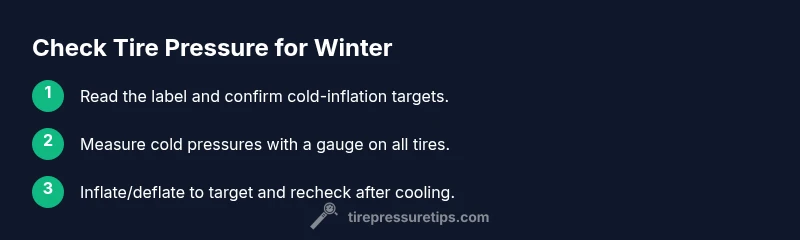
A structured routine ensures you don’t miss a critical step. Begin by gathering tools and confirming the vehicle’s PSI targets from the label. Check all four tires when they are cold, ideally before starting your day or after the car has sat overnight. Inflate or deflate to the recommended cold pressure, then recheck each tire once the tires have cooled again or after a short drive. Don’t forget the spare; winter-adjacent storage can lead to slow leaks over time. Keeping a small notebook or app log helps you spot trends and plan proactive maintenance.
Common mistakes and how to avoid them
Common mistakes include inflating while tires are warm, ignoring the spare, and assuming the same pressure applies to winter tires as it does to summer tires. Another pitfall is relying solely on TPMS alerts without a physical reading, which can mislead when sensors malfunction or temperatures skew results. Take the time to measure cold pressures, compare with the label, and use a trusted gauge for every tire. Also, remember to check your tires after a significant temperature drop to catch pressure changes early.
TPMS, sensors, and winter checks
Tire Pressure Monitoring Systems (TPMS) are a valuable safety feature, but they don’t replace manual checks. In winter, sensor readings can lag behind actual pressures when temperatures plummet, so you should verify TPMS data with a gauge and cold-pressure measurement. If your TPMS light comes on unexpectedly, consult the owner’s manual for the correct diagnostic steps and consider a professional inspection if readings contradict sensor data. Regular TPMS maintenance helps ensure you get accurate feedback during severe weather.
Seasonal maintenance checklist for safe winter driving
Create a small winter tire log with dates, temperatures, and pressure readings. Schedule checks after long trips into colder weather, after storage periods, and before anticipated snow events. Pair tire pressure maintenance with tread depth checks and wheel alignment assessments. Keeping tires inflated near the recommended cold-pressure target improves grip, braking, and fuel economy in snow and ice. The routine is simple, but its impact on safety is substantial.
Tools and gauges that help accuracy
A reliable gauge is essential for accurate winter readings. Digital gauges are easy to read and tend to produce consistent results in cold weather. Keep a spare valve cap and a small amount of washer fluid for cleaning the valve stem if it gets dusty. A simple notebook or mobile app to log readings will help you notice trends across weeks of winter conditions. Finally, a quality inflator with a built-in gauge reduces tool-switching and speeds up the process.
Practical driving benefits of proper air pressure in winter
Maintaining correct inflation improves steering response, reduces rolling resistance, and helps your tires maintain a stable contact patch on slick surfaces. Proper pressure minimizes uneven tread wear, enhances braking distance on ice, and can improve fuel efficiency during cold months. By prioritizing winter air pressure checks, you improve comfort, safety, and performance on snowy roads. The Tire Pressure Tips Team emphasizes that consistent, careful checks are a low-cost, high-reward way to stay safer in winter driving.
Tools & Materials
- Digital tire pressure gauge(Choose a model with a clear display and good resistance to cold temps; calibrate periodically.)
- Vehicle door jamb PSI label/manual(Use the cold-inflation numbers for front and rear tires; verify if different for winter tires.)
- Spare tire pressure gauge (backup)(Useful if your primary gauge is unavailable or inaccurate.)
- Notebook or mobile app to log readings(Helpful for tracking seasonal changes and planning maintenance.)
- Tire inflation compressor or air pump(Only if you need to adjust pressures where a gauge shows underinflation; ensure it delivers steady, precise pressure.)
Steps
Estimated time: 15-25 minutes
- 1
Prepare and locate targets
Gather your tools, locate the vehicle’s cold-inflation targets from the door jamb label or manual, and confirm the tires are cold before starting. This ensures an accurate baseline reading and appropriate inflation targets.
Tip: If you’ve just driven, wait until tires cool down before measuring; this prevents inflated readings. - 2
Measure cold pressures
Remove valve caps and attach the gauge to each tire’s valve stem. Take a steady, complete reading for all four tires. Record the values and compare to the recommended cold PSI from the label.
Tip: Practice a one-second press to seal the gauge; a loose seal can give false high readings. - 3
Inflate or deflate to targets
If a tire reads below or above the target, adjust using the inflator or pump until it matches the cold-inflation specification. Recheck to confirm accuracy after a few minutes of rest.
Tip: Do not overinflate; aim for the target and observe that readings stay stable after the tire cools again. - 4
Check the spare and all tires
Don’t overlook the spare tire. Check its pressure and adjust if needed. Ensure all tires, including the spare, are close to their recommended cold pressures.
Tip: A low spare can compromise emergency readiness; verify it is ready when you need it. - 5
Document and plan next checks
Log the readings, note the outdoor temperature, and schedule the next check after a temperature drop or snow event. This creates a repeatable winter maintenance habit.
Tip: Keeping a log helps you spot persistent trends and plan proactive inflation strategies.
Frequently Asked Questions
Why should I check air pressure before snow?
Winter conditions affect pressure readings and tire performance. Verifying cold pressures helps maintain grip, braking, and efficiency on snow. Always measure when tires are cold and compare to the manufacturer’s targets.
Check pressure when tires are cold to ensure accurate readings for winter safety.
How does temperature change tire pressure?
Colder temperatures cause air to contract, lowering tire pressure. Warmer days can raise readings. Always read cold pressures for accurate inflation decisions.
Cold weather lowers pressure, so check your tires when they are cold.
Should I inflate tires to the same number in winter as in summer?
Inflation targets come from the door label and may vary by tire type. Use winter-specific targets if provided and adjust for load and temperature as needed.
Use winter-specific targets from the label and adjust for temperature.
Does TPMS replace manual pressure checks in winter?
TPMS helps monitor pressure, but it can lag or be less reliable in extreme cold. Always verify with a physical gauge when tires are cold.
TPMS is helpful, but you should still check manually when it's cold.
What should I do if readings are inconsistent between tires?
Recheck with the gauge, confirm ambient temperature, and consider a valve or gauge issue. If readings remain inconsistent, consult a tire professional.
If readings vary, recheck with a trusted gauge and seek professional help if needed.
Is it okay to inflate my tires when they are warm?
Inflating while warm can lead to overinflation once tires cool. Always aim for the cold-inflation target and verify after cooling.
Avoid inflating warm tires; target cold pressure instead.
Watch Video
What to Remember
- Check tires cold before inflation
- Inflate to manufacturer targets for winter
- Use a reliable gauge and log readings
- Don’t forget the spare, and recheck after weather shifts