Tire Pressure After Rain: A Practical Guide for Safer Driving
Learn how rain affects tire pressure readings, how to check with TPMS, and what steps to take to stay safe on wet roads. A practical guide from Tire Pressure Tips.


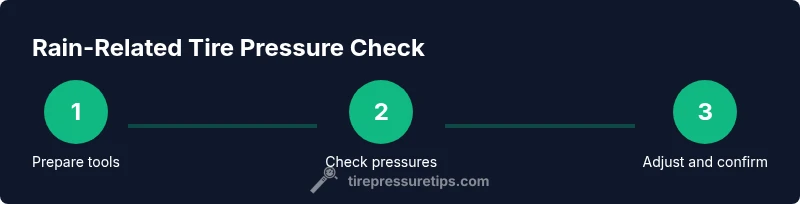
Rain can cause temporary tire pressure fluctuations and readings that seem off. After rain, check all tires with a gauge on a level, dry surface once they have cooled, verify TPMS readings, and adjust toward the vehicle’s recommended pressure. Recheck after tires dry to confirm stability.
Rain and tire pressure: what changes after a shower
Rain cools the air and pavement, which lowers the air temperature outside the tire and inside the tire itself. When air cools, it contracts and pressure can drop slightly; as tires heat up from driving, pressure can rebound. After a rain shower, readings may appear lower or fluctuate, especially if you measure immediately after stopping on a damp surface. The most reliable approach is to measure on a level, dry surface after the tires have cooled for several minutes. The Tire Pressure Tips team notes that readings are influenced by ambient temperature and moisture, not only by tire condition. Always locate the vehicle’s recommended pressure on the door jamb sticker or in the owner’s manual, and use that target when calibrating. Moisture around the valve stem or bead can also affect readings, so inspect the stem and ensure the gauge seals well. If readings still seem off after rechecking on a dry surface, consider a slow leak or tire issue and seek professional inspection if needed.
Weather-related temperature effects on readings
Temperature swings cause pressure shifts independent of tire wear. Rain often accompanies cooler air, which can produce lower readings temporarily. Conversely, clear skies and sunlight can raise readings as tires warm. The key is to account for ambient conditions when interpreting changes and to use a consistent method for measurement (same gauge, same surface, same time after stopping).
Where to look for the target pressure
Your vehicle’s recommended tire pressure is not a fixed number; it’s a range specified by the manufacturer and shown on the door jamb sticker or in the owner’s manual. Do not rely on gut feeling or past habits—weather changes and load can shift the ideal pressure. If the sticker is missing, consult the manual or contact the manufacturer. Always aim to bring each tire to its specified target when you adjust, then recheck after a short cooldown.
Moisture and valve-stem considerations on rainy days
Moisture can enter through the valve stem or around the bead, which may skew readings. Wipe moisture from the valve stem and ensure the gauge seal is clean and tight before taking a measurement. If you notice ongoing readings that don’t align with the target after multiple checks, inspect the valve core for moisture or damage, and consider replacing the valve stem cap to keep out debris.
Practical rain scenarios and readings interpretation
In light rain, readings may drift slightly as ambient temperature lingers around the tires. In heavier rain, the effect can be more pronounced if you measure soon after a drive. In all cases, aim to measure after tires have cooled and the car has been stationary on a dry surface for several minutes, then adjust toward the manufacturer’s target and recheck.
Safety and maintenance mindset after rain
Tire pressure is just one part of rainy-day safety. Combine accurate pressure with tread depth, proper alignment, and TPMS status to ensure confident handling on wet roads. If you suspect a slow leak after a rainstorm, schedule a professional inspection. Regular checks help maintain optimal grip and fuel efficiency, while reducing the risk of a tire-related incident on slick pavement.
Authority sources and references for tire pressure after rain
For trusted guidance, consult official safety resources and reputable publications. See related material from government and major publications for verified tire maintenance practices. Always cross-check with your vehicle’s documentation and a reliable gauge to ensure accuracy during wet weather.
Tools & Materials
- Digital tire pressure gauge(Calibrated for accuracy; preferred for quick, repeatable readings)
- Air compressor or access to a pump(Use a regulated pump to reach target pressure safely)
- Vehicle owner’s manual or door-jamb tire pressure sticker(Identify the correct pressure target for each tire)
- Clean cloth or rag(Wipe moisture from stems/beads to improve gauge seal)
- Flashlight(Inspect valve stems and beads in dim light)
- Notebook or note-taking app(Record readings across tires and temperatures)
Steps
Estimated time: 30-45 minutes
- 1
Prepare tools and locate target pressures
Gather a reliable gauge, air source, and the vehicle’s pressure targets from the door sticker or manual. Confirm you’re checking on a level surface and in cool, dry conditions before touching the tires.
Tip: Double-check the sticker for the exact target pressure per tire; loads like passengers or cargo change the target. - 2
Park on a level surface and let tires cool
Find a safe spot on level ground and avoid hills or soft ground. If you’ve just driven in rain, allow tires to cool for several minutes before measurement to reduce warm-air inflation effects.
Tip: Cooling time helps avoid over- or under-inflation caused by recent driving heat. - 3
Remove valve caps and attach the gauge
Carefully remove each valve cap and press the gauge onto the valve stem to form a seal. Hold the gauge steady and take a firm, straight-on reading.
Tip: Keep the gauge clean and avoid letting moisture enter the valve stem during measurement. - 4
Record readings for all tires
Note the pressure reading for each tire, and compare to the manufacturer’s target. Repeat the reading if the gauge fluctuates or the surface is damp, ensuring consistency.
Tip: Take multiple readings across a minute or two to confirm stability. - 5
Adjust low readings to target
If any tire is below target, add air gradually using a regulated pump. Recheck after a short cooldown to confirm the reading stabilizes near the target.
Tip: Avoid over-inflation; small adjustments and rechecks reduce risk of overpressure. - 6
Check the other tires and the spare
Don’t forget the spare if you’re doing a full tire check. Verify that all tires, including the spare, are within the target range or properly adjusted for load and weather.
Tip: Spare tires often sit unused and may require a quick check to ensure readiness. - 7
Document and monitor
Log the final pressures and note ambient temperature. Over the next few days, monitor any changes and re-check if temperatures shift or you notice any handling changes.
Tip: A simple log helps detect slow leaks or gradual pressure loss due to weather changes.
Frequently Asked Questions
Why does rain affect tire pressure readings?
Rain and cooler air can cause temporary pressure drops. Always measure after tires have cooled on a dry surface to ensure accuracy, and use the vehicle’s target pressure as your goal.
Rain can cause temporary pressure drops. After cooling on a dry surface, measure against the target pressure to ensure accuracy.
How long should I wait after rain to measure?
Wait for the tires to cool and the car to be stationary on a level surface for several minutes before taking measurements.
Wait several minutes for the tires to cool before measuring.
Can TPMS readings be trusted after rain?
TPMS is a helpful quick indicator, but it is not a substitute for measured readings with a gauge. Use TPMS to corroborate, then confirm with a manual check.
TPMS helps, but always confirm with a gauge for accuracy.
What should I do if readings are inconsistent between tires?
Recheck with a reliable gauge, inspect for moisture on the valve stems, and confirm with the door-sticker pressures. If inconsistencies persist, seek a professional inspection.
Recheck using a good gauge and inspect stems; seek professional help if readings remain inconsistent.
Is it better to adjust pressure when it’s raining or after it dries?
Prefer making adjustments after tires have cooled and the surface is dry to ensure readings reflect actual tire pressure, not ambient moisture or rain cooling effects.
Adjust after tires cool on a dry surface for accuracy.
Watch Video
What to Remember
- Verify tire pressure with a reliable gauge after rain.
- Allow tires to cool and measure on a dry surface before adjustments.
- Cross-check with TPMS but rely on direct readings for accuracy.
- Document readings and monitor changes with weather shifts.