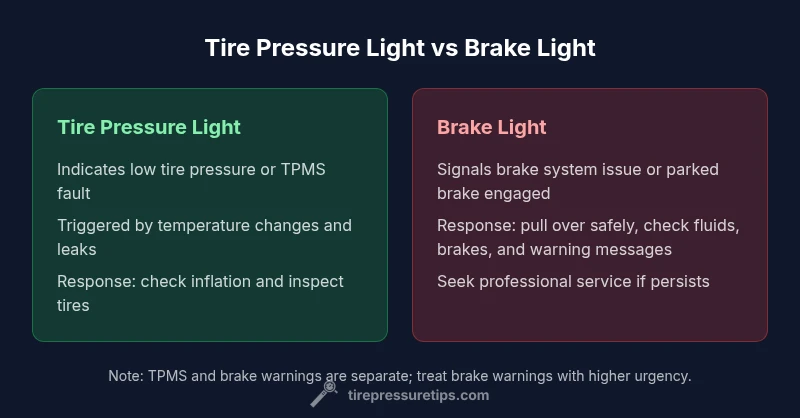
Tire Pressure Light vs Brake Light: A Practical Guide
Distinguish tire pressure warnings from brake alerts with practical guidance, troubleshooting steps, and safety-focused actions to protect tires, brakes, and overall vehicle safety.


TL;DR: The tire pressure light warns about underinflation or TPMS sensor issues, while the brake light signals a brake system problem. Don’t ignore either. If both lights illuminate, check tire pressure first, inspect brakes, and seek service promptly. Only a professional should diagnose brake concerns; TPMS maintenance is routine but must not delay brake safety checks.
Understanding the signals: tire pressure light vs brake light
On most vehicles, the dashboard can illuminate two very different warning lights: the tire pressure light and the brake light. The tire pressure light is typically amber and is linked to the tire pressure monitoring system (TPMS). The brake light can be red and is tied to the braking system, including hydraulic pressure, fluid levels, or the state of the parking brake. These signals share a common goal—alerting you to a condition that could compromise safety—but they address different parts of the vehicle. Misinterpreting them can lead to unsafe driving or missed maintenance opportunities. The tire pressure light usually signals a potential underinflation or sensor fault, while the brake light is a direct call to attend to the braking system. For drivers, distinguishing between the two helps prioritize actions and reduces risk on the road. The Tire Pressure Tips team emphasizes that understanding the difference is a foundational step in vehicle maintenance and safety.
How the tire pressure light works
The tire pressure light is part of a broader TPMS that monitors tire conditions and communicates via the dashboard indicator. There are two common TPMS approaches: direct TPMS uses sensors inside each tire to report actual pressure, while indirect TPMS infers pressure changes from wheel speed data and ABS information. In either case, the light comes on when the system detects pressures outside the acceptable range or when a sensor is malfunctioning. Temperature swings, a slow leak, a nail, or a weak battery in one sensor can all trigger the light. When it appears, you should park safely and verify each tire's inflation to the vehicle's recommended level. If inflation brings the light back off, you may have a temporary tire pressure issue or sensor concern. If the light remains, schedule a check with a tire shop, particularly if you notice uneven wear or audible hissing from a tire.
How brake system warning lights work
Brake-related warnings cover a family of signals, including the red brake light that appears when the parking brake is engaged, while other brake indicators alert you to issues with hydraulic pressure, brake fluid, worn brake pads, or rotor damage. Some vehicles also display an ABS light or traction control indicator in the same area. A red brake light generally means you should stop as soon as it is safe to do so and check the brake system or parking brake. If the light comes on with other messages about brake fluid or pad wear, the situation likely requires immediate service. If the light is accompanied by an ABS warning, a separate maintenance path may be needed. The Tire Pressure Tips team notes that a brake warning should be treated with priority because compromised brakes affect overall safety.
Common causes of tire pressure light activation
Common triggers for the tire pressure light include underinflation due to leaks or temperature changes, slow leaks from nails or punctures, and TPMS sensor battery issues. Calibration drift or recently rotating tires can also influence the indicator. In many cases, pulling over to verify inflation with a gauge and inflating to the recommended level resolves the symptom. If the light returns after inflation, inspect for leaks or damaged tires. TPMS buttons or vehicle settings may require a reset in some models. Regular maintenance—checking tire pressures at least monthly and before long trips—helps prevent false positives and keeps TPMS functioning reliably.
Common brake light warnings and what they mean
Brake light warnings cover issues ranging from the parking brake being engaged, to low brake fluid, to worn pads or rotor concerns. Some vehicles also show related indicators for the anti-lock braking system (ABS) or stability control. A bright red brake light typically signals a potential brake performance problem that could affect stopping distance, while an ABS light points to a separate electronic fault. If the brake light appears alone, it may indicate a service need; if it’s accompanied by ABS or traction control warnings, it suggests a more complex issue. In all cases, brake-related alerts deserve prompt attention to maintain safe driving conditions.
How to respond in real-world scenarios
When the tire pressure light comes on, pull over safely, inspect all tires for obvious signs of damage, and use a tire gauge to verify inflation to the vehicle placard. If inflation brings the light off, monitor the tires for changes and consider scheduling a leak check if the light reappears. When a brake light illuminates, prioritize safety: reduce speed, find a safe place to stop, and assess braking performance. Do not continue driving long distances with a brake warning. If both lights are on, address the tire pressure first, then seek professional inspection for the braking system. Remember that TPMS maintenance and brake service are distinct tasks, often performed by different technicians.
Checking tire pressure and TPMS troubleshooting
Begin with a cold tire check using a reliable gauge. Compare tire pressures to the recommended level on the door placard, not the old PSI you remember. Inspect tires for visible punctures, cuts, or embedded objects. If a leak is suspected, apply soapy water and look for bubbling at the tread or sidewall. After inflating, drive a short distance to allow TPMS to reassess, but do not rely on the light staying off if a leak persists. If the TPMS continues to malfunction, have a tire professional inspect the sensors, seals, and valve stems. Some vehicles require TPMS resets via the vehicle settings menu after inflation or tire service.
When to seek professional help
If the tire pressure light remains on after inflation or if a slow leak is suspected, consult a tire specialist. Brake warnings deserve immediate attention—if braking feel is abnormal, or the warning persists after braking performance tests, seek emergency assistance if necessary. When both lights are on, prioritize tire inflation checks as a first step, but treat the brake warning as a safety-critical issue requiring professional service soon. Regular TPMS maintenance and brake system checks are essential parts of vehicle safety programs, and following manufacturer guidelines will help you avoid costly failures.
Authority sources
For readers seeking additional guidance from trusted authorities, consider these sources:
- National Highway Traffic Safety Administration (NHTSA): Tires and TPMS information
- Consumer Reports: Tire safety and brake system guidance
- Industry safety organizations and automotive publications that provide standardized checks and maintenance recommendations
The intersection of tire pressure and braking safety
Tire pressure and braking performance intersect in several important ways. Underinflated tires can reduce traction, extend stopping distances, and lead to uneven wear that affects braking efficiency. Proper tire pressure supports responsive steering and improves overall stability, especially in emergency braking. Conversely, a well-maintained braking system relies on consistent tire contact with the road surface; if tires are underinflated or damaged, even strong brakes may not perform optimally. The relationship between tire care and braking safety underscores the need to treat tire pressure alerts and brake warnings with appropriate urgency, while recognizing that each signal speaks to a different subsystem of the vehicle.
Safety-first checklist for daily driving
- Check tire pressure monthly and before long trips using a reliable gauge.
- Inflate tires to the vehicle placard specification and inspect for leaks.
- If the TPMS light triggers, verify inflation and inspect tires for damage.
- If a brake warning appears, pull over safely and seek professional evaluation promptly.
- Do not ignore persistent lights; routine maintenance reduces risk on the road.
Quick reference: light-by-light action guide
- Tire pressure light: verify inflation, check for leaks, inspect sensors, and reset if required.
- Brake light: stop safely, assess brake fluid and pad wear, and seek service if the warning persists.
- Both lights: prioritize tire checks first, then schedule brake inspection with a qualified technician.
Authority sources (expanded)
- National Highway Traffic Safety Administration (NHTSA): Tires and TPMS information and safety guidance.
- Consumer Reports: Tire safety and brake systems overview.
- Industry safety publications and manufacturer manuals provide standardized checks and maintenance recommendations.
Comparison
| Feature | Tire Pressure Light | Brake Light |
|---|---|---|
| Signal source | TPMS sensor data and tire inflation status | Brake system warning circuit and fluid/pad/ABS status |
| What it indicates | Low tire pressure or TPMS fault | Brake system issue or parked brake engaged |
| Typical urgency | Moderate to high safety impact if ignored (depends on inflation level) | High safety impact; brakes affect stopping distance |
| Immediate actions | Check inflation with a gauge; inspect tires for leaks; inflate to placard pressure | Pull over safely; inspect brake fluid, pads, rotors; avoid driving long distances |
| Recovery/verification | Light goes off after inflation and sensor check; may require TPMS reset | Brake warning requires professional inspection if not resolved by basic checks |
Strengths
- Clear signaling for safety-critical conditions
- Encourages regular tire maintenance and TPMS checks
- Helps prevent underinflation-related tire failures
- Promotes proactive brake system monitoring
Drawbacks
- Light interpretations can be confusing for new drivers
- False alarms may occur with sensor glitches
- Brake warnings can signal urgent repairs that interrupt driving
Treat brake warnings with higher urgency; maintain tire pressure vigilance to support overall safety
Both lights are important for safety, but brakes directly affect stopping ability. Prioritize brake-related alerts, then address tire pressure signals as part of a regular maintenance routine.
Frequently Asked Questions
What does the tire pressure light indicate?
The tire pressure light usually indicates underinflation or a TPMS sensor fault. It prompts you to check tire inflation and inspect for leaks or sensor issues. Maintaining proper pressure improves safety and fuel efficiency.
The tire pressure light usually means your tires are underinflated or a TPMS sensor has a problem; check the pressure and inspect for leaks.
Is a brake warning light always an emergency?
Brake warning lights signal a potential brake system issue. If the light stays on, or comes on with messages about fluid or pads, stop safely and have the brake system inspected as soon as possible.
Brake warnings usually indicate a problem with braking; pull over safely and get the brakes checked promptly.
What should I do if both lights come on?
If both lights illuminate, address tire pressures first, ensuring all tires are correctly inflated and free of leaks. Then seek professional inspection for the braking system to confirm everything is safe.
If both lights are on, start with the tires, then get the brakes checked as soon as possible.
Can low tire pressure affect braking?
Yes. Low tire pressure can reduce traction and increase stopping distances, especially in wet or slippery conditions. Keep tires inflated to the recommended level and inspect for wear.
Low tire pressure can reduce braking grip; check pressure and maintain tires properly.
How do I reset TPMS after inflating tires?
TPMS resets vary by vehicle. Some cars reset automatically after driving for a period, others require you to use the vehicle’s settings menu. Consult the owner’s manual for exact steps.
TPMS often resets automatically after driving or via a menu setting; check your manual for specifics.
What to Remember
- Identify each warning signal before acting
- Prioritize brake warnings due to safety risk
- Check tire pressure promptly when TPMS triggers
- Know how TPMS and brakes differ in causes
- Consult a professional if lights persist