TPMS Light vs Tire Pressure Light: Understanding the Difference and Action Steps
Understand the difference between the TPMS light and tire pressure light, when each triggers, how to diagnose them, and practical steps to maintain correct tire pressure for safety and efficiency.


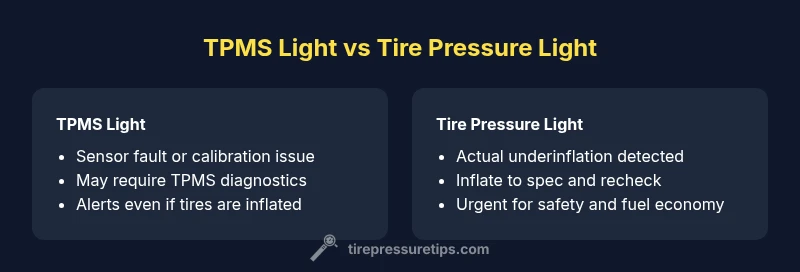
The TPMS light and tire pressure light are related but not identical. The tire pressure light signals actual underinflation in one or more tires, while the TPMS light indicates a fault or anomaly within the Tire Pressure Monitoring System. Start by checking all tires with a gauge to the vehicle spec; if pressures are correct and the TPMS light remains, seek a system diagnosis.
Understanding the two lights: TPMS light and tire pressure light
The dashboard can show two warnings that seem similar but have different meanings: the TPMS light and the tire pressure light. The TPMS light signals that the Tire Pressure Monitoring System has detected an out-of-range condition, which could be a failing sensor, a dead battery in a sensor, or a calibration issue. The tire pressure light, by contrast, indicates actual low air pressure in one or more tires. Recognizing the distinction is essential for quick, effective action.
According to Tire Pressure Tips, modern vehicles often combine these warnings in the same icon set, but the underlying triggers are not identical. In practice, you should treat a tire pressure light as an urgent call to inflate to the vehicle spec, then verify the system status if the light persists. The Tire Pressure Tips team found that misinterpreting these signals can lead to underinflation maintenance delays, which in turn affects fuel economy and safety.
Direct TPMS vs indirect TPMS: How the system works on your car
TPMS technology comes in different flavors. Direct TPMS uses sensors mounted on each wheel to measure actual tire pressure and transmits data to the vehicle’s computer. Indirect TPMS does not rely on physical pressure sensors; instead, it infers pressure changes from wheel speed sensor data and ABS information. Direct systems tend to offer more precise readings and faster alerts, but they require sensor batteries to be replaced periodically. Indirect systems may be cheaper to repair but can be slower to alert or less accurate in extreme temperature or load conditions. Both systems, when functioning correctly, are designed to keep you informed about dangerous underinflation that can impair handling, wear, and fuel economy.
When the lights come on: Common triggers and what they mean
A tire pressure light often signals a measurable drop in air pressure across one tire (typically a drop of 5-20 psi depending on the vehicle). A TPMS light can indicate several non-pressure issues: a failed sensor, a dead sensor battery, a wheel that has been replaced without recalibrating the system, or a calibration mismatch after tire rotation. Temperature changes, tire repair patches, or a recent tire swap can also trigger the TPMS light. Knowing the likely trigger helps you decide if you should inflate, inspect hardware, or schedule service.
For drivers who want practical guidance, it helps to track when the lights come on. If the warning appears after a cold night, a brief recheck after driving may be sufficient. If it persists after inflating to spec, the issue is more likely a TPMS fault or sensor calibration problem.
Step-by-step: How to check tire pressure accurately and safely
Begin with a quick visual check for obvious damage or uneven wear. Next, use a reliable tire gauge to measure each tire’s pressure when the tires are cold (before driving or after at least three hours of no driving). Compare readings to the vehicle’s recommended pressure listed on the door jamb placard or owner’s manual. If any tire is below spec, inflate to the recommended PSI and recheck. If the readings are all within spec, the TPMS light may be indicating a fault rather than a genuine underinflation. In that case, you should consider a TPMS diagnostic with a qualified technician.
Throughout the process, reference the vehicle’s user manual for any model-specific steps. Your vehicle may have a reset procedure for the TPMS after tire service or rotation, which is important to perform if instructed.
Common misperceptions and myths about TPMS and tire pressure lights
Many drivers assume a TPMS warning means a tire is visibly flat or that the light is only about speed or fuel economy. In reality, underinflation can be present without a visibly flat tire. Conversely, a TPMS warning does not always mean there is a real tire pressure problem; it can indicate a sensor or system fault. Misinterpretation can lead to unnecessary trips to the shop or unsafe driving on underinflated tires. Clear understanding of what each light signifies helps drivers take accurate, timely actions and avoid unnecessary costs. As with most maintenance signals, errs in judgment tend to be more expensive than a careful, methodical approach.
Temperature effects on tire pressure readings and how to manage them
Temperature plays a big role in tire pressure. Colder temperatures can lower tire pressure by 1 psi per 5-10 degrees Fahrenheit for most tires, while heat can increase pressure. If you observe a warning during a temperature swing, consider checking pressures when temperatures stabilize. The same principle applies after long highway drives where tires heat up; readings during or immediately after heat exposure may not reflect curbside reality. Understanding temperature effects helps you decide when to inflate or recheck after the engine cools.
Maintenance routines to prevent false alarms and ensure accuracy
Routine maintenance is the best defense against nuisance warnings. Regularly check tire pressures—ideally once a month and before long trips—using a quality gauge. Inspect tires for uneven wear, object damage, and valve stem condition that could cause leaks. Calibrate or reset the TPMS after any tire rotation, replacement, or sensor service. If you replace tires, make sure the TPMS sensors are compatible with your vehicle and programmed correctly. Keeping maintenance records can also help you track when components were last serviced and how often warnings occur.
Diagnostic pathways: What to do when a TPMS or tire pressure light comes on
If both lights illuminate, start with physical tire pressure verification. If all tires read within the recommended range, the TPMS warning is most likely a sensor or calibration issue and should be diagnosed with an appropriate scan tool. If a tire is underinflated, inflate to spec and recheck after a short drive; if the light persists, check for leaks, punctures, or slow leaks that may require professional repair. In many cases, driving a short distance after inflating to the correct pressure is enough to reset a straightforward underinflation warning, but persistent warnings warrant a service visit.
Keep a basic tire pressure gauge in your vehicle for quick checks, especially during seasonal temperature changes. When in doubt, consult the vehicle manual and local service professionals who can validate sensor health and calibration. For ongoing guidance on TPMS and tire pressure maintenance, see Tire Pressure Tips.
Quick-start checklist for TPMS and tire pressure alarms (for drivers on the go)
- Check all tire pressures with a gauge while tires are cold.
- Inflate to the vehicle’s recommended PSI if any tire is low.
- Drive a few miles to allow the system to recalibrate if pressures were adjusted.
- If the TPMS light remains after inflation, inspect the valve stems and consider a TPMS diagnostic.
- Consult the owner's manual for reset steps after service or rotation.
- Schedule professional TPMS calibration if warnings persist beyond basic checks.
Comparison
| Feature | TPMS light | Tire pressure light |
|---|---|---|
| Trigger | Sensor fault or out-of-range readings | Actual low tire pressure (or load-related change) |
| Primary meaning | System issue in monitoring sensors | Low air pressure detected by sensors |
| Actions to take | Diagnose TPMS, inspect sensors, calibrate, possibly replace sensors | Inflate tires to spec and recheck; re-test after driving |
| Reset required | Often after service/calibration | Sometimes after inflating; may auto-reset after driving |
| Common false positives | Sensor battery failure, wheel position changes | Temp-related pressure fluctuations and slow leaks |
| Safety impact | Depends on sensor reliability; can mask actual inflation issues | Directly tied to vehicle handling and safety when underinflated |
| Maintenance implications | Periodic sensor checks, recalibration after tire changes | Regular pressure maintenance and leak checks keep readings accurate |
| Time to resolution | Can range from minutes (inflate) to hours/days (sensor repair) | Often quick with proper inflation; longer if leaks or sensor faults exist |
Strengths
- Promotes proactive tire maintenance and safety awareness
- Helps detect underinflation before it causes tire failure
- Encourages timely TPMS maintenance and calibration
- Improves fuel economy and tire wear when addressed promptly
Drawbacks
- TPMS faults can trigger warnings without real pressure issues
- False positives may lead to unnecessary checks or service
- Resetting/calibrating TPMS can require specialized tools
- Sensors can fail and add maintenance costs
Prioritize tackling the tire pressure light; address actual inflation first, then diagnose TPMS if the light persists
The tire pressure light usually signals a tangible issue you can verify with a gauge. If pressures are correct, the TPMS warning likely indicates a sensor or calibration problem that requires professional service. Acting promptly reduces safety risks and prevents tire damage.
Frequently Asked Questions
What is the TPMS light?
The TPMS light signals a fault or anomaly within the Tire Pressure Monitoring System, such as sensor failure or calibration issues. It is not a direct measure of current tire pressure. If this light comes on, you should inspect the system and consider diagnostic service.
The TPMS light means there’s a problem with the monitoring system, not necessarily the tire pressure itself. Check sensors and calibration, and get a diagnostic if the light stays on.
TPMS warning with normal pressure—what does it mean?
If all tires read at or above spec but the TPMS light is on, this typically indicates a sensor fault, a dead battery in a TPMS sensor, or a calibration issue after tire service. A diagnostic check is advised.
A TPMS warning with normal pressure usually means a sensor or calibration issue rather than actual tire inflation.
How do I reset TPMS after changing tires?
Reset procedures vary by vehicle; consult your owner’s manual or dealer. In many cases, driving for a short distance after inflating to spec will reset indirect TPMS, while direct TPMS may require a scan tool or button sequence.
Check the manual for TPMS reset steps; many cars reset after driving with correct pressure, but some require a tool.
How can I check tire pressure accurately at home?
Use a reliable tire pressure gauge to measure cold tires and compare against the vehicle’s recommended PSI. Ensure valves are clean, and inflate if needed. Recheck after driving a short distance to confirm stable readings.
Use a good gauge and check when tires are cold, then inflate to the recommended PSI and recheck.
Do cold temperatures affect TPMS readings?
Cold temperatures lower tire pressure, which can trigger both the tire pressure light and the TPMS in some setups. Recheck pressures after ambient temperatures stabilize to determine if attention is needed.
Yes, cold weather can drop tire pressure and trigger warnings; recheck after temperatures level off.
When should I service TPMS sensors?
Service is typically required if TPMS warnings persist after inflating to spec or after tire replacement. A technician can test sensor health, battery status, and calibration to determine next steps.
If warnings stay after inflation, get a TPMS diagnostic to check sensors and calibration.
What to Remember
- Check tire pressures first when either light appears
- Understand TPMS vs tire pressure indicators to avoid confusion
- Maintain regular tire pressure and TPMS calibration
- Use a gauge on cold tires for accurate readings
- Seek professional TPMS diagnostics if warnings persist