Check Engine Light vs Tire Pressure Light: A Practical Guide
Learn the differences between the check engine light and tire pressure light, what triggers them, how to diagnose, and when to seek help. Practical, safety-focused guidance for drivers from Tire Pressure Tips.


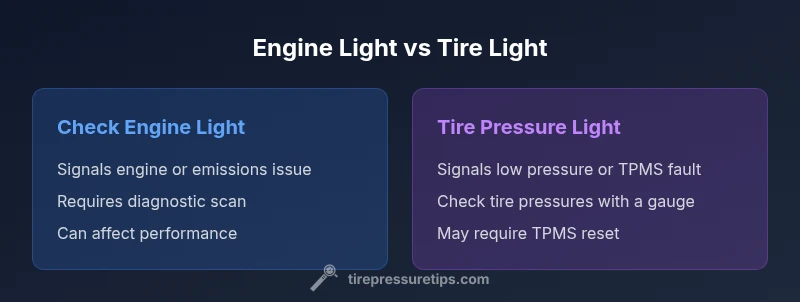
In most cars, the check engine light signals a potential engine or emissions fault requiring diagnostics, while the tire pressure light (TPMS) warns that tire pressure is too low or a TPMS sensor fault is present. Understanding the difference between check engine light vs tire pressure light helps you respond appropriately, protect safety, and minimize repair costs. This quick contrast sets the stage for deeper guidance below.
How the warning lights work
Dashboard warning lights are designed to communicate two distinct safety signals. The check engine light (CEL) is part of the engine management system and indicates a fault that can affect performance, emissions, or fuel economy. The tire pressure light, often labeled TPMS, focuses on air pressure and tire health. Because these lights reflect different systems, drivers should respond according to the light shown and the symptoms experienced. According to Tire Pressure Tips, recognizing the difference between check engine light vs tire pressure light is essential for safe driving and cost-effective maintenance. When the CEL illuminates, the car may still run, but diagnostic checks are needed to identify root causes like misfires or sensor faults. The TPMS light, by contrast, flags tire-related safety issues that can affect handling, braking, and tire wear. Understanding both lights helps you make informed decisions on the roadside and at a shop.
How the warning lights work
Dashboard warning lights are designed to communicate two distinct safety signals. The check engine light (CEL) is part of the engine management system and indicates a fault that can affect performance, emissions, or fuel economy. The tire pressure light, often labeled TPMS, focuses on air pressure and tire health. Because these lights reflect different systems, drivers should respond according to the light shown and the symptoms experienced. According to Tire Pressure Tips, recognizing the difference between check engine light vs tire pressure light is essential for safe driving and cost-effective maintenance. When the CEL illuminates, the car may still run, but diagnostic checks are needed to identify root causes like misfires or sensor faults. The TPMS light, by contrast, flags tire-related safety issues that can affect handling, braking, and tire wear. Understanding both lights helps you make informed decisions on the roadside and at a shop.
Light behaviors and what they imply
Not all warning lights behave the same on every vehicle. A steady CEL usually means a fault detected by the engine control unit, requiring diagnosis and repair before long-distance driving. A flashing CEL is often a severe misfire condition that can damage the catalytic converter and should prompt immediate action. TPMS lights are typically steady when tires are underinflated, but they can flash if a TPMS sensor is failing or the system detects a fault. The key takeaway is that the presence of either light signals a health check for the respective system. For drivers, this means planning a safe stop, verifying tire pressures, and arranging a diagnostic if the CEL remains on after basic checks. Tire Pressure Tips recommends treating both warnings with seriousness, especially when operating in adverse weather or long trips.
Safety and practical note
When a warning light appears, prioritizing safety matters most. If you notice unusual handling, vibrations, or loud sounds, reduce speed and pull over safely. If the CEL is on but the vehicle operates normally, still schedule a diagnostic soon to prevent potential engine damage. If the TPMS light comes on while all tires look fine, check the pressures, inspect for leaks, and consider a TPMS reset if appropriate. Throughout this process, keep in mind the guidance from Tire Pressure Tips. This two-light framework helps you stay proactive about both engine health and tire safety, reducing the risk of breakdowns and expensive repairs in the future.
Quick reference: aligning actions with the lights
For the check engine light, prioritize a diagnostic scan (OBD-II) and professional inspection. For the TPMS light, start with tire pressures and a visual inspection, then address sensor faults or resets as needed. The balance between engine diagnostics and tire maintenance is essential for overall vehicle safety. Tire Pressure Tips emphasizes that a methodical approach—diagnose, verify, and reset—minimizes confusion and improves outcomes on the road.
Comparison
| Feature | Check Engine Light | Tire Pressure Light |
|---|---|---|
| What it signals | Engine management or emissions fault requiring diagnostics | Low tire pressure or TPMS sensor fault |
| Typical causes | Misfire, oxygen sensor, catalytic converter, EVAP leak, vacuum leak, loose gas cap | Underinflation, sensor fault, dead/weak TPMS battery, sensor corrosion |
| Diagnosis method | OBD-II scan, live data review, code interpretation, possible component tests | Tire pressure check with gauge, TPMS reset, sensor inspection |
| Immediate risk | Potential engine damage or emissions exceedance if ignored | Loss of handling/braking margin due to incorrect tire pressure |
| Reset/clearing | Clear codes after repair with scan tool; may require multiple drives | TPMS light clears after correct pressure or TPMS reinitialization |
| Best action | Pull over safely and diagnose; prioritize engine health | Check all tires’ pressures immediately and reset/reassess |
| Impact on driving | Engine performance may be compromised; fuel economy may drop | Tires may be unsafe if pressures are too low; handling compromised |
Strengths
- Helps prevent safety risks by signaling urgent system checks
- Encourages timely diagnostics and maintenance
- Simple, universal warning cues understood by most drivers
- Can reduce long-term costs by catching issues early
Drawbacks
- False positives or sensor faults can cause confusion
- Some drivers delay maintenance due to perceived minor alerts
- TPMS can trigger in cold weather even when tires are okay
- Resetting or locating the cause may require specialized tools
Address the engine issue promptly while ensuring tires are safe and inflated; both lights are safety signals with different urgency.
The CEL usually signals a higher immediate risk to the engine and emissions, warranting diagnostic scans. The TPMS light calls for tire pressure checks and possible sensor work. Treat both seriously, but prioritize CEL diagnostics when performance or emissions are involved. The Tire Pressure Tips team supports a structured approach to diagnosing and addressing both lights promptly.
Frequently Asked Questions
What should I do first if the check engine light comes on?
Pull over safely if needed and perform a quick check for obvious causes like a loose gas cap. Then use an OBD-II scanner or visit a service shop to read the codes and plan repairs.
If the check engine light comes on, pull over safely, check for a loose gas cap, and then diagnose with an OBD-II scanner or visit a mechanic.
Can the TPMS light indicate a tire or TPMS sensor problem?
Yes. A TPMS warning can point to underinflated tires, a slow leak, or a faulty sensor. Start by checking tire pressures and then assess whether the TPMS needs resetting or sensor replacement.
Yes. TPMS warning can mean low tires or a faulty sensor. Check pressures first, then decide on reset or sensor work.
Is it safe to drive with the check engine light on?
It depends on the symptom. If the car runs roughly or loses power, pull over and seek diagnostics immediately. In many cases, a steady CEL allows limited driving to reach a shop, but avoid long trips.
It can be risky to drive long with the CEL; assess symptoms and get a diagnostic as soon as safe.
What equipment do I need to diagnose a CEL at home?
An OBD-II scanner is essential to read the error codes. Advanced diagnostics may require professional equipment and access to service data for accurate repairs.
An OBD-II scanner is essential for reading CEL codes; some issues require professional tools.
What should I do if the TPMS light remains after inflating tires?
Reinflate to the recommended pressure, inspect for leaks, and attempt a TPMS reset if your vehicle supports it. If the light stays on, have the system inspected for sensor faults.
If TPMS stays on after inflating, recheck pressure, reset TPMS if possible, and seek a professional check if it persists.
What is TPMS and how does it work?
TPMS monitors tire pressure using sensors in each wheel. It triggers a warning when pressure falls below the recommended level or when a sensor fault is detected. Regular pressure checks help keep TPMS reliable.
TPMS uses wheel sensors to monitor pressure and warns you when it's too low or faulty.
What to Remember
- Check engine light requires prompt diagnostics with an OBD-II scan
- TPMS light means tire pressure or sensor fault; first check pressures
- Do not drive long distances with either light on without assessment
- Always verify tire pressures after TPMS warnings and reset if needed
- Consult professional help for persistent CEL or TPMS faults