Can you pass inspection with tire pressure light on? A practical, urgent guide for 2026
Urgent guide to handle a tire pressure light during vehicle inspections. Learn quick checks, TPMS relearn steps, and when to seek professional help to pass the inspection.


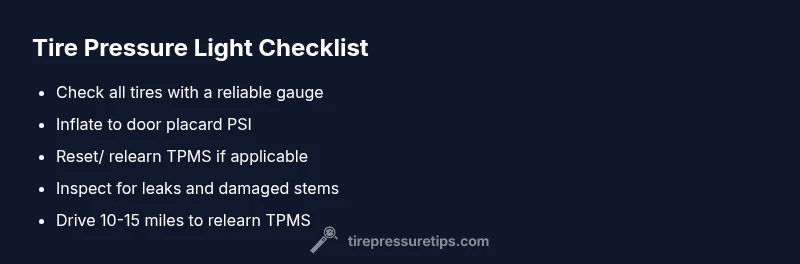
Low tire pressure or a faulty TPMS are the most common reasons the tire pressure light stays on. To address it quickly: check all tires with a reliable gauge, inflate to the vehicle's recommended psi, drive 10-15 miles to let the TPMS relearn, and reset the TPMS if your vehicle supports it. If the light remains after inflation, have the system inspected by a pro, and check for slow leaks and damaged stems.
Can you pass inspection with tire pressure light on? A practical, urgent reality check
If you’re asking, can you pass inspection with tire pressure light on, the short answer depends on whether the light is signaling real underinflation or a sensor fault. According to Tire Pressure Tips, inspectors focus on safety-critical issues like tire condition, tread depth, and proper inflation. A true underinflation issue will often be flagged, while a faulty TPMS or a slow leak may require targeted fixes. The goal is to ensure the tires meet minimum inflation requirements and that the TPMS system accurately reflects the tire state. For most drivers, inflating tires to the recommended psi and performing a TPMS relearn (if applicable) resolves the issue before inspection.
Key takeaway: you don’t want to gamble on the inspection—confirm the tires are within spec and the TPMS is functioning correctly before you go.
Quick, practical checks you can perform today
Before you worry about the inspection, run through a fast, practical checklist. Start with all four tires, plus the spare if your vehicle’s placard or TPMS setup requires it. Use a reliable gauge and verify the tire pressure against the placard on the driver’s door jamb. Consider temperature effects: cold mornings reduce psi and hot days can increase it. If any tire reads low, inflate to the specified value and recheck after driving a short distance. Resetting the TPMS (if your model supports it) may be necessary after inflating, replacing a sensor, or rotating tires. If your light stays on after inflation, it’s a signal to inspect for leaks or sensor faults. Remember: a tire at or near the recommended pressure is safer, improves fuel economy, and reduces wear.
Understanding TPMS and why the light might stay on
TPMS sensors monitor tire pressure in real time and trigger a warning when a tire drops below the recommended level or when sensors malfunction. Modern TPMS relies on sensor power (usually a battery inside the sensor) and sometimes a relearn process to recognize new sensor IDs after tire rotation or replacement. If a sensor is weak or dead, the light can stay on even after inflating tires. In other cases, a damaged valve stem or a slow leak can keep the system alerting. To interpret the light correctly, you need to check both physical inflation and the sensor health.
Common scenarios that trigger the warning
Several scenarios can trigger the light: (1) underinflation across one or more tires; (2) a slow leak from puncture, bead seal, or valve stem; (3) a TPMS sensor that needs relearning after a tire rotation, tire replacement, or battery issue; (4) temperature-driven pressure fluctuations that push readings below the threshold. Understanding these helps you decide the best course of action. A quick fix is to inflate tires to the proper level and reset the TPMS if possible. If the light persists, you should inspect the tires and sensors more deeply or seek professional assistance.
How to prep your vehicle for inspection day
Plan ahead so the inspection goes smoothly. Confirm tire pressures match the door placard, including the spare if required by your local rules. Ensure there are no obvious tire damages, bulges, or cracks. If you recently rotated tires or changed sensors, consider performing a TPMS relearn. Some vehicles require a specific sequence for relearn, so consult the owner’s manual or a trusted technician. Finally, bring any receipts for tire services as proof of maintenance if asked by the inspector.
If you discover a slow leak or damaged tire
A slow leak can be tricky because it may not be obvious at a glance. Look for visible punctures, nails, or cuts, and listen for hissing around the bead area or valve stems. For suspect tires, apply soapy water around the tire bead and valve to identify air leaks. If you locate a leak, consider repairing if the tire is tubeless and repairable, or replacing if the tire is damaged beyond repair. Do not ignore a slow leak; it affects safety and can fail an inspection.
Steps
Estimated time: 45-60 minutes
- 1
Check tire pressures with a reliable gauge
Begin by measuring each tire’s pressure when cold. Compare against the placard value on the driver door jamb. Record any discrepancies before you start inflating.
Tip: Use a digital gauge for accuracy and note the PSI for each tire. - 2
Inflate to recommended PSI
Inflate each tire to the exact PSI listed on the placard. Don’t rely on a single gauge; double-check with another gauge if possible. Recheck after 3-5 miles of driving to account for settling.
Tip: Never exceed the maximum tire pressure indicated on the tire sidewall. - 3
Reset or relearn TPMS if applicable
If your vehicle supports a TPMS relearn, follow the owner’s manual steps to reset. Some cars require key-on, ignition-off cycles or specific sequence with the ignition.
Tip: If you’re unsure, a quick visit to a dealership or independent shop can save time. - 4
Check for leaks and inspect valves
Look for slow leaks around valve stems, bead seats, and sidewalls. Apply soapy water to suspect areas to see if bubbles form. Address any leaks promptly.
Tip: Tighten valve caps firmly to reduce slow leakage. - 5
Drive short distances to trigger relearn
Some TPMS systems relearn after driving 10-15 miles at highway speeds. This helps the system update and may extinguish the warning if no sensor faults exist.
Tip: Avoid aggressive driving during relearn window to prevent false readings. - 6
Know when to seek professional help
If the light remains on after inflating and relearning, or you notice a physical tire issue, consult a trained technician. Persistent warnings may indicate sensor faults or deeper issues.
Tip: Bring tires and TPMS service history when visiting a shop.
Diagnosis: Tire pressure light remains on after inflating to recommended PSI
Possible Causes
- highUnderinflation persists due to slow leak or incorrect target PSI
- mediumFaulty or aging TPMS sensor/battery
- lowTPMS relearn not completed after tire rotation or replacement
Fixes
- easyRecheck all tires with a calibrated gauge and inflate to the door placard PSI; recheck after driving 10-15 miles.
- easyInspect tires for slow leaks, punctures, or damaged valve stems; repair or replace as needed.
- easyPerform TPMS relearn/reset according to the vehicle manual or have a dealer/auto shop perform a relearn.
Frequently Asked Questions
Can you legally pass a vehicle inspection with the tire pressure light on?
Most jurisdictions require that the tires are safely inflated and the TPMS system is functioning. If the light remains on due to a sensor fault, you may need service before a passing inspection. Always fix underinflation first and ensure the TPMS is communicating correctly.
In many places, safety checks require proper inflation and a working TPMS. If the light stays on due to a sensor issue, service is typically needed before passing.
What is TPMS, and how does it relate to the warning light?
TPMS stands for Tire Pressure Monitoring System. It monitors air pressure and triggers a warning when readings are out of spec. Malfunctions or relearn needs can cause the light to stay on even after inflation.
TPMS monitors tire pressure and warns you when readings are off. If it malfunctions or needs relearning after rotation, the light may stay on.
Why would the light stay on after I’ve inflated the tires?
Possible causes include a slow leak, a faulty sensor, or a TPMS relearn that hasn’t completed after tire work. Double-check air pressure, inspect for leaks, and run a relearn if your vehicle supports it.
If the light stays on after inflation, check for leaks and sensor issues, and perform a relearn if possible.
How often should I check tire pressure?
Check tire pressure at least once a month and before long trips. Temperature changes can affect readings, so recheck after driving or during seasonal shifts.
Check your tires monthly and before trips, especially when the weather changes.
Is it safe to drive with the TPMS light on?
If the light is on due to low pressure, driving slowly to a safe location to inflate is okay. If you suspect a sensor fault or damaged tire, limit driving and seek professional help.
If the light means low pressure, drive carefully to fix it; if you suspect sensor issues, get help sooner.
When should the TPMS sensor battery be replaced?
Sensor batteries typically last several years, but performance can vary. If the light behaves erratically or signals an imminent fault, a professional TPMS sensor check is advised.
Sensor batteries last years, but if readings are unstable, have them checked by a shop.
Watch Video
What to Remember
- Inflate tires to the placard pressure and verify with a reliable gauge
- Reset TPMS after inflation or sensor work to ensure accurate readings
- Inspect for slow leaks and damaged valves if the light stays on
- If unsure, consult a professional to avoid inspection failure