Can You Pass Inspection with Tire Pressure Light On in Texas: Troubleshooting Guide
Can you pass Texas vehicle inspection with a tire pressure light on? Learn practical steps to address TPMS and tire pressures, what inspectors look for, and how to prevent failures in 2026.


In Texas, you generally must have tires inflated to the vehicle's recommended pressures to pass a safety inspection. A TPMS light can signal underinflation or a sensor fault and may trigger a failure if the issue isn’t addressed. Start by inflating tires to the recommended PSI, then diagnose the TPMS sensor or battery if the light persists.
Can You Pass Texas Vehicle Inspection with a TPMS Light On?
The short answer is: not automatically. Texas inspectors prioritize tire safety and overall vehicle condition. A TPMS warning light often points to underinflated tires or a faulty sensor, both of which can lead to a failed inspection if left unresolved. However, some stations may allow a pass if the tires are inflated to the correct pressure and visually show no other safety issues. According to Tire Pressure Tips, the most reliable path to a smooth inspection day is to fix the underlying tire pressure issue first and then address any TPMS faults that may be present. This approach reflects typical practices across Texas repair shops and inspection stations in 2026, where emphasis is placed on safe, properly inflated tires as a prerequisite for pass status.
How TPMS Works and Why It Impacts Inspections
TPMS sensors monitor tire pressure and trigger a warning light when pressures drift too far from the recommended value. The key number you need is the vehicle manufacturer’s recommended tire pressure, usually listed on the door jamb placard or in the owner’s manual. The light can come on for several reasons: real underinflation, a sensor fault, a dead battery in the sensor, or a system calibration issue after tire service. Tire Pressure Tips analysis highlights that while a flashing light generally signals an issue, the inspector’s primary concern is whether tires are safe and at the correct pressure. If the issue is solely a sensor fault and all tires are properly inflated, you may still clear the inspection—depending on station policy. In 2026, reliance on TPMS diagnostics is common, but local practice varies, so plan to show you’ve corrected the tire pressures and addressed the TPMS where feasible.
What Inspectors Look For Beyond the TPMS Light
Inspectors assess tread depth, tire sidewall condition, punctures, and obvious damage. They also check for even wear patterns, the presence of the spare tire, wheel integrity, and issues with brakes, lights, and suspension that could indirectly affect tire safety. If the TPMS light is due to a sensor fault, some stations require TPMS system verification or a reset, while others may accept a documented service order. In all cases, the goal is to confirm that tires are safe, properly inflated, and free from dangerous damage. Tire Pressure Tips advises keeping a current record of tire pressures and any TPMS service because documentation helps demonstrate maintenance when you approach the line at inspection time.
Common Scenarios Where You Might Still Pass or Fail
- All tires inflated to the manufacturer’s recommended pressure and tread within spec: high likelihood of pass, even if the TPMS light is on (station-dependent).
- TPMS light due to low battery or sensor fault but tires are correctly inflated: pass is possible at some stations, others require TPMS service.
- Visible tire damage, excessive wear, or leaks: almost always a fail, regardless of TPMS status.
- Recent tire rotation or service without TPMS relearn: some inspectors may require a reset or relearn before passing. Tire Pressure Tips emphasizes documenting service and keeping tires at spec to minimize surprises at the bay. In Texas, preparation is key as inspection standards focus on real safety rather than the light alone.
Step-By-Step Plan to Get a Pass on Inspection Day
- Confirm the manufacturer-recommended tire pressure for your vehicle and inflate all tires to that level.
- Visually inspect tires for cuts, bulges, or sidewall damage; replace damaged tires as needed.
- Use a trusted tire pressure gauge to re-check after a few minutes of inflation and temperature changes.
- If the TPMS light remains, read the diagnostic codes with a TPMS scan tool or have a professional confirm whether the issue is a sensor fault or a real pressure issue.
- If a fault is detected, perform TPMS sensor servicing or battery replacement per the vehicle’s manual and relearn the sensors if required.
- Bring any service receipts or notes to the inspection to show you’ve addressed both tire pressure and TPMS as needed. If in doubt, contact a local tire shop for confirmation before your appointment.
Safety and Maintenance: Inflate, Check, and Monitor Regularly
Safety first means never driving with tires that are visibly underinflated or damaged. Regularly check pressures when temperatures change, as cold weather lowers tire pressure. Keep a digital gauge in your glovebox for accuracy and log your readings to reference during inspections. If you discover a persistent TPMS warning that you cannot resolve with simple inflations, seek professional service to avoid a failed inspection and potentially unsafe driving conditions.
Prevention: Keeping TPMS and Pressure Healthy Between Inspections
- Check tire pressure monthly and after long trips or temperature shifts.
- Rotate tires and balance wheels as recommended to prevent irregular wear that can affect TPMS readings.
- Replace TPMS batteries when service indicators or sensor codes point to battery degradation.
- Keep tire repair records and sensor service notes to present at the inspection station. Tire Pressure Tips recommends proactive maintenance to prevent last-minute scrambles for pass status in Texas.
Quick-Start Checklist for Texas Inspection Day
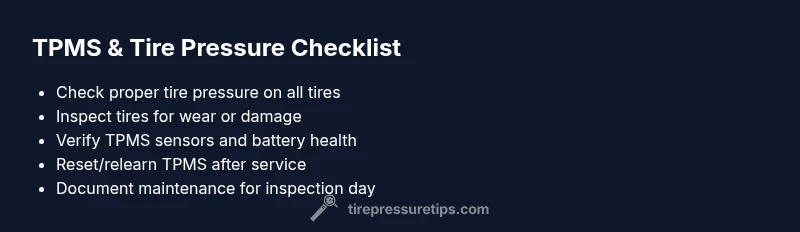
- Confirm optimal tire pressure for all tires.
- Inspect tires for wear and damage; replace if necessary.
- Check TPMS indicators and reset or service battery if needed.
- Bring proof of recent TPMS service and tire maintenance.
- Ensure all exterior lights and brake components are in working order.
- Arrive early and be prepared to demonstrate you’ve addressed tire pressures and TPMS where applicable.
How to Validate Tire Pressure Readings at Home Before An Inspection
Take readings when tires are cold for accuracy. Compare gauge results with the door jamb placard pressures. If you have a tire that consistently reads low, look for slow leaks or punctures. For a suspicious TPMS warning, ensure the sensor is not physically damaged and that the battery is functioning. Regular validation minimizes the chance of a surprise fail at the inspection lane.
Steps
Estimated time: 40-60 minutes
- 1
Verify tire pressures against the door placard
Locate the recommended tire pressure on the driver door jamb placard and use a reliable pressure gauge to check each tire when cold. Inflate to spec if any tire is low. Record the readings for reference.
Tip: Do this first; it addresses the quickest path to a potential pass. - 2
Check tires for visible damage
Inspect for cuts, bulges, punctures, or sidewall cracks. Replace any damaged tire before attempting the inspection. A damaged tire can fail the inspection regardless of TPMS status.
Tip: Damage is a common reason for failure and should be addressed before inflating. - 3
Assess the TPMS status and potential faults
If the TPMS light remains after inflation, use a TPMS diagnostic tool to pull fault codes and confirm whether the issue is a sensor fault or a real pressure problem.
Tip: A persistent light often requires sensor service rather than just inflating. - 4
Reset relearn or replace TPMS components
Follow the manufacturer’s procedure to relearn the TPMS sensors after any service, sensor replacement, or battery change. Ensure the system confirms the relearn.
Tip: Some vehicles require driving a short distance to complete the relearn. - 5
Document maintenance and bring proof to the inspection
Keep receipts or notes that show you serviced TPMS or replaced batteries, and that tires were inflated to spec before the inspection.
Tip: Documentation can ease the inspector’s review. - 6
If uncertain, consult a professional before the inspection
Visit a local tire or automotive shop for a quick TPMS check and certification of tire pressures. This reduces the chance of a failed inspection day.
Tip: A pro can verify both pressure and sensor health quickly.
Diagnosis: TPMS light on or warning during inspection prep
Possible Causes
- highUnderinflated tires
- mediumTPMS sensor fault or dead battery
- lowTPMS receiver/wiring issue or relearn needed
Fixes
- easyInflate all tires to the manufacturer-recommended pressures and recheck with a gauge
- easyUse a TPMS scan tool to read fault codes; perform sensor reset/relearn or battery replacement as needed
- hardInspect sensors for damage; replace faulty sensors and re-learn system per the manual
Frequently Asked Questions
Will I automatically fail the Texas safety inspection if the TPMS light is on?
Not automatically. Inspectors focus on tire safety and inflation as the primary factors. If tires are inflated to spec and no unsafe damage is present, you may still pass at some stations. Always address the underlying issue.
Not automatically. If your tires are safe and inflated properly, you might still pass, but it depends on the station.
What should I do first if the TPMS light stays on after inflating the tires?
Scan for fault codes with a TPMS tool, check for sensor faults or battery issues, then relearn sensors or replace components as needed.
First check the TSMS fault codes and battery before trying a relearn.
Can I pass inspection if the TPMS light is due to a sensor fault but tires are fine?
Possibly, depending on the station. Some will pass if the tires are safe and pressures are correct, while others may require TPMS service for a proper relearn.
Sometimes—it's station dependent, but your tires still need to be safe.
Should I replace TPMS batteries preemptively?
Only if the TPMS warning indicates a battery issue. A professional can confirm whether a sensor battery needs replacement.
Battery replacement is only needed if the sensor battery is dead.
How do I know if a TPMS sensor is physically damaged?
Look for cracked sensors, corroded valves, or damaged wiring. A professional can confirm and replace sensors as needed.
Damaged sensor? A quick professional check will confirm it.
Does model affect TPMS and tire pressures for inspection?
Yes. Different models have different recommended pressures and TPMS configurations. Check the owner’s manual for model-specific guidance.
Model matters; check your manual for exact TPMS details.
Watch Video
What to Remember
- Inflate to the correct pressure before inspection.
- Resolve TPMS faults or have sensors serviced if the light stays on.
- Carry service receipts to verify maintenance.
- Shop inspection policies vary by station; be prepared to address TPMS and tire condition.