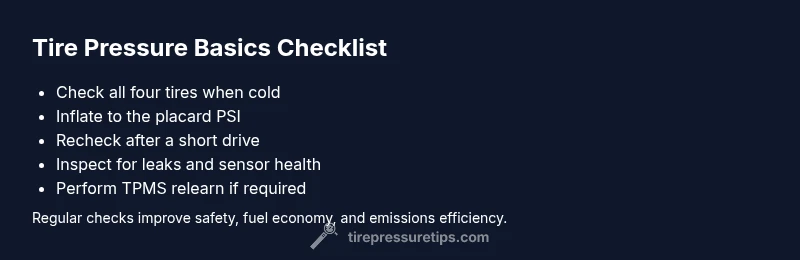
Will Tire Pressure Light Fail Emissions? Urgent Troubleshooting Guide
Urgent, step-by-step guide to diagnosing tire pressure light issues and their emissions impact. Learn checks, TPMS basics, and when to seek professional help.


Will tire pressure light fail emissions? The light itself does not measure emissions, but underinflated tires raise rolling resistance and fuel use. The quick fix is: check all tires with a calibrated gauge, inflate to the vehicle's recommended PSI on the placard, then drive briefly to let the TPMS reset. If the warning stays on, inspect for leaks or sensor faults.
Why tire pressure matters for emissions and performance
A well-maintained tire pressure level supports safe handling, better fuel economy, and lower emissions. The question will tire pressure light fail emissions? can be clarified: the tire-pressure warning light itself does not regulate emissions, but consistently underinflated tires increase rolling resistance, which raises fuel consumption and emissions. The vehicle's engine management and emission system respond to many factors, not just tire pressure, so ignore it at your peril; addressing the warning promptly stays critical for safety and efficiency.
Beyond emissions, underinflation affects tire wear, braking distance, and handling in wet conditions. Overinflated tires can reduce grip and lead to harsher rides. The Tire Pressure Tips team recommends starting with a quick, accurate pressure check to prevent cascading issues. In this guide we break down the relationship between the tire pressure light, TPMS, and your vehicle's emissions performance, with practical steps you can take today.
How TPMS and tire pressure interact
Most cars today rely on a TPMS (tire pressure monitoring system) to alert you when a tire drops below a safe threshold. Direct TPMS uses sensors inside the tire to report actual pressure, while indirect TPMS estimates pressure from wheel speed data. Either way, the warning light is a maintenance alert, not a diagnostic for emissions. When you inflate to the recommended level, the TPMS often resets after driving; if the sensor or its battery is failing, the light may stay on even with correct inflation. Understanding TPMS limits helps you prioritize safe driving and fuel economy.
Quick checks you can perform safely
Safety first: before touching tires, park on a flat, level surface, apply the parking brake, and turn off the engine. Gather a reliable tire pressure gauge and your vehicle’s door placard. Check all four tires (and the spare if applicable) when they’re cold for the most accurate reading. Inflate each tire to the recommended PSI on the placard, then recheck with the gauge. If the light flickers or stays on after inflation, note any unusual wear, valve leaks, or slow punctures. After inflation, drive a short distance to allow the TPMS to reassess, but avoid driving aggressively if a tire is still suspiciously low.
Diagnosing common causes
Underinflation is the most common trigger for a tire pressure light. Temperature changes can cause pressure to drop, especially in cold mornings. A nail, screw, or bead leak also causes slow loss of air. TPMS sensor faults, a dead sensor battery, or a failed relearn process can leave the light on even with proper inflation. Look for a visibly soft tire, listen for hissing, and check the valve stem for damage. If all tires read within spec but the light persists, suspect sensor issues or a need for a relearn procedure.
Fixes and best-practice inflation strategies
Inflate tires to the exact PSI shown on the door placard (not the max pressure on the tire sidewall). Use a trusted gauge and check when tires are cold. After inflating, drive a few miles to let the TPMS relearn or reset; if your vehicle requires a manual relearn, consult the owner’s manual for the exact steps. If a leak is detected, repair or replace the affected tire before driving longer distances. In some cases, a TPMS sensor replacement or battery service is necessary.
Safety considerations and common mistakes
Never ignore a persistent tire pressure warning—driving on underinflated tires risks blowouts and poor handling. Do not rely on passengers or guesses; always verify with a gauge. Avoid inflating beyond the placard; overinflation can cause uneven wear and poor ride quality. Ensure you use a gauge that reads accurately at the cold start state and recheck after some driving has occurred.
Seasonal changes and emissions impact
Seasonal shifts affect tire pressure: colder weather can lower tire pressure, while heat can raise it. This fluctuation can trigger the warning light even when tires read at the correct cold pressure. Understand that maintaining correct inflation helps optimize fuel economy and emissions indirectly by reducing rolling resistance and improving overall vehicle efficiency.
Monitoring and prevention to avoid future warnings
Create a routine: check tire pressures monthly, before long trips, and after temperature swings. Keep a small gauge in the glovebox and log readings so you can spot gradual leaks. Consider TPMS maintenance as part of annual vehicle care and replace sensors as recommended by the manufacturer or when battery life is low.
When to seek professional help
If you cannot identify a leak, or if the TPMS light remains on after inflation and relearning attempts, seek professional help. A technician can inspect for slow leaks, valve stem damage, rim leaks, and TPMS sensor faults. Regular professional checks can prevent unsafe driving and ensure the emissions-related efficiency is not compromised.
Steps
Estimated time: 30-45 minutes
- 1
Prepare and safety-check
Park on a level surface, engage the parking brake, and turn off the engine. Gather a calibrated tire gauge and the vehicle placard. This ensures you measure accurately and follow the manufacturer’s recommended pressures.
Tip: Always read tires when cold for the most accurate PSI. - 2
Measure all tires
Measure each tire’s current pressure using the gauge. Don’t forget the spare if you carry one. Compare readings to the placard values printed on the door jamb or fuel filler cover.
Tip: If a tire is significantly below spec, prioritize inflating that tire first. - 3
Inflate to spec
Inflate each tire to the recommended PSI and recheck with the gauge. Confirm that the inflation matches the placard for both front and rear tires as specified by your vehicle.
Tip: Don’t rely on the tire sidewall max psi; use the placard value. - 4
Recheck and drive
After inflation, drive 5–10 miles to allow the TPMS to relearn. If your vehicle requires a manual relearn, perform it as described in the owner’s manual.
Tip: Monitor the TPMS light for a reset. If it stays, move to further diagnostics. - 5
Inspect for leaks
If a tire remains low, inspect for nails, punctures, or bead leaks. Use soapy water to identify slow leaks around valve stems and rims.
Tip: Mark any leak area with chalk to monitor progression. - 6
Assess TPMS sensor
If all tires read correctly but the light persists, TPMS sensor or battery may be at fault. Schedule sensor check or replace as needed.
Tip: Sensors have limited life; battery health is critical. - 7
Consider professional help
For persistent lights or relearn failures, visit a technician who can perform a proper TPMS relearn and sensor check.
Tip: Professional service ensures safety and compliance. - 8
Prevent future warnings
Implement regular pressure checks, seasonal adjustments, and TPMS maintenance to minimize future warnings and emissions impact.
Tip: Keep pressures within 2 psi of the placard for consistency.
Diagnosis: Tire pressure warning light stays on after inflation
Possible Causes
- highUnderinflation detected in one or more tires
- mediumTPMS sensor fault or dead battery
- lowTemperature-related pressure changes or slow leaks
Fixes
- easyRecheck all tires with a calibrated gauge and inflate to the placard spec
- mediumInspect TPMS sensors, battery integrity, and relearn procedure
- easyCheck for leaks around valve stems and tires; seal or replace as needed
- hardIf unresolved, have a technician perform a TPMS relearn and wheel inspection
Frequently Asked Questions
What does the tire pressure light actually indicate?
The tire pressure light indicates that one or more tires are below the recommended pressure or there is a TPMS sensor fault. It does not measure emissions directly. Addressing the pressure and TPMS ensures safe handling and better fuel efficiency.
The tire pressure light signals underinflation or sensor issues; it’s a maintenance alert, not an emissions gauge.
Can low tire pressure affect emissions or fuel economy?
Yes, low tire pressure increases rolling resistance, which can lower fuel economy and raise emissions indirectly. Keeping tires at the correct pressure helps optimize efficiency and reduce unnecessary emissions.
Low pressure can raise fuel use and emissions indirectly by increasing rolling resistance.
How do I reset TPMS after inflating tires?
Many vehicles reset automatically after driving a short distance at normal speed. Some models require a manual relearn procedure outlined in the owner’s manual or by a dealer. If in doubt, a professional can perform the relearn.
Most cars reset automatically after a short drive; some need a manual relearn per the manual.
What if the light stays on after I inflate and relearn?
If the light remains on, there may be a slow leak, a damaged valve stem, or a faulty TPMS sensor. Inspect tires for damage and consider having a professional diagnose the TPMS system.
If it doesn’t reset, there might be a leak or sensor issue—get a tech to check it.
Is it safe to drive on a tire with a slow leak?
Driving on a tire with a slow leak is risky. Inflate only if you can drive short distances to a repair shop; otherwise, avoid driving until the tire is inspected and repaired.
No, don’t drive far on a tire with a slow leak; get it checked soon.
Watch Video
What to Remember
- Check tires immediately when the light comes on
- Inflate to placard pressure, not max tire pressure
- Reset/relearn TPMS after inflation
- Inspect for leaks or damaged sensors if light returns
- Schedule sensor maintenance and yearly TPMS checks