Why Do Tire Pressure Get Low? A Practical Troubleshooting Guide
Discover the main reasons tires lose air, how to accurately check pressure with gauges and TPMS data, and practical steps to fix and prevent low tire pressure for safer driving.


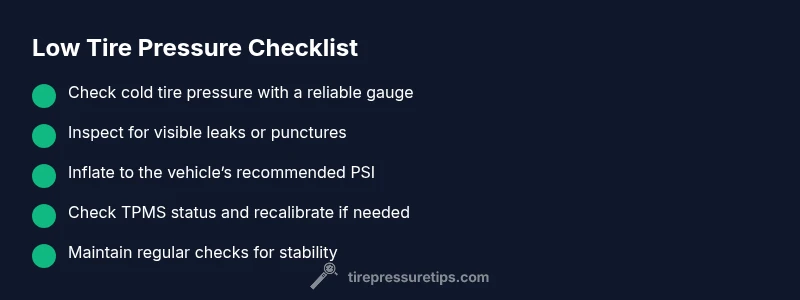
Low tire pressure is usually caused by slow leaks, temperature changes, and gradual air loss over time. The quickest fix is to check all tires with a reliable gauge, locate any punctures or seal failures, and top off to the vehicle’s recommended pressure. If the TPMS light stays on or leaks persist, a professional inspection is advised.
What Causes Low Tire Pressure
Tire pressure is not a fixed value; it changes with every mile and every weather shift. According to Tire Pressure Tips, many drivers experience low readings not just after a puncture, but from everyday wear and environmental factors. The most common causes include slow leaks from nails or bead leaks that let air escape gradually, aging or damaged valves, and the natural tendency of rubber to permeate tiny amounts of air over time. Temperature also plays a significant role: as outdoor temperatures drop, air contracts and pressure falls inside the tire. Potholes, curb damage, and a bent rim can create micro leaks that worsen over days. Finally, uneven tire wear or mismatch among tires can cause inconsistent readings across the axle. Understanding these factors helps you prioritize checks, identify warning signs, and prevent air loss before it affects handling or fuel economy. The Tire Pressure Tips team emphasizes that quick action now prevents bigger problems later.
The Role of Temperature and Weather
Temperature is a silent but powerful factor in tire pressure. When the air outside cools, the air inside your tires contracts, reducing psi even if the tire isn’t visibly damaged. In many regions, a simple drop from 70°F to 40°F can shave a noticeable amount off your tire’s pressure. Conversely, hot days can temporarily raise tire pressure, which may mask slow leaks. For drivers who live in areas with big seasonal shifts, it’s smart to check pressure more often during transition months. By understanding these dynamics, you can plan checks around weather forecasts and avoid surprises on morning commutes.
The TPMS: How It Works and What It Tells You
Tire Pressure Monitoring Systems (TPMS) are your real-time pressure alarms, but they aren’t perfect. They alert you when a tire drops below the recommended range, not when a tire is mildly low yet still drivable. A TPMS warning means you should verify readings with a gauge since sensors can drift over time or become faulty. If you notice inconsistent readings between tires, or if the warning reappears after inflating to spec, consider a sensor inspection or recalibration. The TPMS is a valuable safety feature, but it works best when paired with regular manual checks.
How to Check Tire Pressure Accurately
Always measure tire pressure when the tires are cold, ideally after the car has been parked for at least three hours. Remove the valve cap and press the gauge onto the valve stem firmly, then read the gauge without twisting. Compare the reading to the vehicle’s recommended pressure printed on the door jamb sticker or owner’s manual. Repeat on all tires, including the spare if your vehicle requires it. If a tire reads low, add air in small increments and recheck until you reach the recommended level. For the most accurate results, measure with the same gauge each time.
Quick Fixes You Can Do Today
If you discover a tire reading low, top it up to the recommended level right away and drive a short distance to let the pressure settle. Recheck after a few miles of driving, especially in fluctuating temperatures. If you notice a rapid drop again, inspect for obvious leaks, punctures, or damaged valve stems. In the meantime, keep a portable air compressor or a reliable tire inflator handy for on-the-go maintenance. Always avoid over-inflation, which can cause a harsh ride or uneven wear.
Common Leaks to Watch For
Leaky tires can stem from several sources. Common culprits include embedded nails or screws, bead leaks around the rim, cracked sidewalls, and deteriorating valve stems. A slow leak may be hard to spot, so a soapy water test around the bead and valve stem can reveal bubbling leaks. Inspect the wheel rim for corrosion or damage that could prevent a proper seal. If you find a leak, repair or replace as soon as possible to restore safe driving performance.
Maintenance and Prevention to Keep Pressure Stable
Proactive maintenance is the best defense against sudden pressure loss. Check tire pressure monthly and before long trips, and more often in extreme weather. Rotate tires as recommended by your manufacturer to promote even wear and consistent readings. Replace aging valves or TPMS batteries if readings drift. Store spare tires with proper pressure and inspect for cracks or bulges. Finally, adopt a habit of keeping a quality gauge in your glove box for accurate checks anywhere.
When to Seek Professional Help
If you notice a persistent low reading after inflating to spec, or if the TPMS light stays on after a proper inflating cycle, seek professional inspection. A technician can inspect for slow leaks, damaged rims, or TPMS sensor faults that require recalibration or replacement. If a tire shows visible sidewall bulges, cords, or rapid deflation, stop driving and replace the tire. In safety-critical situations, it’s better to err on the side of caution and consult a professional promptly.
Safety Tips for Checking and Adjusting Tire Pressure
Always perform checks in a safe area away from traffic. Use eye and hand protection if you’re inspecting for leaks or damaged valves. Do not lean on hot tires after a drive—wait for them to cool to avoid burns or inaccurate readings. When inflating, monitor the gauge closely and avoid over-inflation, which can lead to a burst tire or irregular tread wear. If you’re unsure about a leak’s source, consult a professional rather than guessing.
Steps
Estimated time: 20-35 minutes
- 1
Check tires when cold
Park in a shaded, safe area and wait several hours if possible. Avoid checking immediately after driving, as heat can skew readings. This ensures you’re measuring true cold pressure.
Tip: If you must check after a drive, note the temperature effect and recheck after cooling down. - 2
Use a reliable gauge
Select a high-quality gauge and use it consistently. Remove the valve cap, press the gauge onto the stem firmly, and read the measurement without twisting. Compare to the vehicle’s recommended PSI.
Tip: Keep a digital gauge in the glove box for quick, precise readings. - 3
Inflate to recommended PSI
Inflate each tire to the manufacturer’s specified pressure, not the maximum tire sidewall pressure. Check the measurement again after inflation for accuracy.
Tip: Inflate in small increments; overinflation can cause reduced traction and uneven wear. - 4
Check all tires
Inspect all four tires and the spare (if applicable). Don’t forget to check for irregular wear patterns that may indicate alignment or suspension issues affecting pressure.
Tip: A single underinflated tire can compromise handling and fuel economy. - 5
Inspect for leaks
Look for nails, screws, cracks in the sidewall, or bead leaks. Apply a soapy solution to suspected areas to spot bubbles that indicate a leak.
Tip: If you hear hissing, stop and replace or repair the tire immediately. - 6
Test TPMS status
If the light persists after inflation, scan the system with a TPMS tool or visit a shop to verify sensor function and calibration.
Tip: Some vehicles require a drive cycle to reset TPMS after inflation. - 7
Drive and recheck
After inflating, drive a short distance and recheck pressures to confirm stability. Temperature and wheel conditions can cause small fluctuations.
Tip: If pressure continues to drop, stop driving and seek professional help. - 8
Document and schedule maintenance
Keep a log of readings and maintenance. Schedule regular checks, especially before long trips and during seasonal changes.
Tip: Set monthly reminders to avoid neglect. - 9
Know when to seek help
If you can’t locate the leak or the TPMS remains faulty after calibration, consult a tire service professional promptly.
Tip: Safety first: driving on a consistently underinflated tire can be dangerous.
Diagnosis: Tire pressures read low on one or more tires or the TPMS warning light is on after a period of normal readings.
Possible Causes
- highSlow puncture or bead leak from a nail, screw, or rim
- highTemperature-related pressure drop due to seasonal changes
- mediumTPMS sensor fault or calibration drift
Fixes
- easyInspect tires for nails, screws, or bead leaks; repair or patch as needed
- easyInflate to the recommended pressure and recheck after driving a short distance
- mediumTest or recalibrate TPMS sensors with a diagnostic tool; replace faulty sensors if needed
Frequently Asked Questions
What are the most common reasons tires lose air pressure?
Most causes are slow leaks, temperature changes, and general air loss over time. Inspect for punctures, valve issues, and damaged rims to pinpoint the source.
Tires usually lose air due to slow leaks, temperature shifts, or normal air loss. Check for punctures, valve problems, or rim damage.
How often should I check tire pressure?
Check at least once a month and before long trips. Use a reliable gauge and compare with the vehicle’s recommended pressure.
Check your tire pressure at least monthly and before long trips with a good gauge.
Can TPMS be faulty?
Yes, TPMS sensors can drift or fail. If readings seem inconsistent, have a technician inspect and recalibrate or replace sensors if needed.
Yes, TPMS sensors can fail. If readings seem off, have a pro check them and recalibrate if needed.
Is driving with low tire pressure safe?
No. It increases heat buildup, wear, and blowout risk. Inflate to the correct pressure as soon as possible and inspect for leaks.
No, driving on low tires is unsafe. Inflate to the right pressure quickly and check for leaks.
How do I reset TPMS after inflating tires?
Many cars auto-reset with driving cycles; some require manual reset per the owner’s manual. If in doubt, have a technician perform the reset.
Most cars reset automatically with a drive cycle, but some need manual reset.
What is the normal tire pressure for my car?
Refer to the door jamb sticker or owner’s manual; avoid using the maximum tire pressure listed on the sidewall.
Check the door sticker or manual for the exact number; the sidewall number is not your target.
Watch Video
What to Remember
- Check tires when cold for accurate readings
- Inspect for leaks and patch promptly
- Use TPMS as guidance, verify with a gauge
- Prevent losses with regular maintenance