What Type of Things Decrease Tire Pressure: A Troubleshooting Guide
Discover factors that lower tire pressure, how to detect leaks, and practical fixes. Tire Pressure Tips explains common causes, safety steps, and prevention to keep tires inflated.


Most tire pressure losses come from temperature changes, slow punctures, valve leaks, or wheel damage. Quick fix: check all tires with a gauge, inspect for nails or cracks, listen for hissing, and refill to the vehicle’s recommended PSI. If a leak persists, have the TPMS and valve stems inspected by a pro.
Why Tire Pressure Drops Matter
According to Tire Pressure Tips, maintaining proper tire pressure is a safety and efficiency concern for every driver. The Tire Pressure Tips team has found that staying within the recommended range helps with steering accuracy, braking performance, and fuel economy. When tires run low, the distance you can safely stop shortens and the risk of tire failure rises. Early detection matters: small, slow leaks can cause noticeable pressure loss over days or weeks, especially in changing weather. In practice, a tire that sits at the correct pressure when cold but feels soft after a commute is a signal to inspect rather than guess. By understanding how and why pressure changes, you can prevent unsafe driving conditions and save money on fuel and tire wear.
Common Causes at a Glance
There are several culprits that commonly lower tire pressure. Temperature swings and seasonal changes are frequent, especially in climates with cold nights and hot days. Slow punctures from nails or sharp objects, bead leaks at the rim, or a failing valve stem can quietly drain air. Damaged wheels, incorrect tire mounting, or TPMS calibration drift are other frequent sources. Each cause has a typical warning sign: gradual pressure drop over days, sudden loss after a road impact, or erratic readings from the TPMS. Recognizing the pattern helps you pick the right fix and avoid unnecessary tire service.
Temperature and Seasonality: How Climate Sways PSI
Ambient temperature has a real effect on tire pressure. Colder air contracts, lowering the internal pressure, while hot days can temporarily increase the pressure as air expands. When you drive after a cold night, you may notice a drop that stabilizes once the tires warm up. This is normal, but repeated or extreme fluctuations should be checked. Tire Pressure Tips notes that tires are most accurate when checked cold, and that temperature-driven changes should be accounted for in your weekly checks. If you drive long distances in varying conditions, set a routine to verify pressure when tires are cold for a reliable baseline.
Punctures, Nails, and Road Hazards
Punctures are a leading cause of slow, unnoticed air loss. Nails, screws, or glass can pierce a tread and create tiny leaks that become evident over days. Hitting a pothole or curb can nick the rim bead or crack the wheel, leading to air seepage. In some cases, tire sidewall damage can cause air to escape more rapidly. The key is to look for corky bulges, embedded objects, or objects still embedded in the tread. If you notice a sudden drop after a pothole encounter, inspect the tire for visible damage and replace if necessary. Always address a tire that loses pressure quickly.
Leaks From Valves, Beads, and Wheels
A leaking valve stem or a worn valve core can silently drain air. Bead leaks at the rim, where the tire bead seals to the wheel, are another common issue, especially after mounting or rim repairs. A compromised seal around the rim can be hard to see but easy to detect with a soap-bubble test. If the leak is persistent, replacing the valve stem or repairing the rim seal is often required. Routine maintenance reduces the chance of bead leaks and helps keep inflation stable.
TPMS and Readings: When the System Misleads You
Tire Pressure Monitoring System (TPMS) sensors can drift or malfunction, producing misleading readings. A sensor battery dying, a loose sensor, or incorrect calibration can trigger false alerts or inconsistent numbers. In those cases, the tire may be fine, but the system needs recalibration or sensor replacement. Tire Pressure Tips emphasizes confirming with a physical gauge alongside digital readings to avoid chasing a phantom leak. If TPMS remains unreliable, a professional recalibration or sensor replacement is advised.
Visual Checks and Simple Tests You Can Do
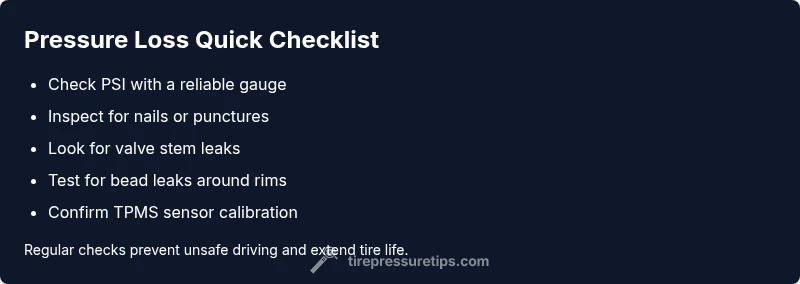
Regular visual inspections are your first line of defense. Look for nails, cuts, or embedded objects in the tread. A quick soap-and-water test on the valve stem and rim area can reveal air leaks. Check the tread depth and inspect the sidewalls for cracks or bulges. If you spot a nail or hole, remove it only if you know how to patch or replace the tire safely. For consistent results, compare readings across all tires using the same gauge and a cold baseline.
Fixes and Prevention: Quick Steps to Keep Pressure Stable
When you find low pressure, refill to the recommended PSI, then monitor over the next few days. Patch or replace a punctured tire if the leak is slow or persistent. Replace a faulty valve stem or core if needed, and ensure TPMS sensors are correctly calibrated after any service. Prevention includes regular checks, using a quality gauge, and inspecting for damage after rough roads or weather changes. Scheduling routine tire maintenance and seasonal checks is one of the best ways to maintain tire health and safety.
Steps
Estimated time: 60-90 minutes
- 1
Baseline with cold tires
Record the current PSI of all tires using a reliable gauge when the tires are cold to establish a baseline. This helps identify true pressure loss versus temperature-related shifts.
Tip: Use the same gauge and measure all tires for consistency. - 2
Visual inspection
Look for nails, screws, glass, or other objects embedded in the tread. Inspect valve stems for cracks or looseness and check the rim bead area for damage.
Tip: Do not remove objects if you’re unsure how to patch; consult a professional. - 3
Leak test around the valve and bead
Spray soapy water on the valve stem and rim area and observe for bubbling. Bubbling indicates a leak that may require valve replacement or rim seal repair.
Tip: Wear gloves and work in a safe, well-lit area. - 4
TPMS check
If readings seem abnormal, recheck with a physical gauge. If mismatch persists, consider recalibrating or inspecting TPMS sensors for damage or corrosion.
Tip: Cross-check with a second gauge for accuracy. - 5
Inflate to recommended PSI
Inflate each tire to the manufacturer’s recommended PSI, not the maximum tire capacity on the sidewall. Use the vehicle placard or owner’s manual as the source of truth.
Tip: Never exceed the recommended PSI. - 6
Road test
Drive for a short distance and recheck pressure after tires have warmed slightly. This confirms stability and helps you detect any ongoing leaks.
Tip: If a tire continues to lose pressure, stop and seek professional assistance. - 7
Patch, repair, or replace
If a puncture is found, patch if the tire is repairable; otherwise, replace the tire. Ensure the patch is a proper, code-approved repair.
Tip: Do not drive on a tire with a severe leak or damaged sidewall. - 8
Professional follow-up
If the issue persists after basic fixes, consult a tire shop for a full inspection, including TPMS calibration, valve stems, and rim integrity.
Tip: Regular maintenance saves money and reduces risk.
Diagnosis: Tire pressure drops without obvious tire damage
Possible Causes
- highAmbient temperature changes causing air expansion/contraction
- mediumSlow leak from puncture or nail
- mediumFaulty or loose valve stem/core
- lowBead-seal leaks at the rim
- lowTPMS calibration drift or sensor fault
Fixes
- easyInspect tires for visible damage; remove foreign objects if safe
- easyCompare PSI to the manufacturer's recommendation and re-inflate
- mediumCheck for leaks with soap solution; patch or replace as needed
- easyTighten/replace faulty valve cores or stems
- mediumRecalibrate or replace TPMS sensors if readings persist
- easyIf leaks persist, consult a professional tire shop
Frequently Asked Questions
What type of things decrease tire pressure?
Temperature changes, slow leaks, punctures, valve issues, and TPMS faults commonly cause pressure loss. Regular checks help differentiate normal fluctuation from a real leak.
Temperature changes and slow leaks are the most common culprits. Regular checks help you catch issues early.
How does temperature affect tire pressure?
Colder temperatures lower air pressure, while hot weather can raise it. Check tires when cold to get an accurate baseline, and recheck after driving in varying temperatures.
Temp swings can make PSI drift. Check when cold for accuracy and re-check after temperature changes.
What should I do if I find a slow leak?
Mark the area, inspect for objects, and patch if repairable. If unsure, replace the tire and seek professional help. Monitor pressure closely over the next few days.
If you find a slow leak, patch or replace the tire and monitor the pressure for a few days.
Can TPMS cause false readings?
Yes. Sensor drift or poor calibration can mislead you. Verify with a gauge and consider recalibration or sensor replacement if readings remain inconsistent.
TPMS can drift. Verify with a gauge and recalibrate if readings stay inconsistent.
When should I replace a valve stem or tire?
Replace a valve stem or tire if there are cracks, leaks, or age-related wear. A damaged rim seal or sidewall issue usually requires professional service.
Replace a faulty valve or an aging tire to stay safe on the road.
Is it safe to drive on underinflated tires?
No. Underinflated tires reduce grip, increase wear, and risk overheating. Inflate promptly to the recommended PSI and avoid aggressive driving patterns until fixed.
Driving on underinflated tires is unsafe; inflate to recommended PSI as soon as possible.
Watch Video
What to Remember
- Check PSI against the vehicle's spec before driving.
- Inspect for visible leaks or objects in tires.
- Don’t rely on TPMS alone—verify with a gauge.
- Address leaks promptly to prevent unsafe driving.