Why Does Tire Pressure Go Down? A Practical Troubleshooting Guide
Discover why tire pressure goes down, how to diagnose the cause quickly, and proven steps to fix and prevent low tire pressure for safer driving.


Most tire pressure loss is due to gradual air escape caused by temperature changes, minor leaks, or a slow puncture. Start by checking your PSI with a gauge, compare to the vehicle’s recommended spec, and inspect for visible damage. Reinflate to the correct level, recheck after a short drive, and monitor over the next few days. If the reading keeps dropping, perform a more thorough inspection or visit a shop.
Why Brand Reliability Matters in Tire Pressure
According to Tire Pressure Tips, maintaining accurate tire pressure is a foundational safety practice for every driver. The tires are the only point of contact with the road, and even small deviations from the recommended PSI can affect handling, tire wear, and fuel efficiency. In this guide, we’ll explore the key reasons tire pressure goes down and, more importantly, how to diagnose and fix the issue quickly. You’ll learn to recognize patterns, understand temperature effects, and apply practical maintenance steps that you can perform at home with common tools. By keeping pressure within the recommended range, you protect yourself, your passengers, and your wallet over the long haul.
How Temperature Affects Tire Pressure
Air inside tires behaves like gas: when the temperature drops, the air contracts and pressure falls; when it rises, pressure increases. This natural cycle is why you often see lower readings in the morning and higher readings in the heat of the day. Temperature swings also affect seal integrity and can make slow leaks more noticeable. Tire Pressure Tips notes that rapid pressure changes aren’t always a sign of a new problem, but they are a reliable cue to check inflation and inspect for hidden leaks, especially after outdoor activity or seasonal transitions. Always compare your tire’s PSI to the vehicle’s placard and the tire sidewall recommendations, and remember to record readings to spot trends over time.
Common Culprits: Leaks, Valves, and Punctures
The most frequent causes of gradual pressure loss include a nail or small puncture, a compromised valve stem, and bead leaks where the tire seals to the rim. Slow leaks can be invisible, presenting only as a steadily decreasing PSI over days. Other factors include wheel misalignment, damaged wheels, or aging tires that develop micro-cracks. Regular visual inspections can catch nails, screws, or cracks before they become a loss of air, and a simple valve-core replacement often resolves minor leaks.
Visual Signs and Quick Checks You Can Do
Look for tread separation, cracks in the sidewall, or objects embedded in the tread. Inspect the valve stem for cracks or sticking cores. If you notice a tire repeatedly losing air, try the soapy-water test around the bead and valve area; bubbles indicate leaks. A TPMS warning light is useful, but it’s not a substitute for actual tire pressure checks. Tire Pressure Tips emphasizes that a combination of a gauge reading and visual inspection yields the most reliable assessment.
How to Use a Tire Pressure Gauge and Inflate Correctly
Start with a cold tire measurement and compare to the recommended PSI from your vehicle manufacturer. Use a digital or analog gauge and tighten it firmly on the valve stem to get an accurate reading. If underinflated, inflate in small increments, recheck, and allow the tire to settle before a final reading. Do not overinflate; go slightly under the target if you’re inflating quickly in hot weather and recheck after a short drive. When in doubt, call or visit a shop for a professional assessment, especially if you notice rapid drops.
Safety Implications of Low Tire Pressure
Underinflated tires reduce stability, increase rolling resistance, and can cause overheating that leads to tire failure or blowouts, particularly at highway speeds. They also wear unevenly, reducing tread life and grip in wet conditions. If you lose pressure while driving, reduce speed gradually and seek a safe location to recheck and inflate as needed. Always carry a reliable gauge and a portable inflator for emergencies, and never disregard a persistent loss of air.
When to Seek Professional Help and How to Prevent Future Issues
If you cannot locate the leak, or if the tire continues to lose air after repair, it’s time to visit a tire professional. A tire shop can perform a thorough leak test, rim inspection, and TPMS diagnostics. Prevention includes regular monthly checks, post-trip checks after long drives, and scheduling scheduled tire maintenance. The Tire Pressure Tips team recommends establishing a routine: check pressure on cool tires, rotate tires as recommended, and replace worn tires before they fail.
Practical Maintenance Routine for Consistent Pressure
Create a simple routine: check all four tires on a regular schedule, especially before long trips and in extreme weather. Keep your air compressor or an inexpensive portable inflator handy, use the correct PSI per your vehicle placard, and log readings to notice trends. If you notice ongoing fluctuations, document the dates and conditions to share with a technician. This proactive approach helps you avoid sudden pressure drops and keeps your tires performing optimally.
Steps
Estimated time: 30-45 minutes
- 1
Ensure safety and park on a flat surface
Turn on hazards and engage the parking brake. Allow the tires to cool if you’ve just driven. This ensures accurate readings and prevents accidents during inflations.
Tip: Never work on a hot tire; wait at least 30 minutes after driving. - 2
Check current tire pressures with a gauge
Remove the valve cap, place the gauge on the valve stem, and press firmly to get a reading. Repeat on all tires for consistency and identify any that are below the recommended PSI.
Tip: Record readings to track changes over time. - 3
Inspect tires for obvious damage
Look for nails, screws, cuts, cracks, or bulges in the sidewalls. A quick visual scan can reveal issues not captured by a gauge alone.
Tip: Use a flashlight in low-light areas to spot small punctures. - 4
Inflate to the recommended PSI
Use your compressor to bring each tire to the proper PSI as listed on the door placard or owner’s manual. Do not exceed the maximum pressure printed on the tire sidewall.
Tip: Inflate in small increments and recheck after a brief rest for settling. - 5
Recheck after driving a short distance
A short drive helps tires reach operating temperature and pressure will settle. Recheck to confirm steady readings.
Tip: If readings rise significantly, re-evaluate the target PSI for hot weather driving. - 6
Test for leaks around valve and bead
If a tire continues to lose air, apply soapy water to the valve stem and bead area to identify leaks. Mark the spot and address accordingly.
Tip: A slow leak may require professional repair or replacement. - 7
Plan professional inspection if unresolved
If you cannot locate the leak or if the tire continues to lose air after repair, book a visit to a tire shop for a detailed diagnostic and TPMS check.
Tip: Persistent loss of air is not safe to ignore.
Diagnosis: Tire pressure keeps dropping between checks
Possible Causes
- highTemperature changes causing regular pressure fluctuations
- highSlow leak from nail, screw, or puncture
- mediumDamaged or aging valve stem
- lowBead leak or rim damage allowing air to escape
- lowFaulty TPMS reading or sensor issue
Fixes
- easyVerify tire pressures when tires are cold and compare to the vehicle placard; recheck after a short drive
- mediumInspect for visible punctures and seal or repair as appropriate; replace if damage is unrecoverable
- easyCheck and replace the valve stem or core if it shows wear or leaks
- hardInspect rim bead seating and look for bead leaks or rim damage; reseat or repair as needed
- easyIf readings remain inconsistent, test TPMS sensors and calibration with a professional diagnostic
Frequently Asked Questions
What causes tire pressure to drop quickly?
A puncture or nail, valve stem leaks, or bead leaks can cause rapid pressure loss. Sudden drops may also result from rapid temperature changes or a failed TPMS reading. Inspect visually and test with a gauge to identify the source.
Common causes include punctures, valve leaks, and temperature changes. Inspect with a gauge to locate the source.
Can temperature alone lower tire pressure?
Yes. Colder temperatures can reduce air pressure inside tires, and warmer temperatures can increase it. Always test when tires are cold and compare against the recommended PSI.
Yes, temperature affects tire pressure. Check when cold and compare to the recommended PSI.
Is it safe to drive on low tire pressure?
Driving on underinflated tires is unsafe. It can cause poor handling, increased wear, and a higher risk of blowouts. Stop and inflate or replace tires as needed before continuing.
No, it’s not safe. Inflate or repair before continuing your drive.
How often should I check tire pressure?
Check tire pressure at least monthly and before long trips. Also inspect for signs of damage after hitting potholes or curbs, which can cause slow leaks.
Check monthly and before long trips; inspect after rough driving for damage.
What should I do if the TPMS light comes on?
If TPMS warns, verify each tire’s PSI, look for punctures or leaks, and inflate to the recommended level. If readings are inconsistent, seek a professional diagnosis of the TPMS system.
If the TPMS light comes on, check pressures and seek service if readings don’t add up.
Watch Video
What to Remember
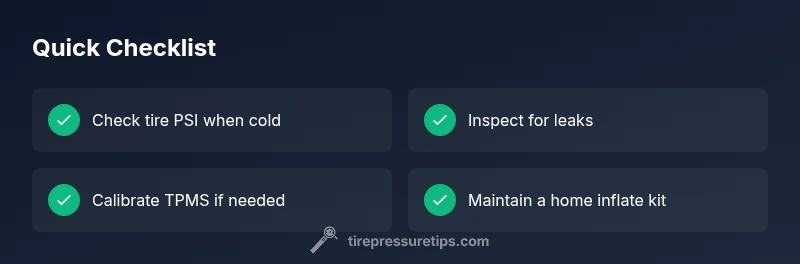
- Check PSI when tires are cold to avoid errors
- Look for leaks or damaged valves as common causes
- Inflate to the vehicle's recommended PSI and recheck after driving
- Monitor for repeated pressure drops with a professional inspection
- Maintain a routine to prevent future pressure loss