Why Tire Pressure Goes Down Overnight: A Practical Troubleshooting Guide
Learn why tire pressure goes down overnight, how to diagnose the cause, and practical fixes to keep your tires safe. A step-by-step troubleshooting guide from Tire Pressure Tips.


Most likely cause is temperature-driven air contraction and minor leaks. Start by confirming the tires are cold, inflate to the vehicle's recommended cold PSI, and recheck after a few hours. If the drop continues, inspect valve stems and TPMS for slow leaks.
Why does tire pressure go down overnight? A concise explanation
The exact question “why does tire pressure go down overnight” comes up often when drivers wake to a lower PSI. According to Tire Pressure Tips, overnight changes are typically tied to three practical realities: temperature shifts, small leaks, and natural air migration inside the tire. This means a small overnight drop is common and not always a sign of a dangerous fault—but it is a cue to check before you drive. The Tire Pressure Tips team emphasizes measuring cold tires and using the vehicle's recommended cold PSI for accurate readings.
Temperature shifts and their impact on tire air
Air expands when warm and contracts when cold. Overnight temperatures usually fall, causing the air inside each tire to contract slightly and the pressure to drop. Individual tires can respond differently based on load, speed history, and wheel position. This is a normal physical process, not a failure mode, but repeated large drops warrant closer inspection because they can mask slower leaks or TPMS issues.
Other culprits: slow leaks, valves, and TPMS quirks
While temperature explains much of an overnight drop, several other factors can contribute. Slow leaks from nails or wheel damage, faulty valve stems or cores, and TPMS sensor issues can silently reduce pressure. Be mindful of obvious signs: a hissing sound, tire sidewall damage, or a tire that takes longer to pressurize than others. Regular inspections help catch these problems early and prevent flats.
How to check tire pressure accurately and safely
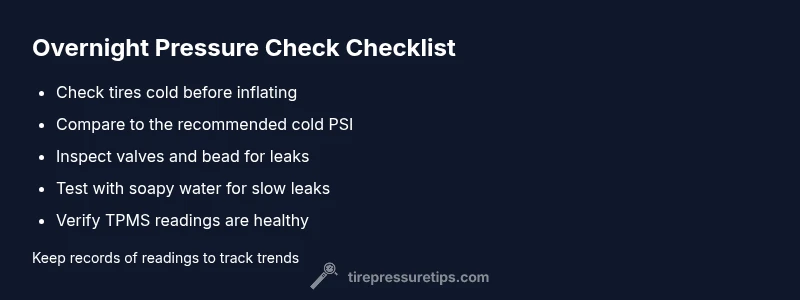
Always start with cold tires before inflating. Use a reliable gauge and compare to the vehicle manufacturer’s recommended cold PSI. If you notice a drop after a few hours indoors, recheck with the tires cold again and take note of any pattern across multiple tires. Document readings over several days to identify persistent drops versus one-off fluctuations.
Steps
Estimated time: 45-60 minutes
- 1
Confirm the tires are cold
Park the car in a shaded area and wait at least 3 hours after driving to ensure the tires are cold. Take note of the current PSI on all tires using a reliable gauge.
Tip: Recording multiple readings over a few days helps identify patterns. - 2
Check the owner's specification
Refer to the door jamb sticker or owner's manual for the recommended cold PSI for front and rear tires. Write these values down for quick reference.
Tip: Do not inflate beyond the max inflation pressure listed on the tire sidewall. - 3
Inflate to spec and recheck
Inflate each tire to the recommended cold PSI, then wait 5-10 minutes and recheck to ensure stability before driving.
Tip: If you notice rapid pressure loss after inflation, stop and inspect for leaks. - 4
Inspect for obvious issues
Look for nails, screws, or punctures. Check the valve stem for cracks or a loose cap. Check the wheel bead area for damage.
Tip: Use a soapy water test around the valve, bead, and stem to reveal slow leaks. - 5
Test for slow leaks
If a tire continues to lose air, submerge the area around the bead and valve in soapy water and watch for bubbles that indicate leaks.
Tip: Wear eye protection and avoid running a tire with a known leak. - 6
Check the TPMS
If readings are inconsistent across tires, or one tire shows abnormal pressure, verify TPMS sensor status and recalibrate if needed.
Tip: A weak TPMS battery can cause false readings; professional replacement may be required. - 7
Consider professional inspection
If leaks are detected or you can't locate the source, schedule a professional inspection to assess rim damage, bead integrity, and TPMS health.
Tip: Persistent drops warrant a professional check for safety. - 8
Prevent future drops
Maintain consistent tire pressures, check monthly, and monitor changes with seasonal temperature shifts. Keep nipples and caps clean to prevent leaks.
Tip: Store a portable gauge in the glove compartment for on-the-go checks.
Diagnosis: Tire loses pressure overnight with no obvious puncture
Possible Causes
- highAmbient temperature drop causing air contraction
- mediumSlow puncture or nail causing gradual leak
- lowValve stem/core leak
- lowTPMS sensor fault or misread
Fixes
- easyVerify tires are cold, then inflate to the recommended cold PSI and recheck later.
- easyInspect tires for visible damage and use soapy water to identify leaks around valves, bead, and sidewalls.
- mediumTighten or replace faulty valve cores and ensure valve stems are in good condition.
- mediumIf TPMS readings seem inconsistent, recalibrate or consult a professional to confirm sensor health.
Frequently Asked Questions
Why does tire pressure drop overnight?
Overnight drops are common due to cooling temperatures and slight air contraction, plus any small leaks. Check cold PSI and re-inflate to spec. If the drop repeats, inspect valves and TPMS for leaks.
Overnight drops happen mainly because it gets cooler and air contracts. Check the tires when they're cold and inflate to the recommended pressure; if it keeps dropping, inspect for leaks and TPMS issues.
Is it dangerous to drive with low pressure in the morning?
Driving on underinflated tires can reduce handling and increase tire wear. If a tire is significantly below the recommended PSI, address it before driving long distances or at highway speeds.
Low tire pressure can affect handling and tire wear. If a tire is notably low, inflate to spec before driving far or fast.
How can temperature changes affect tire pressure?
Temperature shifts cause air to expand or contract. A tire's pressure will rise when warm and drop when cold, independent of a puncture. Regular checks account for seasonal changes.
Temperature affects pressure: it rises with heat and drops when it’s cold. Check regularly, especially during seasonal changes.
Can TPMS be faulty and show incorrect pressure?
Yes, TPMS sensors can fail or lose battery power, leading to inaccurate readings. If only one tire seems off, or readings don’t align with the gauge, have the system checked.
TPMS sensors can fail or be inaccurate. If readings don’t match a gauge, get the system checked.
How often should I check tire pressure?
Check tire pressure at least once a month and before long trips. Increase frequency during extreme temperatures or after winters to monitor changes.
Check at least monthly and before long trips, especially when temperatures swing.
What should I do if I find a nail in the tire?
Do not drive long distances with a nail. Have the tire inspected; a slow leak can worsen and cause a blowout. If in doubt, replace or repair professionally.
If you see a nail, don’t drive far. Get it inspected soon to prevent a blowout.
Watch Video
What to Remember
- Check tires when cold to get accurate readings
- Temperature shifts explain most overnight drops
- Inspect valves, TPMS, and for leaks if drops persist
- Professional help is advised for persistent drops