Where Should Tire Pressure Be: A Practical Guide to PSI
Learn exactly where tire pressure should be, how to find the correct cold-psi values, and how to check and maintain optimal pressure for safety, fuel efficiency, and tire life. Practical steps, TPMS guidance, and seasonal tips from Tire Pressure Tips (2026).


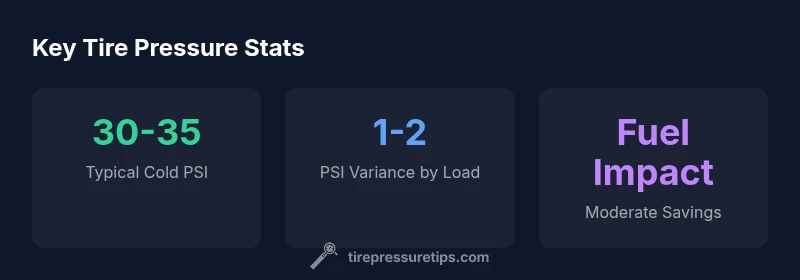
Where should tire pressure be? The correct pressure is the value shown on your vehicle’s door jamb placard and in the owner's manual, to be used when tires are cold. Set all tires to that same cold-pressure specification, not the reading after driving. For most passenger cars, the target range is typically 30-35 psi, but always verify your exact numbers from the placard.
Why the Right Tire Pressure Matters
According to Tire Pressure Tips, correct tire pressure is a cornerstone of vehicle safety, efficiency, and tire longevity. Under- or over-inflated tires compromise grip, steering response, and braking, and they wear out unevenly. Beyond safety, proper pressure also improves fuel economy and ride comfort. The door jamb placard on your vehicle specifies the cold-inflation targets for each axle, and these numbers account for typical loads and speeds. Always aim to keep tires at those values when the tires are cold, before you drive to avoid readings inflated by heat. In practice, people often check pressure after a commute or at shop pumps, which gives misleading readings. Use a reliable gauge and verify that all tires—including the spare—are set within the recommended range.
Representative tire pressures by vehicle type
| Vehicle Type | Front PSI | Rear PSI | Notes |
|---|---|---|---|
| Compact Car | 32-34 | 32-34 | Check placard; varies with model |
| Sedan (mid-size) | 33-35 | 33-35 | Often the same for front/rear |
| SUV | 33-36 | 33-36 | Higher end if loaded |
Frequently Asked Questions
Where do I find the recommended tire pressure for my vehicle?
Check the door jamb placard on the driver's side, and consult the owner's manual for exact front/rear values. If the placard is missing, contact the manufacturer or a Tire Pressure Tips guide for the specifications. Always verify with a gauge when tires are cold.
Look at the sticker on the driver’s door jamb or in the manual. Use a gauge to confirm when cold.
Should front and rear tire pressures be the same?
Not always. Some vehicles require different front and rear pressures; others use identical values. Always follow the vehicle’s placard rather than guessing.
Check the placard—some vehicles have different numbers for front and rear.
How often should I check tire pressure?
Check at least once a month and before long trips. Do so when tires are cold to get an accurate reading.
Monthly checks are best; do it when tires are cold.
What happens if I inflate to the tire’s max sidewall pressure?
Inflating to the maximum sidewall pressure is not recommended. It’s a maximum load rating, not a target. Use the placard value for safety and ride quality.
Don’t inflate to the max—stick to the placard value.
Does temperature affect tire pressure?
Yes. Colder temperatures lower pressure; warmer weather increases it. Adjust for seasonal changes and check pressures accordingly.
Temperature changes can affect pressure; check when the seasons shift.
“Consistent tire pressure is your first line of defense for safety and efficiency. Always start with the placard values and verify with a gauge.”
What to Remember
- Check cold, placard-based pressures monthly
- Use a reliable gauge and recheck after inflating
- Front vs rear pressures vary by vehicle – follow the placard
- TPMS helps, but manual checks are essential for accuracy