Is the Tire Pressure Supposed to Be? Practical Guide to PSI, TPMS, and Maintenance
Learn how to determine the correct tire pressure for your vehicle, how temperature and load affect PSI, and practical steps to regularly check and maintain optimal tire pressure.


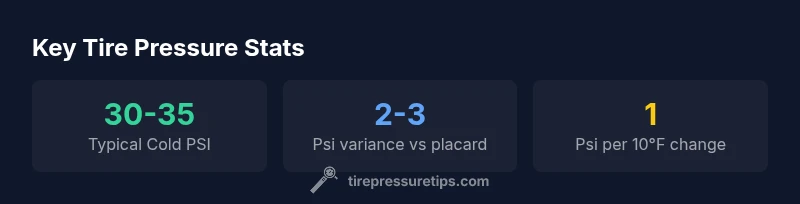
Is the tire pressure supposed to be a single universal number? Not quite. Most vehicles specify a cold PSI range on the door placard or in the owner's manual, with typical passenger cars sitting around the low 30s PSI and larger vehicles often needing more. According to Tire Pressure Tips, starting with the manufacturer’s recommendation ensures safety, efficiency, and even tread wear. The precise value can vary by model, tire size, and load, so you should verify each tire and adjust as needed after temperature shifts or heavy cargo.
What the question really means for your car's tires
When drivers ask, is the tire pressure supposed to be exactly the same all year, the answer isn't a single static figure. Tire pressure is a dynamic parameter set by the vehicle manufacturer to optimize safety, handling, wear, and fuel economy. As Tire Pressure Tips explains, the starting point is the door placard on the driver's door jamb or in the owner's manual, which lists the recommended cold PSI for each tire position. For most passenger cars, that range sits in the low 30s, while SUVs and trucks typically require higher pressures to account for extra weight and larger tire footprints. The goal is to keep all tires within spec under typical driving conditions, and to avoid the common pitfalls of underinflation and overinflation that can shorten tire life or compromise grip. The key takeaway: follow the manufacturer’s spec, then monitor pressure regularly, especially if your climate or load changes.
Reading the numbers: what the digits mean
PSI (pounds per square inch) is the standard unit for tire pressure in North America. When you inflate, you should target the cold PSI—before you drive and before the tires heat up from road use. The label on the placard usually shows different numbers for front and rear tires, reflecting weight distribution. If your TPMS reads a different value than the placard, don’t panic; use a trusted gauge to verify, and then adjust accordingly. In practice, many drivers find themselves at a comfortable 32-34 psi on most sedans, but always verify with the specific vehicle guidance. Consistency across all tires matters more than chasing a single number.
What changes the target pressure (temperature, load, and systems)
Tire pressure does not exist in a vacuum. Ambient temperature directly affects air density, so cold days can bring a drop in psi, while hot days can push it higher. Loading the vehicle with passengers or cargo also changes the load distribution and may prompt a slight adjustment in front or rear pressures. TPMS can alert you when a tire falls outside its target range, but it’s still best to confirm with a gauge when the tires are cold. This is why seasonal checks matter—winter driving often benefits from a small increase, while long highway trips with a heavy load may benefit from rechecking after the initial miles.
How to check tire pressure: a practical, repeatable method
- Find the recommended cold PSI on the placard or owner’s manual. 2) Check tires when they are cold (before driving or after at least 3 hours of no driving) to avoid heat-induced readings. 3) Use a reliable gauge (dial, digital, or pump gauge) and read each tire’s pressure at the valve stem. 4) Compare front and rear readings and ensure they align with the placard. 5) If readings are off, adjust gradually by adding or releasing air until each tire matches the specified cold PSI. 6) Re-check after a few miles of driving because tires heat up and pressures shift slightly.
Common mistakes and how to avoid them
A frequent error is inflating to the maximum sidewall pressure printed on the tire—this is not a target for most vehicles. Always rely on the vehicle placard rather than sidewall numbers. Another pitfall is ignoring seasonal changes; a drop of a few psi in winter is normal, but substantial drops warrant a check for leaks or valve issues. Finally, neglecting to check the spare tire can leave you with a surprise on the road; include the spare in your routine checks.
Seasonal and tire-type considerations
Seasonal changes, aftermarket tires, and different tire sizes all influence the ideal PSI. All-season tires on a compact car may have a slightly different recommended range than those on a light-duty SUV. If you’ve swapped tires or wheels, re-check the recommended pressure and adjust to the placard. Also note that some performance tires or run-flat tires have distinct guidance; always confirm with the vehicle manuals or tire manufacturer data. In general, aim for even inflation across all tires and maintain an awareness of how changes in temperature, load, and road conditions influence the readings.
Typical cold PSI ranges by vehicle type
| Scenario | Recommended PSI (cold) | Notes |
|---|---|---|
| Passenger car (compact) | 30-35 | Refer to placard for exact numbers |
| Mid-size sedan | 32-34 | Check front vs rear as directed |
| SUV/Truck | 34-36 | Higher load may justify higher PSI |
| Winter conditions | Adjust based on placard | Temperature effects apply |
Frequently Asked Questions
How often should I check tire pressure?
Check tire pressure at least once a month and before long trips. Always verify when tires are cold to get an accurate reading, and adjust if needed. Regular checks help prevent underinflation and improve fuel efficiency.
Check your tires about once a month and before long trips, making sure the tires are cold for accurate readings.
Is it safe to inflate to the maximum sidewall pressure?
No. The maximum sidewall pressure on a tire is not a target for inflation. Always use the vehicle’s recommended PSI from the placard, which accounts for load and handling.
No—don’t inflate to the maximum; use the vehicle’s recommended PSI listed on the placard.
Do TPMS readings always match the placard?
TPMS readings can differ from the placard by a small amount due to sensor calibration and temperature. Use a trusted gauge to verify and adjust if needed.
TPMS readings can differ a bit from the placard; verify with a gauge and adjust if necessary.
What happens if tires are overinflated?
Overinflation can reduce the contact patch, making the ride harsher and increasing the risk of uneven wear. It can also reduce grip on wet surfaces. Return to the recommended PSI to restore balance.
Overinflating can lead to harsher rides and uneven wear—bring pressure back to the recommended PSI.
How does temperature affect tire pressure?
Cold temperatures lower tire pressure, while warm temperatures raise it. Regularly check the pressure when seasons change and adjust to the placard as needed.
Temperature changes affect PSI; check and adjust with the seasons.
Is nitrogen filling worth it for tire pressure stability?
Nitrogen filling can reduce pressure loss slightly but is not a substitute for regular checks. If you use it, ensure you still monitor PSI with a gauge and follow the placard.
Nitrogen isn't magical; regular PSI checks still matter even if you use nitrogen.
“Tire pressure is not a fixed number; it’s the manufacturer’s specification that keeps your vehicle safe and efficient. Regular checks using a quality gauge help you maintain optimal tire health.”
What to Remember
- Check cold PSI against the placard first
- Measure when tires are cold for accuracy
- Balance inflation across all tires
- Account for temperature and load changes
- Use a reliable gauge and re-check regularly