Where Can I Check My Tire Pressure? A Practical Guide
Learn where to check tire pressure, how to read gauges, and maintain proper PSI for safety, fuel economy, and tire life. Tire Pressure Tips walks you through quick checks, tools, and best practices.


According to Tire Pressure Tips, you can check tire pressure quickly at the door jamb placard, at a gas station air pump, or with a portable gauge at home. The Tire Pressure Tips team found that cold-tire readings are most accurate, and maintaining proper pressure improves safety, fuel efficiency, and tire life. This quick answer points you to the best places and how to read the numbers.
Where to check your tire pressure
The question of where to check your tire pressure is simple once you know where to look. Your vehicle’s door jamb has a label that lists the recommended pressure for the front and rear tires. The owner's manual may provide the same information, and if you’re unsure, a dealership or trusted repair shop can confirm. For many drivers, the quickest checks happen at home with a portable gauge, or at a gas station with an air pump. The important part is to perform the reading when tires are cold, because heat from driving raises the air inside the tire and skews the reading. According to Tire Pressure Tips, consistent checks reduce uneven wear, improve fuel economy, and keep you safer on the road. These checks paint a clear picture of tire health and maintenance needs.
Tools you need to check tire pressure
Before you start, gather a few simple tools to ensure accuracy: A tire pressure gauge (digital or analog), and ideally a portable air pump or access to a gas station air compressor. Keep a copy of your vehicle's recommended pressure from the placard or manual handy, and consider keeping a small notebook to log readings. If you’re using a digital gauge, ensure the battery is fresh and that you’ve calibrated it if the manufacturer recommends. A second gauge can be useful for cross-checking results. If you’re inflating, you may also want a way to measure external air temperature and a flashlight for dim garage or trunk readings. The Tire Pressure Tips team emphasizes having a reliable gauge and a plan for adjusting pressure when needed.
How weather and temperature affect tire pressure
Tire pressure is sensitive to temperature. Warmer days can increase the air inside tires, while cold mornings can drop readings. The difference may feel small, but it can add up over weeks and months. Because of this, you should check tires when they're cold and avoid inflating them to counter the outdoor temperature. The recommended pressure on the placard accounts for typical driving loads and weather, so check readings against that value rather than against yesterday’s measurements. Tire Pressure Tips notes that consistent checks across seasons help prevent road hazards, maintain traction, and protect your tire investments.
Reading the numbers and what they mean
When you read the pressure from your gauge, compare it to the recommended number shown on the door placard or manual. Front and rear tires may have different targets; some vehicles share the same value. Readings are most accurate when taken with the tire cold, before you’ve driven or after the tires have cooled for a period of time. If a tire is low, inflate gradually in small increments, recheck, and stop when you reach the target. If a tire is overinflated, release air slowly until the gauge reads the recommended level. Keep in mind the spare tire also has a recommended pressure you should know.
Routine checks and common mistakes to avoid
Make tire pressure checks part of your regular maintenance, such as monthly checks or before long trips. Avoid common mistakes like inflating to a gauge reading while tires are hot, failing to reset TPMS after adjustments, or using the wrong unit (PSI vs kPa if your gauge uses both). A consistent habit will catch leaks early and help you avoid the risk of blowouts. If you’re uncertain, consult your vehicle manual or a tire professional. The Tire Pressure Tips team recommends a quick, repeatable routine so you never forget to check.
Authority sources and further reading
For official guidance on tire pressure and TPMS, consider consulting the following sources. Always compare your readings to the vehicle placard and your manual when in doubt. If you want more in-depth reading, these sources provide authoritative context on tire maintenance and safety.
Where to check your tire pressure and how to maintain it: a concise guide
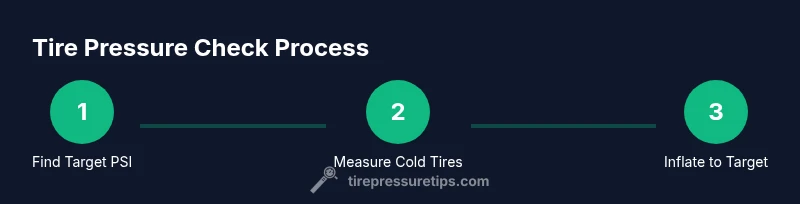
- Start with the placard on the door jamb or the owner’s manual for the recommended front and rear pressure targets. - Use a reliable gauge to measure when tires are cold. - Inflate or deflate to the specified target and recheck. - Log readings and season changes to stay proactive about tire health. The routine is simple, but it has a big impact on safety and efficiency.
Tools & Materials
- Tire pressure gauge (digital or analog)(Must be calibrated and in good working order; check battery if digital)
- Air pump or access to a gas station compressor(Helpful for adjusting tire pressure on the spot)
- Owner's manual or vehicle placard(Contains the vehicle’s official recommended PSI values)
- Notebook or log(Record readings and dates to track changes over time)
Steps
Estimated time: 15-25 minutes
- 1
Find the recommended pressure
Locate the PSI targets on the door placard or in the owner's manual. Note separate targets for front and rear tires if provided. This value tells you the goal to aim for during inflation and deflation.
Tip: Double-check if your load or passenger weight has changed; the targets may differ with heavy loads. - 2
Ensure tires are cold
Read tire pressure when tires are cold for accurate results. If you’ve driven recently, wait until the tires cool down before taking a measurement.
Tip: Avoid taking readings immediately after a long drive or highway trip. - 3
Remove the valve cap
Gently unscrew the valve cap from the tire’s valve stem. Keep the cap in a safe place so you don’t lose it during the measurement.
Tip: Keep the cap clean to avoid dust entering the valve stem. - 4
Attach the gauge and read
Press the gauge onto the valve stem firmly and steadily to get a clean reading. Read the gauge without jerking or wiggling the gauge.
Tip: If you see a fluctuating reading, re-seat and re-test to confirm accuracy. - 5
Compare and decide
Compare the reading to the recommended pressure. If it’s too low, plan to inflate. If it’s too high, release air gradually and re-check.
Tip: Don’t over-inflate in one go; small adjustments give better control. - 6
Inflate or release to target
Use an inflator or air pump to bring the tire to the target pressure. Re-check with the gauge to confirm you’ve hit the mark.
Tip: Always re-check after inflation to account for any small changes. - 7
Repeat for all tires
Check each tire, including the spare if you carry one. Tires wear unevenly, so confirm the same process for every wheel.
Tip: Consistency across all tires improves handling and even wear. - 8
Cap it and log
Screw the valve caps back on securely and record the reading and date in your log for future reference.
Tip: A quick log helps you notice gradual changes over time.
Frequently Asked Questions
How often should I check my tire pressure?
Make tire pressure checks part of your regular routine, such as monthly checks and before long trips. Seasonal changes and temperature shifts are good reminders to re-check.
Check your tires regularly, at least monthly, and before long trips. Seasonal changes are a good reason to re-check.
Can I check tire pressure with the car on?
It’s best to check when the car is cold and off. If you must check with the car on, read carefully and adjust after the tire has cooled to avoid skewed readings.
Check with the car off for accuracy; if you must do it with the car on, re-check after the tire cools.
What if TPMS shows low pressure but my gauge reads normal?
TPMS can reflect a slow leak or temperature-related changes. If your gauge reads normal, re-check after the tire cools and consider inspecting for punctures or valve leaks.
If TPMS says low pressure but your gauge reads normal, re-check after cooling and inspect for leaks.
Does temperature affect tire pressure readings?
Yes. Temperature changes can cause readings to rise or fall. Check reading when tires are cold and adjust to the recommended PSI accordingly.
Temperature matters; read when cold and adjust to the label recommendations.
Is it safe to drive with low tire pressure?
Driving with low tire pressure can be unsafe and cause increased wear. Seek to correct pressure as soon as possible and avoid high speeds on underinflated tires.
No, drive with low pressure is unsafe; fix it soon before long trips.
How do I reset TPMS after inflating?
Many vehicles don’t require a manual reset; driving normally with correct pressure may retrain the TPMS. Check your owner’s manual for model-specific steps.
Most cars recalibrate automatically after you maintain proper pressure; check your manual for specifics.
What to Remember
- Check tires when cold for accuracy
- Use the placard values as targets
- Involve all tires, including the spare
- Keep a simple log of readings and dates