How to Check Tire Pressure: A Complete Guide
Learn to check tire pressure accurately with gauges, TPMS, and seasonal changes. Tools, steps, mistakes, and a maintenance plan from Tire Pressure Tips.


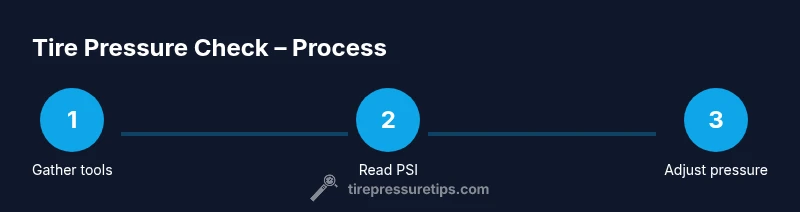
Regularly checking tire pressure protects you from flats, improves fuel economy, and extends tire life. Gather a reliable gauge, locate the vehicle’s recommended PSI from the door jamb sticker or owner's manual, and ensure tires are cold. Read the pressure, adjust to the specified level, and repeat for all tires to maintain safety and performance.
Why Checking Tire Pressure Matters
Understanding how to check tire pressure is foundational for safe driving and efficient operation. Regular checks help prevent sudden flats, reduce uneven wear, improve fuel economy, and extend tire life. If you’re wondering how to keep your tires in peak condition, this guidance from Tire Pressure Tips can help you build a simple, repeatable routine. By making a habit of checking pressure monthly and before long trips, you can catch leaks early and avoid reactive, costly repairs. Proper inflation also supports consistent traction on wet or snowy roads, improving overall safety.
Tire Pressure Basics: What the Numbers Mean
Tire pressure is the amount of air in a tire, measured in PSI (pounds per square inch). The key number you should follow is the vehicle’s recommended PSI, usually found on the door jamb sticker or in the owner's manual. Do not rely on the maximum PSI printed on the tire sidewall for daily driving; that rating is the tire's maximum capacity, not your target pressure. Cold tires versus hot tires matter: readings taken after driving can be higher because heat expands air inside the tire. To keep performance consistent, aim for the recommended PSI when tires are cold and adjust if the vehicle has a heavy load or if you drive aggressively.
Tools You Need to Check Tire Pressure
Before you start, assemble a few simple tools. The essential item is a tire pressure gauge, either analog with a snap dial or a digital readout. You’ll also need access to your vehicle’s recommended PSI (door jamb sticker or manual). A clean, undamaged valve stem and cap help prevent readings from being skewed. If you lack an air compressor, you may use a portable pump, or plan to visit a gas station when inflating is needed. Finally, set aside a small amount of time in a safe, level area to perform checks on all four tires and the spare.
Step-by-Step Process for Checking Tire Pressure (Cold Tires)
If you’re new to checking tire pressure, start with cold tires to avoid readings influenced by heat. Park on a level surface, engine off, and remove the valve caps from all four tires. Place the gauge on the valve stem straight and press firmly to get a reading. Read the gauge quickly and note the pressure. If the reading is below the vehicle’s recommended PSI, add air in short bursts and recheck until you reach the target. If it’s above, release air gradually and recheck. Repeat for each tire and replace the valve caps when finished.
Analog vs Digital Gauges: Pros and Cons
Analog gauges are often affordable and durable, but reading them precisely depends on your eyesight and lighting. Digital gauges provide a quick numeric read and can be easier for beginners, but they require batteries and may be less accurate if not calibrated. Regardless of type, ensure you zero the gauge on a known pressure or follow the manufacturer’s calibration steps. Always compare readings from multiple tires to catch a gauge issue.
Temperature and Weather: How It Affects Readings
Temperature swings influence tire pressure. Colder weather lowers tire pressure, while warmer days raise it. Because readings can shift with temperature, it’s best to check when tires are cold for accuracy. In winter, inflate to the lower end of the recommended range if temperatures are expected to drop, and recheck after a warm-up period. In hot weather, avoid inflating based on heated readings; instead, read after a brief cooldown to confirm you’re at the target pressure.
Interpreting the TPMS and When It Helps
Your TPMS provides a pressure-based alert rather than a precise PSI number. A low-pressure warning means at least one tire is underinflated and requires inspection. Some systems allow you to reset after inflation, but it’s important to verify all tires are at the recommended level, including the spare. If TPMS readings consistently differ from gauge readings, there may be a sensor issue or a slow leak that needs professional attention.
How Often to Check and When to Recheck
A practical rule is to check tire pressure at least once a month and before long trips. Check again after any significant temperature change or after you’ve loaded the car with passengers or cargo. If you notice uneven wear, slow leaks, or recurring low readings, schedule a check with a tire professional. Regular checks help maintain safety and optimize fuel efficiency.
Common Mistakes and How to Avoid Them
Common mistakes include using the wrong PSI (maximum vs recommended), checking after driving, not replacing valve caps, and using a faulty gauge. Always verify readings with the same gauge, ensure tires are cold, and avoid inflating to the tire’s maximum pressure. Another error is neglecting the spare tire; ensure it’s properly inflated as part of routine maintenance.
Maintenance Plan: Keeping Your Tires at the Right Pressure Year-Round
A consistent maintenance plan keeps you on track year-round. Start every month with a quick pressure check, validate against the door jamb sticker, and adjust as needed. Before long trips, recheck after loading the trunk and adjusting weight distribution. For seasonal changes, implement a quick PSI check as the seasons shift. The Tire Pressure Tips team recommends using a simple log to track readings and any adjustments, so you can spot trends and address leaks early.
Tools & Materials
- Tire pressure gauge (analog or digital)(Choose a gauge with a readable display and a wide enough range for your vehicle's PSI.)
- Vehicle’s recommended PSI (door jamb sticker or owner's manual)(Record front vs rear values and consider load adjustments.)
- Valve caps(Keep caps on to prevent dirt and moisture from entering the valve.)
- Air pump or access to inflation equipment(Portable pump is convenient; you can also use a station compressor.)
- Notebook or smartphone to record readings(Optional for tracking PSI changes over time.)
Steps
Estimated time: Estimated total time: 5-10 minutes
- 1
Park on a level surface and let tires cool
Bring the vehicle to a level, flat surface and turn off the engine. Let the tires cool for at least 3 hours after driving to get an accurate cold reading. This minimizes reading errors caused by heat expansion.
Tip: Cold readings are the most consistent; skip driving beforehand if you can. - 2
Find the recommended tire pressure
Locate the PSI specification from the door jamb sticker or the owner's manual. Note the exact values for the front and rear tires, and whether the spare has a different target.
Tip: If the car carries heavy loads regularly, note any load-adjusted PSI figures. - 3
Remove valve caps and attach the gauge
Remove the valve cap from one tire and press the gauge onto the valve stem straight on. Ensure a good seal to avoid losing air during measurement.
Tip: Keep the valve stem clean to avoid false readings. - 4
Read the pressure and compare to the target
Read the gauge and compare it to the manufacturer’s recommended PSI. If it’s low, add air in small bursts and recheck; if high, release air gradually and recheck.
Tip: Read quickly after attaching the gauge to prevent air from escaping. - 5
Inflate or deflate to reach the target PSI
Adjust pressure by adding or releasing air until the reading matches the recommended PSI. Check all tires, including the spare, for consistency.
Tip: Do not overinflate; if you can’t reach the target, inspect for slow leaks. - 6
Recheck and reseal
After adjusting, recheck each tire. Replace valve caps to seal the stems and prevent debris from entering.
Tip: Record the final readings to track any future changes.
Frequently Asked Questions
Why is tire pressure important?
Proper tire pressure helps with safety, handling, braking, fuel economy, and tire life. Keeping pressure at the recommended PSI reduces uneven wear and minimizes the risk of flats. Regular checks provide peace of mind while driving.
Tire pressure matters for safety, control, and efficiency. Regular checks prevent flats and wear.
Can I check tire pressure using a smartphone app?
Some apps connect to digital gauges or inflators and can log readings. However, accuracy still depends on the quality of the gauge, so use a reliable gauge as your primary tool.
Apps can help log readings, but a good gauge is essential for accuracy.
How often should I check tire pressure?
Check at least once a month and before long trips. Check again after temperatures swing or after changing loads. Regular checks keep tires in the right range.
Check monthly, before long trips, and after big temperature changes.
What should I do if the TPMS warning lights up?
If the light comes on, inspect all tires with a gauge, correct any underinflated tires, and look for slow leaks or sensor issues. Recalibrate if you recently changed tires or rims.
If TPMS warns, check pressure and inspect tires for leaks.
Does temperature affect tire pressure?
Yes. Cold temperatures lower tire pressure and warm temperatures raise it. Check readings when tires are cold to get a stable baseline.
Temperature changes affect readings; check with cold tires.
Where can I find the correct PSI for my car?
Look at the door jamb sticker or the owner's manual. Do not rely on the tire's sidewall maximum PSI for daily use.
Find your car’s PSI on the door sticker or manual.
Watch Video
What to Remember
- Check tires when cold before inflation
- Use a reliable gauge and verify readings
- Match PSI to vehicle-specified values
- Recheck after inflation and on all tires
- Keep a simple log of PSI changes