What to Fill Tire Pressure To: A Practical Guide
Learn how to determine and set the correct tire pressure for safety, fuel efficiency, and tire longevity. Find your cold PSI on the placard, use a reliable gauge, and follow a simple routine.


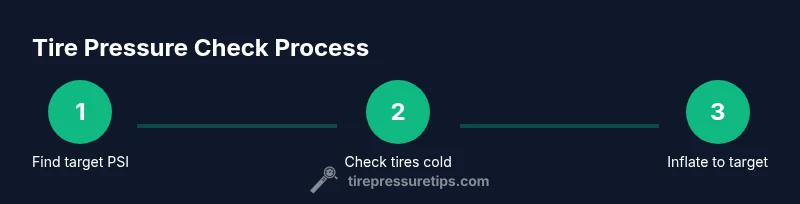
You fill tires to the recommended cold PSI listed on the vehicle placard or owner's manual. This setting promotes safe handling, even tire wear, and better fuel efficiency. Check when tires are cold (before driving or after they've sat for several hours), use a precise gauge, and adjust all tires according to manufacturer guidance.
Why Getting the Right Tire Pressure Matters
Knowing what to fill tire pressure to isn’t just a number on a sticker. It guides how your vehicle handles, how evenly tires wear, and how efficiently you use fuel. When tires run at the correct pressure, contact with the road is optimized, reducing heat buildup and improving grip in everyday driving. Conversely, underinflation can increase rolling resistance, leading to higher fuel use and faster wear on the shoulders of the tire, while overinflation can reduce the contact patch and degrade wet-weather performance. According to Tire Pressure Tips, the right tire pressure is foundational for safety and performance. Aligning with your vehicle’s recommendations helps you avoid uneven tire wear and reduces the risk of blowouts in extreme conditions. The goal isn’t guessing; it’s following the manufacturer’s target, then validating it with a gauge.
How a Vehicle Defines its Target Pressure
Automakers determine a tire pressure target to balance ride comfort, handling, braking, and tire life for a wide range of loads and speeds. These targets are not arbitrary numbers; they reflect a compromise between contact patch area, sidewall stiffness, and tread wear. The placard and owner’s manual specify cold PSI values for front and rear tires and may also note differences for heavily loaded conditions or when carrying passengers. If you ever notice a mismatch between front and rear readings, remember that some vehicles are designed to operate with different pressures on each axle to optimize stability and steering response. The target is vehicle-specific, not universal, so always start with the manufacturer’s guidance.
Front vs Rear Tires: Do They Always Need the Same Pressure?
Many cars use different targets for front and rear tires. This is often to account for weight distribution and steering dynamics. If your placard lists separate values, you should inflate each axle to its respective target. If there’s only one value listed, it generally applies to all four tires, but always verify in the user manual for any caveats related to driving modes or unusual loads. Checking both axles ensures balanced handling and even wear across the tire set.
Where to Find the Official Target Pressure
The most reliable reference is the placard found on the driver’s door jamb, sometimes the fuel door or glovebox area holds the info for certain models. The owner’s manual may reiterate these numbers and provide load-based adjustments. The tire sidewalls show maximum pressure, but that is the tire’s maximum load rating, not the recommended operating pressure. Always use the placard or manual as the primary source, and reserve the sidewall max as a hard upper limit that you should never exceed during normal driving.
Cold vs Warm Tires: When Readings Matter
Pressure readings are valid only when the tires are cold. A hot tire will show a higher reading because of internal heat expansion, masking the true operating pressure. For practical accuracy, check after the car has sat unused for at least three hours, or before driving in cold mornings. If you’ve driven recently, wait at least 2–3 hours or cool the tire by removing heat with a short drive that returns to ambient temperature. This discipline prevents over- or under-inflation caused by heat buildup during driving.
Temperature, Seasons, and Performance: What Changes?
Ambient temperature influences tire pressure; a drop can reduce pressure, while a rise can increase it. In colder months, you may notice a gradual drop in PSI, which can subtly alter ride feel and fuel economy. Some drivers adjust pressure slightly when the seasons change, but you should always return to the manufacturer’s cold-reading target for consistency. If you routinely haul heavy loads or drive at higher speeds, you may need to revisit the placard guidance and adjust within the allowed range rather than chasing a single fixed number.
Tools and Gauges: Getting an Accurate Reading
A reliable tire pressure gauge is essential. Digital gauges are easy to read and tend to provide quick, repeatable readings, while analog gauges can be highly accurate with careful use. Regardless of type, ensure the gauge is calibrated and clean. When you test, press the probe onto the valve stem firmly and read the result quickly to avoid air escaping. Having a spare valve stem cap and a small amount of air with you for minor adjustments can save trips to the gas station. A good gauge turns guesswork into precision.
A Practical Routine for Checking Pressure Regularly
Create a simple maintenance habit: perform a quick check at least once a month and before long trips. If you notice a tire visually underinflated, check it again with a gauge and adjust as needed. Record the PSI reading for today and note any changes in handling or ride comfort. A routine check keeps you aware of gradual PSI changes due to temperature, wear, or small leaks, and helps you catch issues early before they become expensive problems.
TPMS and Traditional Gauges: How They Complement Each Other
Tire Pressure Monitoring Systems (TPMS) alert you when pressures fall below recommended levels, but they don’t tell you the exact value. A gauge confirms the precise pressure so you can verify and correct any discrepancy. If TPMS warning lights persist after inflation, it may indicate a leak, a sensor fault, or an underlying issue with the tire or rim. Use both indicators: TPMS for timely alerts and a gauge for precise, confirmed readings.
For Safety: Avoiding Extreme Inflation and Underinflation
Never inflate beyond the recommended range, and avoid letting tire pressure drift too low for long periods. Extreme underinflation increases heat buildup and shortens tire life, while overinflation reduces the contact patch, affecting grip and ride comfort. The goal is stable, within-spec inflation that supports consistent handling and predictable braking, especially in wet or snowy conditions.
Seasonal Storage and Long-Term Maintenance
If you store a vehicle for extended periods, consider checking tire pressures periodically to prevent slow leaks or seal hardening. Temperature fluctuations in storage areas can still affect PSI, so a quick check quarterly helps maintain tire health. For fleets or multi-vehicle households, maintain a simple log with date, measured PSI, and any notes about load or usage. Consistency over time is the key to predictable performance.
Tools & Materials
- Tire pressure gauge (digital or analog)(Choose a unit you’re comfortable with; ensure it’s calibrated and has a smooth valve interface)
- Air compressor or access to a service station(Helpful for quick adjustments; many stations offer built-in gauges for convenience)
- Owner's manual or door placard reference(Use as the primary source for your target PSI values)
- Notebook or mobile note app(Record readings and adjustments for maintenance logs)
Steps
Estimated time: 15-25 minutes
- 1
Gather tools and locate target pressure
Bring your gauge, check the vehicle placard or manual, and ensure you’re working in a safe, flat area away from traffic. Confirm you’re reading cold tires as your baseline.
Tip: If you’re unsure which value to use, check both front and rear values on the placard. - 2
Check tires when cold
Park on a level surface and wait for the tires to cool if you’ve driven recently. A cold check gives the most accurate baseline for inflation.
Tip: Avoid inflating after a long drive; heat changes the reading. - 3
Attach gauge and take readings
Remove the valve cap, firmly press the gauge onto the valve stem, and read the measurement quickly. Note the exact PSI for each tire.
Tip: Make sure the valve stem isn’t damaged; a loose stem can give false readings. - 4
Inflate or deflate to the target
If readings are below target, add air until each tire reaches the recommended cold PSI. If above target, release air in small increments and recheck.
Tip: Work in small increments; it’s easier to fine-tune with a gauge. - 5
Recheck all tires
Double-check each tire after adjustments. Replace the valve caps to maintain a clean, sealed system.
Tip: If a tire repeatedly loses pressure, schedule inspection for leaks or faulty valves. - 6
Document and close out
Record the date, per-tire psi, and any notes about load or conditions. This keeps maintenance history accessible for future checks.
Tip: Keep a simple log accessible to all drivers of the vehicle.
Frequently Asked Questions
Where can I find my vehicle's recommended tire pressure?
Look for the door jamb placard on the driver’s side or check the owner's manual for the exact cold PSI values. Some models also list the target pressure in the glovebox or fuel door area.
Check the door placard or the owner's manual for the exact cold PSI values.
Can TPMS replace manual tire pressure checks?
TPMS provides alerts when pressure drops, but it doesn’t give the exact PSI. Always verify with a gauge to ensure you’re at the recommended target.
TPMS warns you, but you still need to measure with a gauge.
What happens if I inflate too high or too low?
Underinflation increases wear on the inner and outer edges and can raise heat buildup; overinflation can reduce grip and lead to uneven wear. Both reduce efficiency and safety.
Underinflation wears the edges; overinflation reduces grip. Check your target PSI.
Should I adjust tire pressure for heavy loads or high-speed driving?
Yes. If the placard notes higher pressures for heavy loads or higher speeds, adjust accordingly. Don’t go beyond the recommended range.
Yes, follow the load and speed guidance on the placard.
Is it okay to inflate to the tire’s maximum sidewall pressure?
No. The maximum sidewall pressure is the tire’s limit, not a recommended operating pressure. Use the vehicle’s specified target.
Don’t inflate to the max—use the vehicle’s target PSI.
How often should tire pressure be checked?
Ideally once a month and before long trips. Check after significant temperature changes or if you notice handling differences.
Check at least monthly and before long trips.
Watch Video
What to Remember
- Check cold PSI on placard before inflating
- Use a reliable gauge for accurate readings
- Inflate/reduce in small increments and recheck
- Record PSI and note any changes over time
- TPMS alerts complement, not replace, manual checks