What Tire Pressure When Cold: Practical Guidelines
Learn what tire pressure when cold means, why temperature matters, and how to accurately check PSI using the manufacturer cold-pressure spec on your placard.


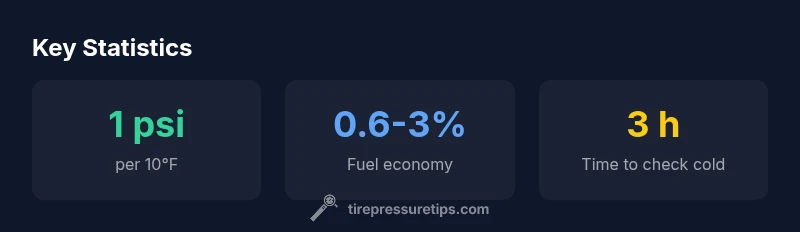
According to Tire Pressure Tips, inflate to the vehicle manufacturer’s cold tire pressure specification (door placard/manual) for safe, efficient driving. The cold spec is the number you should use when tires are cold, not a hot reading. Check tires when they’re cold—before driving or after at least 3 hours of inactivity—and use a reliable gauge. Temperature can shift readings, so rely on the cold specification for accuracy.
Why cold tire pressure matters
Understanding what tire pressure when cold means is essential for safety, efficiency, and even tire wear. Temperature, driving history, and tire construction all influence the PSI you read. The cold pressure is the baseline number you should rely on for ongoing maintenance, because warm readings can overstate the true pressure. As Tire Pressure Tips notes, the official cold specification is usually listed on the door jamb placard or in the owner's manual. Using this baseline across seasons helps ensure consistent handling, better fuel economy, and even wear across tires and axles. In practice, many drivers drift away from the spec, inflate for immediate comfort, and end up with tire pressure that is too high or too low once temperatures shift. Adopting a disciplined approach to cold pressure aligns maintenance with real-world conditions and reduces the risk of pressure-related tire issues.
Finding the correct cold pressure
To determine the right cold pressure, start with the official value printed on the vehicle’s door jamb placard or in the owner’s manual. The placard typically lists separate front and rear values and may show load-specific guidance. If you’ve changed tire sizes or trims, verify against the configuration-specific spec for your model. While many passenger cars sit in the 30-35 psi range (cold) for both axles, numbers vary by make, model, and tire size, so always confirm with the official source. If your tires are worn or mismatched, begin with the lower value and adjust after inspection. Remember: the target pressure is measured when cold, not after a drive. This discipline makes it easier to compare across seasons and driving conditions and reduces the need for frequent tinkering with inflation.
Cold pressure targets by vehicle type
| Aspect | Cold Pressure Target | Notes |
|---|---|---|
| Passenger car front | 32-35 psi | Typical range; verify on placard |
| Passenger car rear | 32-35 psi | Often same as front; check manual |
| SUV/Truck (per placard) | 35-45 psi | Higher due to load; refer placard |
Frequently Asked Questions
What does cold pressure mean?
Cold pressure is the tire PSI reading when the tires are at ambient temperature, without recent driving heat. It is the baseline value you should use for inflation. Always rely on the cold-spec from the placard or manual for accuracy.
Cold pressure is the value you get when the tires haven’t warmed up from driving; use that number for inflation.
How do I check tire pressure correctly?
Park on level ground with the vehicle off and the tires cold. Remove the valve cap, place a reliable gauge on the valve stem, and record the reading. Compare every tire to the door-placard specifications, then adjust in small increments if needed and recheck.
Check when cold, use a good gauge, and compare to the placard.
Why does temperature affect readings?
Temperature changes cause air to expand or contract, shifting tire pressure readings. A common rule of thumb is about 1 psi per 10°F change, but the exact amount varies by tire and initial pressure. This is why you should rely on the cold-spec and recheck after temperature shifts.
Temps change PSI; cold-spec is your anchor.
Can I inflate for load when cold?
Yes, but you should use the load-adjusted value shown on the placard or manual. If your load varies, recheck after loading and adjust accordingly. Do not exceed the maximum recommended pressure.
Use the load-adjusted cold spec if you’re carrying extra weight.
Does TPMS replace PSI checks?
No. TPMS warns you when pressures fall outside a safe range, but it does not provide an exact PSI reading. Always verify with a gauge using the cold-spec as your target.
TPMS helps, but you should still measure with a gauge.
How often should I check cold pressure?
Check at least once a month and before long trips. Also recheck after significant temperature changes or if you notice changes in handling or fuel economy.
Check monthly and before trips to stay safe.
“Sticking to the cold-pressure spec protects tire wear and safety across seasons. Consistency here reduces unnecessary wear and improves fuel efficiency.”
What to Remember
- Check cold pressure first: use manufacturer spec.
- Always verify on the placard or manual.
- Temperature shifts readings; rely on cold target.
- TPMS is a warning, not a PSI substitute.