Tire Pressure for Car: A Practical Guide
Learn how to check, adjust, and maintain tire pressure for your car. This step-by-step guide covers cold psi, TPMS, temperature changes, and common mistakes to keep you safer and more fuel-efficient.


Goal: to check, adjust, and maintain your car’s tire pressure for safety, fuel efficiency, and tire wear. You’ll identify the recommended cold psi from the door placard and owner’s manual, use a precise gauge, and adjust tires when cold. The guide also covers TPMS basics, typical pressure ranges, and how temperature changes affect readings.
Why tire pressure matters for car safety
Maintaining correct tire pressure is essential for safety, braking performance, steering feel, and tire longevity. According to Tire Pressure Tips, proper tire pressure helps you stop sooner on wet roads, maintains predictable handling, and reduces uneven wear. When tires are underinflated, sidewall flex increases heat buildup; overinflation can make the contact patch smaller and lead to a harsher ride. Temperature, road conditions, and load all affect pressure, so you should check regularly and adjust to the vehicle’s recommended cold psi. Always compare measurements to the specific numbers on the door placard and in the owner's manual. In this guide, we’ll cover how to check accurately, how temperature changes affect readings, and how to interpret TPMS alerts so you can keep your tires in optimal condition.
The Tire Pressure Tips team emphasizes that regular, deliberate checks reduce risk and improve overall vehicle performance. This article is designed for drivers and car owners who want practical, actionable guidance that translates to real-world driving.
Understanding the basics: PSI, cold vs hot, and TPMS
Pounds per square inch (PSI) is the common unit for tire pressure in many regions. “Cold” means tires that have not been driven for at least three hours or have accumulated less than a mile of travel since the last cold-purge. TPMS (tire pressure monitoring system) uses sensors to warn you when a tire drops below the recommended level, but it does not replace direct gauge measurements. The door placard on the driver’s door jamb lists the required cold pressures for front and rear tires, and many vehicles have separate values for different load conditions. Temperature matters: as tires heat up during driving, pressure rises, which is why you should measure cold and compare to the manufacturer’s spec. This ensures you maintain safe handling and even tire wear. Turtle: The key takeaway is to verify with a gauge and never rely on seat-of-the-pants estimates or a TPMS alarm alone.
How temperature affects tire pressure and how to adjust accordingly
Ambient temperature and driving heat affect tire pressure. In cold weather, air contracts and pressure drops; in hot weather or after extended driving, pressure increases. Seasonal swings can cause readings to shift by several psi, so frequent checks help maintain accuracy. The safe practice is to measure when tires are cold and adjust to the vehicle’s recommended cold psi. If you must check after a drive, let tires cool for at least 30 minutes before inflating to spec. When in doubt, err on the side of a slightly higher cold target rather than underinflating, especially for high-speed driving or heavy loads.
Checking and adjusting tire pressure properly: best practices
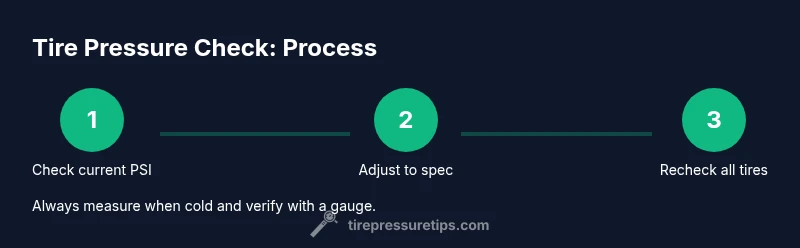
To check pressure accurately, park on a level surface away from direct heat sources. Use a high-quality gauge, ideally with 0.5 psi resolution, and compare readings against the vehicle’s specified cold psi from the placard or owner’s manual. Inflate slowly to the target, then recheck after a minute to confirm stability. Always check all four tires and, if applicable, the spare, because differences across tires can affect handling and braking. Record the date, time, and readings to monitor trends over time. If you notice persistent underinflation in one tire, inspect for leaks, punctures, or damaged valves.
The role of TPMS: sensors, limitations, and maintenance
TPMS provides a safety net by signaling underinflation, but it does not give exact tire pressure readings. Sensor locations vary: some are in the valve stem while others are located inside the wheel assembly. Battery life can degrade, sensors can fail, and harsh road conditions can cause occasional false alarms. Treat a TPMS warning as a trigger to verify with a gauge rather than a final pressure readout. If you adjust pressure and the light stays on, consult your owner's manual for relearn procedures or visit a qualified technician. Regular calibration and sensor checks help maintain system reliability.
Where to find the right pressure for your vehicle
Always start with the door placard on the driver’s door jamb, which lists the recommended cold psi for front and rear tires. The owner’s manual may also provide specifications for different load conditions or seasons. If you regularly drive with a heavy load or frequently take long trips, some manufacturers recommend a higher psi to accommodate the extra weight. Do not exceed the maximum pressure printed on the tire sidewall, which is a structural limit, not an intended operating pressure. When replacing tires or changing wheel sizes, recheck the recommended pressure as it may differ from the previous setup.
Common mistakes to avoid and quick troubleshooting
Common mistakes include checking pressure when tires are hot, inflating beyond the specified value, ignoring axle differences, and neglecting the spare tire. Always verify pressure when the tires are cold, use the correct gauge, and compare against the vehicle’s exact spec. If a tire shows low pressure repeatedly, inspect for leaks around the valve stem, tread wear that indicates damage, or a slow puncture. For persistent issues, consult a technician and consider TPMS sensor checks or valve replacements. Keeping a portable gauge in the car helps you verify readings on the road.
A simple monthly maintenance routine you can follow
Create a monthly tire pressure check habit: park on level ground, measure cold psi for all four tires and the spare, adjust to spec, and recheck after a short warm-up period. Record the readings in a notebook or app to monitor trends. If you drive in extreme temperatures or carry heavy loads often, increase the frequency to biweekly checks during seasonal transitions. Pair tire pressure checks with a basic tire inspection—look for bulges, cracks, or embedded objects that could cause leaks. A consistent routine saves fuel, improves safety, and extends tire life.
Authoritative sources
For additional, official guidance, refer to the following sources:
- https://www.nhtsa.gov/road-safety/tires
- https://www.consumerreports.org/cars-tuel/tire-pressure-explained/
- https://www.transportation.gov/mission/safety/tires
Tools & Materials
- Digital tire pressure gauge(Choose a gauge with 0.5 psi resolution; test calibration periodically.)
- Vehicle owner’s manual and door placard(Contains the recommended cold psi for front and rear tires.)
- Air compressor or access to calibrated air pump(Gas stations or shop compressors work; ensure gauge accuracy after inflation.)
- TPMS relearn procedure (if applicable)(Some vehicles require relearn after pressure adjustments or tire rotation.)
- Notebook or mobile app for logging(Helpful for tracking pressures over time and seasonal changes.)
Steps
Estimated time: 20-30 minutes
- 1
Gather tools and locate specs
Collect a precision gauge, the door placard, and the owner's manual. Locate the exact front and rear cold psi values for your vehicle so you know your target before you begin.
Tip: Double-check variants for different axle placements; front may differ from rear. - 2
Check tires cold
Park on a level surface and wait until tires are cold, ideally for at least three hours or after a minimum of 3 miles of driving. This ensures an accurate reading.
Tip: If you’ve just driven, wait until tires cool before rechecking. - 3
Attach gauge and read current pressure
Remove valve cap, firmly place the gauge on the valve stem, and record the reading for each tire. Compare with the cold psi from the placard.
Tip: Take multiple quick readings to ensure stability of the gauge. - 4
Inflate or deflate to target
Add air slowly in small increments, checking after each adjustment. Stop at the exact cold psi on the placard; avoid overshooting.
Tip: If you exceed, release a little air and re-measure rather than guessing. - 5
Recheck all tires
Recheck all four tires and the spare if applicable. Ensure the readings are consistent across the set for balanced handling.
Tip: Tire temperatures can rise slightly during inflation, so recheck after a brief rest. - 6
Address TPMS and records
If TPMS indicated warnings, verify pressures with a gauge after inflation. Relearn TPMS if your vehicle requires it after a pressure change.
Tip: Consult the owner’s manual for the relearn procedure specific to your model. - 7
Doc and plan future checks
Log the date, tire pressures, and any notes about load or temperature. Schedule regular checks (monthly or seasonally) to maintain accuracy.
Tip: Keep a simple calendar reminder for consistent maintenance.
Frequently Asked Questions
What is the ideal tire pressure for my car?
The ideal pressure is the cold psi specified on the door placard or in the owner’s manual. It can differ by axle and load, so always follow the vehicle-specific numbers.
Check the door placard for your car's exact cold psi values. If in doubt, refer to the manual.
Can I check tire pressure when the tires are hot?
No. Hot tires show higher readings due to heat, which leads to overinflation if used as the target. Always measure when tires are cold.
Measure when tires are cold for accuracy.
Why does my TPMS warning light come on?
TPMS indicates underinflation or a sensor issue. Verify with a gauge and inspect for leaks or damaged sensors. If needed, perform the relearn per the manual.
A TPMS warning means a tire may be underinflated or a sensor problem.
How often should I check tire pressure?
Check monthly, and before long trips. Temperature changes and load can alter pressure, so regular checks help maintain safety.
Make it a monthly habit or before long trips.
Is it okay to drive with low tire pressure?
No. Low pressure reduces handling, increases heat buildup, and can lead to a blowout. Inflate promptly to the recommended level.
Not safe to drive on low pressure; pull over safely.
How do temperature changes affect tire pressure in winter?
Colder temperatures lower tire pressure; check more often in seasonal transitions and adjust to the cold-psi spec.
Winter temp changes can lower pressure; check more often.
What to Remember
- Check cold psi against placard values
- TPMS supports safety but needs manual verification
- Measure when tires are cold, not after driving
- Regular maintenance saves safety and fuel and extends tire life