What to Do About Tire Pressure: A Practical Guide
Learn how to check, adjust, and maintain tire pressure for safety, fuel efficiency, and tire longevity. This guide covers cold vs. warm readings, TPMS basics, tools, and a practical step-by-step plan.


You’ll learn how to check and adjust tire pressure, understand cold vs warm readings, and how to handle TPMS alerts. Key steps include using a reliable gauge, inflating to the vehicle’s door-jam specification, and verifying both front and rear tires. This guidance helps improve safety, fuel economy, and tire life.
Why tire pressure matters
Maintaining the correct tire pressure is one of the simplest, most effective ways to improve safety, fuel efficiency, and tire longevity. Properly inflated tires help your vehicle stop sooner, respond predictably in corners, and wear evenly over thousands of miles. The Tire Pressure Tips team has found that regular pressure checks can prevent underinflation and overinflation problems that creep in from seasonal temperature changes, road conditions, and long-term use. By staying close to the car manufacturer’s recommended values, you minimize heat buildup and reduce the risk of a tire blowout on highways. In everyday driving, small, consistent adjustments translate into smoother rides, better traction in wet or snowy conditions, and improved gas mileage. The goal is not to chase a single number, but to keep all four tires within an acceptable band that matches your load, speed, and driving style. For most passenger cars, the sticker near the door provides the official cold-pressure target; use it as your baseline and confirm readings with a trusted gauge. If your tires show uneven wear or you notice a TPMS warning, it’s worth rechecking and adjusting as soon as practical. According to Tire Pressure Tips, consistent checks help catch slow leaks before they become failures and keep you safer on the road.
Cold vs warm readings: When to check tire pressure
Checking tire pressure is not a one-time task. Temperature plays a big role: cold readings stay truer to what your tires should be, while warm readings will show higher pressures after driving. The Tire Pressure Tips team stresses checking when tires are cold—ideally before you’ve driven more than a few miles or after it’s cooled overnight. Remember: a small change in ambient temperature can affect readings by a few psi, which is enough to mislead your inflation decisions. Always compare readings to the door jamb placard, not a single number you saw last week. This habit pays off by preventing grip loss, uneven wear, and reduced fuel efficiency over time.
Tools and gauges: Choosing and using them
There are two main types of tire gauges: analog dial and digital. Both provide accurate readings when used correctly, but digital gauges are typically easier to read in low-light conditions. The best practice is to use the same gauge every time to avoid inconsistency. If you’re using an inflator with a built-in gauge, cross-check a final reading with a separate gauge for verification. Keep a small notebook or your phone handy to record readings and any changes you make, especially if you’re balancing performance between front and rear tires.
How to read the label and decide target pressure
Your vehicle’s door jamb sticker lists the recommended cold pressures for the front and rear tires. Some models show different values based on load or drivetrain. When you inflate, aim to reach those targets evenly on all four tires. Do not rely on older numbers printed elsewhere on the tire sidewall or in maintenance guides—stick to the manufacturer’s specification. If you notice consistent pressure loss on a single tire, investigate for leaks, wheel damage, or a faulty valve stem before driving long distances.
Step-by-step overview: practical approach (non-listed)
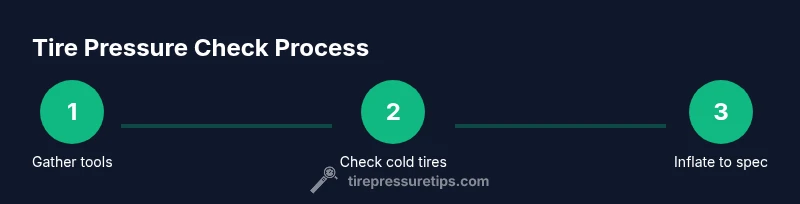
Below is a practical outline you can follow at home or in a shop. First, gather your tools and locate the placard. Next, check all four tires when cold, remove valve caps, and read with your gauge. Inflate to the target pressure, then recheck. Finally, inspect tires for uniform wear and ensure the TPMS light is not indicating a separate issue. This workflow minimizes risk and keeps you aligned with safety standards.
Common mistakes and how to avoid them
Common mistakes include checking after a long drive, inflating beyond the target because you misread the gauge, and neglecting the spare tire. Avoid these by always verifying cold readings, using a reliable gauge, and creating a brief maintenance schedule. Small habits, like checking every month or before long trips, compound into big safety and cost benefits over time.
TPMS and sensors: what to know
Tire Pressure Monitoring Systems (TPMS) alert you when a tire’s pressure deviates from the recommended range. TPMS can warn you of slow leaks or sudden pressure loss. If the light stays on after you’ve inflated to the target, you may have a puncture, a faulty sensor, or an issue with the valve stem. In such cases, it’s wise to seek professional diagnosis to prevent unsafe driving conditions.
Practical maintenance plan for every season
Seasonal temperature changes shift tire pressures. In colder months, check more frequently and be mindful of potential underinflation. In hotter months, pressure can creep upward; ensure you do not overinflate. Establish a simple quarterly or monthly check routine and keep your gauge calibrated. This habit preserves grip, fuel economy, and tire life all year long.
Tools & Materials
- Tire pressure gauge(Choose a gauge with a clear readout; digital or dial works. Calibrate periodically.)
- Air compressor or inflator(Prefer a unit with adjustable pressure and an integrated gauge if possible.)
- Vehicle placard or door jamb sticker(Shows the official cold psi targets by tire position; use as baseline.)
- Notebook or smartphone(Record readings and adjustments for future reference.)
- Valve caps and a small tool(Keep caps on to prevent dirt entry; loosen carefully if caps are tight.)
Steps
Estimated time: 20-30 minutes
- 1
Gather tools and locate recommended pressure
Pull together your gauge, inflator, and the door jamb sticker. Confirm you know which tire position corresponds to which target pressure before starting.
Tip: Having everything ready prevents half-inflated tires and repeat trips to the garage. - 2
Check tires when cold
Run readings before you drive or after the tires have cooled for several hours. Cold readings are the most reliable indicators of the target pressure.
Tip: If you’ve just driven, wait at least 3 hours or more before measuring. - 3
Remove valve caps and attach gauge
Carefully unscrew the valve cap and press the gauge onto the valve stem. Read the pressure value without moving the gauge.
Tip: If the cap is hard to remove, pause and apply a small amount of penetrating oil; avoid forcing it. - 4
Compare reading to target
Check each tire’s value against the door sticker. If a tire is underinflated, prepare to inflate gradually toward the target.
Tip: Don’t chase a perfect number; stay within the acceptable range. - 5
Inflate to target and recheck
Add air in small increments, then pause to recheck after each addition. Ensure all four tires align with their respective targets.
Tip: Overinflation is common—monitor the gauge closely and adjust downward if needed. - 6
Check spare and reseal valves
Don’t forget the spare; most are underinflated or neglected. Inspect valve stems and reseal caps securely.
Tip: A leaky valve stem can mimic a flat tire; address it promptly. - 7
Document and maintain
Record the final readings and schedule the next check. Periodic checks preserve safety, fuel economy, and tire life.
Tip: Set a calendar reminder for a monthly or quarterly check.
Frequently Asked Questions
Why might tire pressure drop after inflation?
A minor drop after inflating can occur if the valve or gauge wasn't seated properly, or if the tire has a slow leak. Recheck with a known-good gauge and inspect for leaks around the valve stem. If the pressure continues to drop, a professional inspection is warranted.
Pressure can drop after inflating if the gauge wasn’t seated well or if there’s a slow leak. Recheck with a good gauge and inspect for leaks; seek service if it continues.
How often should I check tire pressure?
Check tire pressure at least once a month and before long trips. Temperature changes can also impact readings, so more frequent checks during extreme weather are beneficial. Regular checks help avoid underinflation and related safety risks.
Check at least monthly and before long trips; weather changes can affect readings, so more frequent checks in extreme temperatures are helpful.
Can TPMS replace manual pressure checks?
TPMS provides a warning when pressure is off, but it does not replace the need for periodic manual checks. Relying solely on TPMS can miss slow leaks or incorrect readings that a gauge would catch.
TPMS warns you when pressure is off, but you still need manual checks to catch slow leaks or incorrect readings.
Should I adjust tire pressure for cold weather?
Yes. Cold weather lowers tire pressure, so you may need to inflate closer to the target when temperatures drop. Always verify readings with a gauge after warming up the tires if you can’t check them cold.
Cold weather lowers pressure, so you may need to inflate a bit closer to the target when it’s cold. Recheck when possible.
What should I do if my tires always read low?
Persistent low readings suggest leaks, a faulty valve stem, or wheel damage. Have a tire shop inspect for punctures, slow leaks, or damaged rims and repair as needed.
If tires always read low, you likely have a leak or damaged valve or rim. Have a professional inspect and repair.
Is it safe to drive with a TPMS warning?
A TPMS warning should not be ignored. Pull over safely and verify tire pressures; if a tire is underinflated, address it before continuing. If you can’t find the cause, seek professional help.
Don’t ignore a TPMS warning. Check pressures and address any underinflation before driving further; get help if needed.
Watch Video
What to Remember
- Check tires when cold for accuracy
- Follow the door jamb PSI specification
- Inflate gradually and recheck readings
- Don't overlook the spare tire
- Monitor TPMS and address warnings promptly