Tire Pressure Air: How to Check, Adjust, and Maintain
Learn practical, step-by-step guidance to check tire pressure air, understand TPMS signals, and adjust for temperature and load. A driver-focused guide for safer trips and longer tire life.


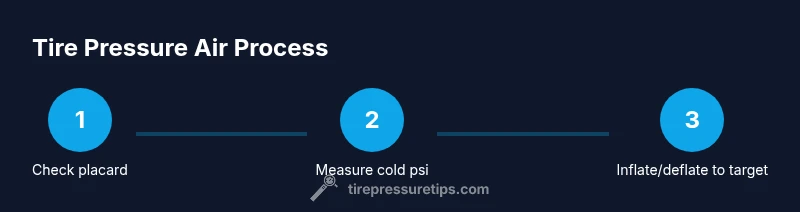
Achieving proper tire pressure air is essential for safety, fuel economy, and longer tire life. This quick answer shows you how to check cold tires against the vehicle placard, use a precise gauge, and adjust with a reliable air source. Consider temperature, load, and TPMS signals, then log readings to keep your tires properly inflated between checks.
Understanding tire pressure air: definition and consequences
Tire pressure air is the invisible force inside each tire that supports the car's weight, maintains the tire shape, and influences handling, braking, and fuel efficiency. The air pressure inside a tire changes with temperature, driving conditions, and load, which means even a small shift can alter how a tire wears and performs. According to Tire Pressure Tips, maintaining proper tire pressure air improves fuel efficiency, grip, and tire wear. The best way to assess it is: measure cold tires against the official placard, use a precise gauge, and adjust with a reliable inflator. Keeping notes of readings over time helps you spot gradual leaks or slow losses. By treating tire pressure air as a living parameter rather than a fixed value, you set yourself up for safer driving and better tire longevity.
Why proper tire pressure air matters for safety and performance
Maintaining the correct tire pressure air is a foundational safety habit. Proper inflation ensures a consistent contact patch with the road, which improves braking response, steering feel, and cornering stability. Under-inflation makes tires flex more, heat up faster, and wear on the outer edges; over-inflation reduces the contact patch, leading to a harsher ride and less traction in certain conditions. The Tire Pressure Tips team emphasizes that small changes in inflation can affect fuel economy, tire wear, and even the likelihood of a blowout in extreme cases. Regular checks help you respond to leaks, slow punctures, or changes in weather before they become costly problems.
The science of pressure: how air behaves in tires
Air inside a tire behaves according to basic gas principles: as temperature rises, air expands; as it cools, it contracts. When you drive, tires heat up, which increases pressure slightly. Heavier loads or higher speeds can intensify this effect. Because outside temperature also shifts with seasons, the “cold” reading you take in the morning may differ significantly from the pressure after you drive home in the evening. Understanding this helps explain why you might see pressure readouts that don’t match the placard after a long trip, and why you should adjust pressure when temperatures swing.
How to measure tire pressure accurately
Measuring tire pressure accurately starts with a cold tire. Remove the valve stem cap from the tire you want to check, attach a gauge, and read the pressure with the gauge firmly seated. If you notice any hiss of air, re-seat and try again. Repeat on all four wheels, noting the readings for front and rear tires separately. Compare each reading to the vehicle placard or owner's manual values and to any recommended targets from your tire manufacturer. If readings are well off the target, don’t rush; proceed to adjust in small increments and recheck after inflation to ensure accuracy.
Tools and gauges: choosing the right instrument
Choosing the right gauge matters for accuracy and ease of use. Digital gauges typically provide quick, precise readings and are easy to read in low light. Analog gauges can be just as accurate if the scale is clear and you calibrate regularly. A gauge with a built-in gauge for psi makes it simpler to read; if your air source lacks a gauge, use a separate one and verify readings against the inflator’s readout. For reliability, keep a spare cap and keep your gauge clean to avoid debris that can skew results.
Temperature and seasonality: how weather affects pressure
Weather and temperature shifts can be as impactful as a road bump. In cold weather, air density increases and pressure drops, which means you may need to inflate more to hit the placard. In hot weather, tires naturally gain pressure as air expands under heat. If you drive long distances in the heat, the tire pressure can rise noticeably; when you return to cooler conditions, the pressure may fall. This is why seasonal adjustments and regular checks are essential, especially if you live in areas with wide diurnal or seasonal temperature swings.
Adjusting air pressure for load and seasons
Start with the placard values, but consider how your typical load compares to factory conditions. If you often carry heavy cargo or passengers in the rear, you may need to adjust rear tire pressure slightly higher than the front to maintain even wear. If you drive in regions with hot summers or cold winters, plan to check and adjust inflation more frequently during those periods. When in doubt, err on the side of slightly higher pressure rather than under-inflation, as under-inflation is a more common source of tire wear and safety issues.
TPMS: understanding sensors and when they misread
TPMS helps alert you to pressure problems, but it is not a substitute for regular checks. Some TPMS sensors can lag, misread, or get damaged by impacts. If TPMS shows a warning while your tires look fine, take a quick measurement with a gauge to verify. If the reading is off, reinflate to target and recheck; if TPMS consistently misbehaves, a sensor or battery issue may be present and require service.
Common mistakes and how to avoid them
Common mistakes include checking the wrong tire, inflating while hot, ignoring seasonal changes, and using a gauge that isn’t calibrated. Another mistake is assuming a tire is fine because it looks normal; small leaks or slow punctures may not be visible. Always check the spare tire if your vehicle has one, and avoid overinflating to fix a flat. Keeping a simple log of readings helps you notice slow losses.
Maintenance routine and record-keeping
Build a simple cadence: inspect tires monthly and before long trips, check when the tires are cold, and adjust as necessary. Record the PSI readings for each tire and the target values in a phone app or notebook. Inspect for uneven wear, cracks, or bulges, and replace worn tires promptly. Regular maintenance reduces the risk of blowouts and extends tire life, saving money in the long run.
Tools & Materials
- Portable tire pressure gauge(Digital preferred for accuracy; ensure it reads in psi and is calibrated.)
- Air source (compressor or gas station pump)(Look for stable, accurate output; some pumps have bad gauges—verify with your own gauge.)
- Reading log (paper or app)(Record each tire’s reading and target values to track trends.)
- Valve stem tool/cap removal tool(Not strictly required but helpful for stubborn caps.)
Steps
Estimated time: 30-45 minutes
- 1
Find the recommended pressure
Open the driver’s door or check the owner's manual to locate the exact front and rear tire pressures. Note whether the values apply to cold tires and whether they differ by axle. This establishes your target before inflating.
Tip: Always start with cold tires; driving recently can raise pressure and skew readings. - 2
Prepare your tools
Gather a reliable gauge and a stable air source. Remove the valve caps from all tires you plan to check so you can compare readings consistently during the session.
Tip: Keep caps in a pocket or tray so you don’t lose them. - 3
Measure each tire
Attach the gauge to the valve stem and read the pressure. Do not rock the gauge; press firmly to get a steady read. Record readings for front and rear tires.
Tip: Take two readings on each tire to confirm accuracy. - 4
Inflate or deflate to target
If a tire is below target, add air in small increments and recheck. If above target, release air gradually and recheck until you match the placard.
Tip: Avoid overinflation; it’s easier to remove air later than to fix a popped tire. - 5
Recheck all tires
After adjustments, recheck every tire again to confirm accuracy. Temperature effects can cause minor shifts, so a final check is essential.
Tip: Recheck after a few minutes for the gauge to settle. - 6
Log readings and inspect
Enter final psi values for each tire into your log. Visually inspect tires for uneven wear, cuts, or bulges that may indicate a problem.
Tip: A simple log helps you notice slow leaks over time. - 7
Check the spare tire
If your vehicle has a spare, measure and inflate it to the recommended pressure as well. A ready spare is part of safe maintenance.
Tip: Don’t leave the spare underinflated; it’s your emergency option.
Frequently Asked Questions
What is tire pressure air?
Tire pressure air is the air inside the tire that supports the vehicle’s weight and affects handling. Keeping it within the recommended range ensures safety, efficiency, and even tire wear.
Tire pressure air is the air inside your tires that helps support the car and affect handling. Keeping it in the recommended range keeps you safer and saves tire wear.
How often should I check tire pressure?
Check tires at least monthly and before long trips. Temperature changes can cause small shifts, so periodic checks help maintain optimal inflation.
Check your tires at least once a month and before big trips to catch slow leaks or seasonal changes.
Can TPMS replace manual tire pressure checks?
No. TPMS alerts you to pressure issues, but you should verify readings with a gauge to confirm exact psi and adjust as needed.
TPMS helps, but you still need to measure with a gauge to know the exact pressure.
What should I do if tires are hot after driving?
Avoid inflating or deflating while tires are hot. Wait until they cool to get an accurate reading, then adjust to the target while cold.
Don’t inflate when hot—let them cool, then check and adjust to the right pressure.
Why does tire pressure change so often?
Pressure changes with temperature, load, driving, and even time of day. Regular checks help you respond to these fluctuations.
Pressure changes with temperature and loads, so regular checks keep you on target.
Is it safe to drive with slightly underinflated tires?
Driving with underinflated tires increases wear and heat buildup, which can reduce safety. Aim to stay near the target as closely as possible.
It’s safer to bring tires back to the recommended pressure than to drive with underinflated tires.
Watch Video
What to Remember
- Check cold tires against placard.
- Use a reliable gauge for accuracy.
- Account for temperature when checking or adjusting.
- Log readings to spot slow leaks.
- TPMS helps but does not replace manual checks.