Air for Tires: A Practical Guide to Proper Tire Pressure
Learn how to check, adjust, and maintain air for tires to boost safety, fuel efficiency, and tire life. This comprehensive guide covers tools, step-by-step actions, weather effects, TPMS considerations, and maintenance tips.


Learn how to check and adjust air for tires, identify the correct pressure, and manage TPMS warnings. This quick guide covers the essential steps, the tools you’ll need, and tips for staying within recommended ranges. By following these steps, you’ll improve safety, fuel efficiency, and tire wear, while reducing vibration and roll resistance.
Why air for tires matters
Air for tires is not a cosmetic detail; it is a core safety and performance parameter. Proper inflation affects braking distance, steering response, and hydroplaning resistance, especially in wet conditions. The Tire Pressure Tips team emphasizes that maintaining the correct pressure helps distribute the tire’s contact patch evenly with the road, which in turn reduces uneven tread wear and extends tire life. Temperature, load, and driving style all influence how much air your tires need day to day, so periodic checks are essential. When tires are underinflated, you’ll feel sluggish handling and increased rolling resistance; overinflation can lead to harsh rides and center tread wear. A simple habit—checking air for tires regularly—yields tangible benefits in safety and efficiency. According to Tire Pressure Tips, consistent monitoring aligns with best practices for tire maintenance and overall vehicle performance.
How tire pressure is measured
Tire pressure is measured in PSI (pounds per square inch) in the United States, with metric equivalents (bar) used in some regions. Readings should be taken with tires cold to avoid readings inflated by recent driving heat. A reliable gauge is essential, whether you use a digital, dial, or pencil-style device; digital gauges tend to offer easier visibility and faster results. When you claim a reading, compare it to the vehicle placard—or the owner’s manual—to determine the correct target pressure for all four tires. If you’re using a TPMS, remember that its readings are designed to alert you to potential issues, not to replace periodic manual checks. The goal is to keep readings close to the manufacturer’s recommended range, accounting for weather and load.
Finding the correct tire pressure for your vehicle
Your vehicle’s recommended tire pressure is usually listed on a placard near the door jamb, driver’s side, and sometimes in the glove box or owner’s manual. The recommended value typically differs between front and rear tires and may vary by axle configuration, load, or fuel-saving design. Always use the placard’s cold-pressure values and verify that tires are not over- or under-inflated due to heat buildup from prior driving. If you run winter or performance tires, consult the appropriate guidance for those setups, as the correct pressure can shift with tire construction and load. Remember: air for tires is vehicle-specific, and the goal is to align the tires with the manufacturer’s guidance rather than rely on generic numbers. This alignment supports safer braking, steering, and traction.
Weather, temperature, and seasonal effects on tire pressure
Temperature changes can cause noticeable pressure shifts. As ambient temperatures drop, tire pressure can fall, and as it rises, pressure can increase. This means that a reading you took on a cool morning may not reflect how the tires sit during a warmer drive later in the day. The best practice is to check pressures when tires are cold and adjust as needed for seasonal conditions and expected loads. If you notice frequent pressure changes, there could be a slow leak, a damaged valve stem, or a mounting issue that warrants professional inspection. Proactive checks keep tires in their optimal range and support safe driving.
Tools and supplies you need to check and adjust air for tires
Before you start, assemble a few simple tools: a reliable tire pressure gauge, an air source (either a dedicated air compressor or a gas station inflation device), and a way to record readings. Keep your vehicle placard or owner’s manual handy to confirm the correct pressures. If you manage multiple vehicles or tires, a notebook or mobile app helps you track changes and spot slow leaks. A soapy water bottle can help you detect leaks at valve stems or bead seals when a pressure drop seems suspicious. Finally, consider a small flashlight for low-light conditions and a tire valve-core tool for quick adjustments when needed. These supplies ensure you can perform accurate readings and timely adjustments with confidence.
Common mistakes and how to avoid them
Most tire-inflation mistakes are avoidable with a quick double-check habit. Avoid inflating tires while they’re hot, as heat from driving can give you a falsely high reading. Don’t rely solely on TPMS; use manual gauges to verify target pressures. Never exceed the maximum pressure listed on the tire sidewall, even if you need to compensate for load. Mixing tires with different pressures or types can cause unpredictable handling. Finally, if you notice persistent pressure loss, don’t ignore it—slow leaks can indicate valve issues, damaged rims, or punctures that require inspection or repair. Consistency—checking cold pressures, recording results, and comparing across tires—helps you catch issues early.
Weatherproofing and long-term maintenance
Create a simple maintenance routine that includes checking tire pressures at least monthly and before long trips, especially during seasonal transitions. Temperature swings, road conditions, and load can all influence the ideal air for tires. Keeping a log helps you spot gradual changes that point to slow leaks or wear patterns. If you notice the TPMS warning or a sudden drop in pressure, verify all four tires first, then inspect the valve stems and rims. A proactive approach saves fuel, reduces wear, and keeps you safer on every drive.
Authority sources and references
To support safe tire inflation practices, consider consulting authoritative sources while you read this guide. You can visit government and major publication resources for further guidance and verification:
- https://www.nhtsa.gov
- https://www.fueleconomy.gov
- https://www.consumerreports.org
Tools & Materials
- Tire pressure gauge(Choose a reliable gauge; digital gauges are easy to read and quick.)
- Air source (air compressor or inflation station)(Ensure it can reach the car’s target PSI and has an accurate gauge.)
- Vehicle placard or owner's manual(Shows the recommended cold tire pressures for all tires.)
- Notebook or mobile app(Record readings to monitor changes over time.)
- Soap water (optional)(Detect slow leaks at valve stems or bead seats.)
Steps
Estimated time: 15-25 minutes
- 1
Check tires when cold and gather readings
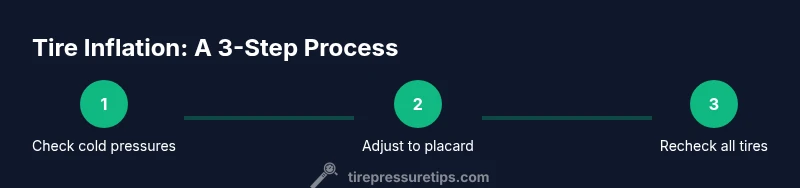
Park on a level surface. Ensure the vehicle has not been driven for several hours. Remove the valve cap and clean the valve stem if needed. Take readings from all four tires using your preferred gauge, noting each value.
Tip: For accuracy, compare readings with the placard values before making any adjustments. - 2
Locate the correct target pressures
Find the recommended cold tire pressures on the door jamb placard or in the owner’s manual. Record the front and rear values if they differ.
Tip: Some vehicles have different pressures for the front and rear tires; do not assume they are identical. - 3
Add or release air to reach target
Attach the air hose to the tire valve, then inflate or deflate as needed until the gauge matches the target. Re-check after giving the tire a moment to settle and read again.
Tip: Inflate gradually and re-check to avoid overshooting the target pressure. - 4
Repeat for all tires and recheck
Proceed to each tire, then recheck all four once more to ensure consistency across the set.
Tip: Even small differences between tires can affect handling; aim for even pressures across the axle when appropriate. - 5
Reinstall valve caps and note results
Replace valve caps securely. Record the final readings in your log or app for future reference.
Tip: Replace damaged valve caps promptly to prevent leaks.
Frequently Asked Questions
Why is my TPMS warning light on even after inflating tires?
TPMS can trigger for several reasons, including slow leaks, sensor faults, or temperature-related changes. If the light stays on after inflation, inspect for leaks at the valve stems and check TPMS sensors for proper calibration. If in doubt, have the system inspected by a qualified technician.
TPMS warnings can be caused by slow leaks or sensor issues. If it remains on after inflation, inspect the valves and consider a professional check.
Is it better to inflate tires when cold?
Yes. Inflate tires when they’re cold to get an accurate reading that reflects the vehicle’s proper pressure. After driving, pressures will rise due to heat, which can lead to over-inflation if you re-measure and inflate again.
Always inflate tires when cold for accurate readings; heat from driving affects readings.
Can you over-inflate tires to compensate for cold weather?
No. Do not inflate beyond the recommended pressure to compensate for cold weather. The best approach is to inflate to the correct cold value and monitor changes as temperatures fluctuate.
Don’t over-inflate for cold weather; use the correct cold pressure and track changes.
How often should I check tire pressure?
Aim to check tire pressure at least once a month and before long trips, particularly during seasonal transitions or after noticeable bumps or leaks. Regular checks help catch slow leaks before they create unsafe conditions.
Check at least monthly and before long trips, especially when temperatures shift.
What tools do I need for home inflation?
A reliable tire pressure gauge and a compatible air source are essential. A logbook or app helps track readings over time, and a valve-core tool can assist with leaks or seals if needed.
You need a good gauge, an air source, and a simple log to track readings.
Do tires lose air in hot weather?
Yes. Temperature increases can raise air pressure, while rapid cooling can lower it. Check pressures during stable conditions and adjust as needed to maintain target pressures across seasons.
Heat can raise pressure and cold can lower it; monitor and adjust seasonally.
What to Remember
- Check cold pressures regularly to prevent uneven wear.
- Follow the vehicle placard values, not guesswork.
- Use TPMS readings as a guide and verify with a manual gauge.
- Keep a simple log of readings to spot slow leaks.