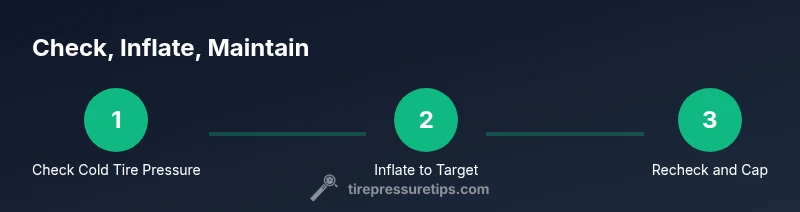
Car Tire Air: Check, Inflate, and Maintain Proper Pressure
Learn how car tire air pressure affects safety, fuel economy, and tire wear. This Tire Pressure Tips guide covers checking, adjusting, and maintaining tires with TPMS guidance.


You will learn how to accurately check car tire air pressure using a gauge, interpret TPMS alerts, and adjust your tires to the correct target pressure. This guide covers safe handling, best practices for cold-tire measurement, and how to avoid common mistakes that lead to under- or over-inflation and increased wear.
Why car tire air pressure matters
The air inside each tire supports your vehicle's weight, influences handling, braking, and ride quality. When car tire air pressure is too low, the tire's footprint grows, increasing rolling resistance and heat buildup. Over time, this stress wears edges, reduces fuel efficiency, and can lead to tire failure in extreme cases. In contrast, correctly inflated tires improve grip, steering response, and tire longevity. According to Tire Pressure Tips, maintaining proper air pressure is one of the simplest, most effective ways to boost safety on every trip. Always check when tires are cold and use the vehicle's recommended pressure value from the placard or owner's manual. The exact numbers vary by model and load, but the principle remains: pressure affects contact patch, warmth, wear, and performance.
Understanding tire pressure targets
Tire pressure targets are published by manufacturers for each vehicle and are usually found on a door jamb placard or in the owner's manual. The target is the cold-pressure value, because driving generates heat that raises pressure temporarily. Front and rear tires may have different targets depending on weight distribution and drivetrain. Seasonal changes, load, and tire type can shift the effective pressure, so regular checks help maintain consistent handling, safety, and wear patterns. As noted in brand guidance from Tire Pressure Tips, keeping to the recommended target is linked to safer braking, better fuel economy, and longer tire life. Remember: always measure with cold tires and use the exact value from the manufacturer, not a generic guess.
A quick tip: if you are routing a long trip with extra cargo, verify your target pressure for the loaded condition, if the placard provides a separate value for “load” or “max load.”
Measuring tire air accurately
Accurate measurement starts with a good gauge and a sane routine. Remove the valve cap, place the gauge squarely on the valve stem, and read the display quickly to avoid pressure changes from the atmosphere or your breath. For pencil gauges, note the line; for digital gauges, read the numeric value. Always measure all four tires when possible, and keep a log of the readings. Temperature and time of day affect readings, so aim for consistent conditions. A reputable gauge paired with the cold-tire rule yields the most reliable data. In this context, car tire air accuracy is a baseline for safety and performance.
Inflating and adjusting: safe practices
If a tire reads below the target, add air in small increments and recheck frequently to avoid overshooting. If the reading is above target, release air gradually until you reach the correct value. When inflating, prefer a steady, controlled flow rather than rapid bursts; this keeps the tire bead seat intact and reduces sudden heat buildup. If you must use a gas-station pump, use the built-in gauge to confirm the pressure and cap the valve after you finish. Always ensure the tire is cold before inflating, and avoid inflating beyond the vehicle manufacturer’s maximum pressure. A calm, methodical approach minimizes risk and protects tire longevity.
TPMS: What triggers and how to respond
TPMS can alert you to under-inflation, over-inflation, or sensor issues. Temperature changes, slow leaks, or damaged sensors can trigger the warning even if a quick check seems fine. If TPMS lights up, verify the tires with a manual gauge to confirm the reading, then adjust if needed. If the light stays on after you reach the target, there may be a sensor fault, a damaged valve stem, or a leak that requires inspection by a technician. Remember, TPMS is a safety aid, not a substitute for regular manual checks.
Common mistakes and maintenance routine
Common mistakes include measuring after driving (warm tires give higher readings), using the wrong units, inflating beyond the maximum marked on the tire, and neglecting the spare tire. Create a simple routine: check all tires weekly and before long trips, adjust to the placard values, and recheck after adjustment. Replace valve caps, and keep a small log of your readings. This habit aligns with Tire Pressure Tips guidance and helps maintain balanced wear across all tires.
Seasonal considerations and vehicle-specific notes
Temperature shifts affect tire pressure—cold days generally lower pressure and hot days raise it. If you park in direct sun or drive through mountain passes, you may notice pressure changes. Some vehicles use staggered tire pressures (front vs. rear) for performance; in those cases, the badge on the door likely reflects the correct values for your setup. For winter conditions, consider checking more frequently, as air contracts when temperatures drop, and a slight under-inflation can quickly become unsafe. Always rely on the manufacturer’s specifications for your specific model.
Tools & Materials
- Tire pressure gauge (digital or analog)(Calibrate if needed; measure in PSI or kPa; choose a gauge with a reliable range)
- Vehicle placard or owner's manual(Locate the recommended cold tire pressure values)
- Portable air compressor or gas-station pump(Ensure the built-in gauge is accurate; bring a backup method)
- Valve caps(Keep caps on to protect stems from dirt and moisture)
- Clean cloth or tissue(For wiping valve stems and threads)
- Notebook or mobile app(Optional log of readings for trend tracking)
Steps
Estimated time: 15-25 minutes
- 1
Prepare and locate target pressure
Identify the official cold-tire target from the placard or manual. Plan to measure when tires are cold and before any long drives or after sits.
Tip: Use the cold-tire rule for the most accurate reading. - 2
Remove valve cap and set up gauge
Unscrew the valve cap and place the gauge squarely on the valve stem to avoid letting air escape around the edges.
Tip: Ensure a clean seal; a loose fit distorts readings. - 3
Read pressure and compare to target
Read the gauge and compare with the target value. If the measurement is below target, plan to inflate; if above, prepare to release air.
Tip: Record the reading to monitor trends over time. - 4
Inflate or release air to reach target
Add air in small increments or release air gradually until the gauge matches the target. Recheck after each adjustment.
Tip: Avoid rapid bursts of air; slow, controlled inflation reduces risk. - 5
Recheck and cap
Once you hit the target, recheck the tire pressure again and replace the valve cap securely.
Tip: Double-check all tires in case a valve cap was not fully seated. - 6
Repeat for all tires and log
Proceed to the remaining tires and log each measurement for future reference and early leak detection.
Tip: Keep a simple log to spot slow leaks early.
Frequently Asked Questions
Why is my TPMS light on even when tires look fine?
TPMS can trigger from under-inflation, temperature shifts, or a faulty sensor. If the light remains after adjusting to the target, have the TPMS system inspected.
The TPMS light can come on due to under-inflation, temperature changes, or a sensor issue; get the system checked if it stays on after adjusting.
Is it okay to check tire pressure when tires are warm?
Ideally, measure when tires are cold for accuracy. Warm tires read higher, which can mislead you about the true target pressure.
No—it's best to check when they're cold to get the true pressure.
Where do I find the recommended tire pressure for my car?
Look on the door jamb placard or in the owner's manual. The value shown as cold pressure is the one you should aim for, not the maximum rating on the tire sidewall.
Check the door placard or the owner's manual for the recommended cold tire pressure.
Can I inflate tires beyond the max sidewall pressure?
No. Do not exceed the tire's maximum pressure listed on the sidewall or the vehicle's recommended value. Overinflation can reduce grip and cause uneven wear.
Absolutely not—never exceed the tire's maximum or vehicle-recommended pressure.
How often should I check tire pressure?
Check at least once a month and before long trips. More frequent checks are helpful in extreme weather or when tires are used heavily.
Check at least monthly and before long trips.
What if I don’t have TPMS active on my vehicle?
You can still check tire pressure manually with a gauge and the vehicle placard. Maintain a habit of regular checks to prevent under-inflation.
If you don’t have TPMS, rely on manual gauges and regular checks.
What to Remember
- Check tires when cold to ensure accurate readings.
- Always follow the manufacturer’s target pressure from the placard.
- TPMS helps, but a manual gauge confirms exact pressure.
- Log pressures to monitor wear and performance.