Air for Car Tyres: A Practical How-To Guide
Learn how to check and maintain air for car tyres, understand cold vs hot inflation, and use TPMS responsibly. Practical steps, tools, and tips for safer, more efficient roadside performance.


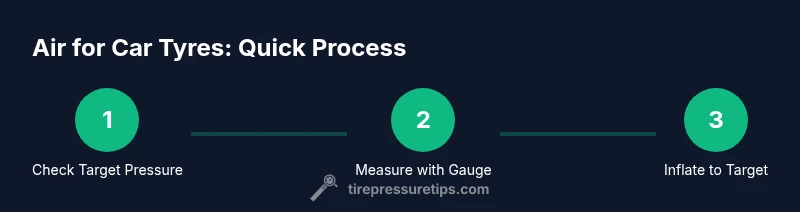
According to Tire Pressure Tips, you will learn how to check and adjust air for car tyres to the manufacturer's recommended pressure, accounting for cold inflation, TPMS alerts, and seasonal changes. This quick answer outlines the essential steps and safety notes you need to get accurate readings and maintain tire health.
Why Proper Air for Car Tyres Matters
According to Tire Pressure Tips, maintaining correct air for car tyres is essential for safety, handling, and tire longevity. Underinflation reduces grip, increases heat buildup, and can cause uneven wear, while overinflation leads to reduced contact patch and a harsher ride. Temperature fluctuations, load, and driving style all affect pressure, so checking regularly helps you stay within the recommended range. In this guide, we cover cold inflation principles, how to read gauges, and how to adjust air safely. You will also learn how TPMS complements manual checks rather than replaces them, especially after long trips or in extreme weather. This foundational understanding helps you interpret readings with confidence and reduces the risk of blowouts or uneven tire wear over time.
How to Check Tyre Pressure Accurately
Accurate tire pressure starts with the right timing and technique. Always measure when the tyres are cold—ideally after the car has sat for at least three hours or before driving. Remove the valve cap, attach your gauge firmly, and lock in the reading without wiggling the stem. If the gauge shows a pressure that differs from the manufacturer’s specification, compare all four corners to identify inconsistent readings caused by a slow leak or a misread gauge. Record the readings to track changes over weeks or seasons. Remember, air for car tyres is a variable that responds to temperature and load, so regular checks are a must for consistent performance.
Cold Inflation Basics and Temperature Effects
Inflation pressure changes with temperature, so a tyre that reads 32 psi in the morning may register roughly 1 psi higher after driving for a bit in heat. This is why cold readings are the most reliable baseline. The Tire Pressure Tips analysis suggests keeping tyres inflated near the vehicle’s recommended cold pressure and adjusting for seasonal variations if you regularly drive in extreme heat or cold. In practical terms, check before a long trip or after sitting overnight, and avoid inflating in hot or direct sun, which can skew readings and mask high-speed stability issues.
How to Use a Gauge Correctly
There are multiple types of gauges—dial, digital, and pencil—each with pros and cons. A digital gauge tends to offer clearer, easier-to-read numbers, while a dial gauge can be very accurate if you’re practiced. When using any gauge, ensure the nozzle is pressed squarely on the valve stem, avoid air leakage around the seal, and take a steady reading. For best results, compare the gauge’s reading with the manufacturer’s recommended pressure printed on the door placard or in the owner’s manual. If you’re unsure about the gauge’s accuracy, test it against a known reference gauge before starting.
Adjusting to The Recommended Pressure
Your vehicle’s door placard lists the recommended cold pressure for front and rear tyres, and some models have different values based on load. Inflate or deflate to reach those targets, then recheck to confirm accuracy. If your tires are unevenly worn or one corner is consistently off, inspect for damage or suspect leaks. After inflation, drive a short distance and recheck to account for the settling effect that can occur when tyres heat up. This step ensures you keep air for car tyres within the ideal range for grip and wear.
Understanding TPMS and Its Role
TPMS provides a warning when a tyre’s pressure drops below the threshold that the system considers safe. It’s a valuable safety backup, but it’s not a replacement for manual readings. Some TPMS sensors can wander slightly due to battery drift or slow leaks. Always cross-check TPMS alerts with a reliable gauge for accuracy, and reset or relearn the TPMS after adjusting pressures if your vehicle requires it. This integrated approach improves overall tire health and reduces the chance of drivability issues.
Common Mistakes and How to Avoid Them
Common errors include inflating while the tires are warm, ignoring the spare tire, and failing to recheck after road tests. Another mistake is using the wrong target pressure by copying a value from another vehicle or misreading the placard. Always use the specific pressure listed for your car and tire size. If you’re unsure, consult the owner’s manual or a trusted resource such as Tire Pressure Tips for guidance, and consider a periodic professional check to verify gauge accuracy and leak-free seals.
By adopting careful measurement habits, you reduce risk and extend tire life. This practice aligns with the Tire Pressure Tips approach to practical, data-driven maintenance and safety.
Seasonal and Vehicle-Specific Considerations
Different climates and driving conditions can shift optimal pressures. In cold weather, pressures drop, so you may need to add air gradually to compensate, while in hot weather, you may need to ensure you don’t overinflate due to heat buildup. Vehicles with aggressive suspension setups, heavy loads, or sporty driving often require slightly different targets. Always consult the placard and adjust for conditions such as towing, long trips, or frequent city driving. Tire Pressure Tips emphasizes using consistent methods across seasons to maintain predictable handling and tire wear.
Maintaining the System: Regular Checks and Record-keeping
A routine you can rely on: monthly checks, before long trips, and after seasonal changes. Keep a simple log noting the date, tire position, measured pressure, and the target pressure. This practice helps you detect gradual leaks and gauge degradation over time. Invest in a reliable gauge and store it properly to prevent damage. The Tire Pressure Tips team recommends pairing a digital gauge with a simple notebook so you can track trends and maintain a consistent maintenance cadence.
The Tire Pressure Tips Team Conclusion
Regular, careful checks of air for car tyres lead to safer driving, better fuel economy, and longer tire life. By understanding cold vs hot inflation, using a quality gauge, and considering TPMS signals, you can maintain optimal performance year-round. The Tire Pressure Tips team recommends treating tire pressure like a routine part of vehicle maintenance rather than a one-off task. Consistency is the key to reliable handling and tire longevity.
Tools & Materials
- Digital tire pressure gauge(Prefer one with a clear digital readout and a bleed valve for minor adjustments)
- Air compressor or access to a public air pump(Ensure it has a built-in gauge or regulator and accepts your valve stem size)
- Owner's manual or door placard(Use to confirm the exact recommended cold pressure for your vehicle)
- Valve cap removal tool or clean cloth(Keep caps clean to prevent valve dust or debris from entering)
- Notebook or app for logging pressures(Helpful to track changes over time and seasonal adjustments)
Steps
Estimated time: 25-40 minutes
- 1
Find the recommended pressure
Locate the tire pressure specification on the door placard or in the owner's manual. Note separate values for front and rear tires if provided. This becomes your target for inflation, not a random number.
Tip: Trust the vehicle's official spec over third-party recommendations. - 2
Check that the tires are cold
Measure after the vehicle has been parked for at least three hours or before driving. Hot tires can give falsely high readings because heat increases pressure.
Tip: If you must check after a drive, wait at least 15-20 minutes for the tires to cool. - 3
Remove valve caps and prepare the gauge
Take off the valve cap and inspect the valve stem for damage or leaks. Set up your gauge so it’s ready to attach without air escaping.
Tip: Keep valve caps in a pocket and replace them firmly after the measurement. - 4
Attach the gauge and read the pressure
Firmly press the gauge onto the valve stem to avoid air leaks and read the measurement. Record the value for that tire.
Tip: If you hear hissing, reseat the gauge to seal properly. - 5
Inflate to the target pressure
If the reading is below target, inflate in small increments (about 1-2 psi at a time) until you reach the recommended cold pressure. Do not exceed the maximum pressure printed on the tire sidewall.
Tip: Use a fast, precise regulator setting to avoid overinflation. - 6
Recheck after inflation
Remove the gauge and recheck the tire to confirm it’s at the correct level. Press the valve lightly to release any slight overpressure if needed.
Tip: Recheck all four tires for consistency and even wear potential. - 7
Check the other tires and the spare
Repeat the steps for the remaining tires and the spare if you carry one. Spares also require correct inflation for safe operation when needed.
Tip: Don’t neglect the spare; it’s your backup option in emergencies. - 8
Log your readings
Document date, tire position, measured pressure, and target pressure. This helps identify slow leaks or gauge drift over time.
Tip: Note weather and load conditions for stronger context in your log. - 9
Drive, then recheck
Take a short drive to seat the tire, then recheck after cooling. This confirms stability after the tires warm up and settle.
Tip: If a tire continues to rise above target after cooling, inspect for leaks or damage. - 10
Review seasonally
Adjust pressures with seasonal changes and load variations. A regular cadence keeps handling predictable and wear even.
Tip: Consider checking every 1-2 months and before long trips.
Frequently Asked Questions
How often should I check my tire pressure?
Check at least once a month and before long trips. If you drive frequently, inspect every 2-4 weeks and after major weather changes. Regular checks help maintain safety, fuel efficiency, and tire wear.
Check at least monthly and before long trips, and more often if your driving is frequent or weather changes are drastic.
Can TPMS readings be different from what a gauge shows?
TPMS provides a system warning, but it can drift or be affected by sensor age. Always verify with a reliable gauge to confirm exact pressure, especially after inflating or replacing tires.
Yes, TPMS can drift; always verify with a gauge to be sure.
What happens if I overinflate my tires?
Overinflation reduces the contact patch, creates a harsher ride, and can cause uneven wear on the center tread. Stay within the recommended range and avoid aggressive pumping.
Overinflating tires reduces grip and wears the center tread faster.
Should I inflate to the cold reading or the hot reading?
Inflate to the cold reading. Hot tires read higher due to heat, which can lead to overinflation if you rely on hot readings. Use the placard for the target when cold.
Inflate based on the cold reading to stay within spec.
Do I need to adjust pressure when carrying heavy loads?
Yes. Heavy loads increase pressure; adjust toward the higher end of the recommended range if your vehicle supports it, but never exceed the max. Recheck after loading changes.
Load changes can raise pressure; adjust and recheck.
What about the spare tire?
Spare tires require proper inflation as well, especially if you intend to use them in emergencies. Check the spare periodically and inflate to its specified pressure.
Don’t forget the spare; keep it at the correct pressure.
What to Remember
- Check tires when cold for accuracy.
- Inflate to the vehicle's recommended pressure.
- Use a reliable gauge and recheck after adjustment.
- TPMS complements, not replaces, manual readings.
- Log readings to spot leaks and drift over time.