Check Tire: A Practical Guide to Safe Tire Pressure
Learn how to check tire pressure accurately, interpret TPMS signals, and inflate safely with practical steps. This Tire Pressure Tips guide covers tools, step-by-step actions, and common questions to keep you on the road.


According to Tire Pressure Tips, you will finish this guide knowing how to check tire pressure accurately, interpret TPMS readings, and decide when to inflate or deflate. You’ll need a digital gauge, a reliable air source, and your vehicle’s recommended pressure placard. This practical, step-by-step method is designed for drivers and DIY enthusiasts.
Why Checking Tire Pressure Matters
Checking tire pressure is a simple habit with big payoffs. Properly inflated tires improve safety by maintaining the correct contact patch with the road, which helps with steering response, braking, and cornering grip. Underinflated tires wear unevenly and can overheat in the heat of summer or on long trips, increasing the risk of a blowout. Overinflated tires ride harshly and wear in the center, reducing traction and comfort. The Tire Pressure Tips team emphasizes that regular checks are part of routine vehicle maintenance and can help you save money on fuel and tires over time. In addition to safety and economy, correct tire pressure also affects braking distance and handling in wet or snowy conditions. By learning to check tire pressure accurately, you empower yourself to act quickly when readings deviate from the placard and to maintain optimal tire health for months or years. This guide stays focused on practical steps you can perform with common tools, and it avoids hard-to-find jargon.
The Science Behind Tire Pressure and Safety
Tire pressure is more than a number on a sticker. It changes with ambient temperature, vehicle load, and driving conditions. When tires are cooler, pressures are lower; after a highway drive they rise as heat builds inside the tire. The goal of check tire is to arrive at the recommended range shown on your door jamb placard or in the owner's manual, which is designed to balance fuel economy, tire wear, and ride quality. The correct pressure helps create an even contact patch, ensuring even wear and predictable steering. Both over- and under-inflation shift handling, increase rolling resistance, and can shorten tire life. The Tire Pressure Tips approach to learning about pressure emphasizes consistency: check tires when they are cold, document readings, and adjust as needed before long trips or seasonal changes.
How to Check Tire Pressure Correctly
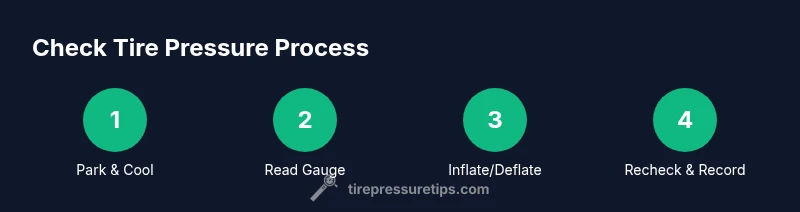
To check tire pressure, start with a cold tire and a flat, level surface. Remove the valve cap, place your digital gauge on the valve stem, and press straight until the gauge settles. Note the number and replace the cap securely. Repeat for each tire, including the spare if you rotate tires regularly. Compare every reading to your vehicle's recommended pressure placard on the door jamb or in the owner's manual. If readings are low, inflate slowly and recheck to avoid over-inflation. If readings are high, release air in small increments and recheck. Regular checks prevent surprises and help you maintain even tire wear.
Tools and What to Use
Before you start, assemble the essential tools:
- Digital tire pressure gauge (required) with PSI and kPa scales.
- A reliable air source (air compressor or manual pump).
- Vehicle owner’s manual or door placard (required).
- Clean cloth or tissue to wipe valve stems (optional).
- Safety gloves (optional) for grip and comfort. Having these on hand makes the process straightforward and reduces the chance of errors while you check tire pressure.
Reading and Interpreting Your Pressure Numbers
Readings should be compared against the vehicle's recommended pressure on the door placard or in the owner's manual. Remember that the pressure can vary slightly between tires (front vs. rear) and across temperatures. Start by measuring all four tires when the tires are cold, then adjust the higher or lower readings to bring them into the target range. If your readings are consistently off by a noticeable amount from the placard, there may be a leak, a faulty gauge, or a TPMS issue that deserves a closer look. Keeping a simple log of readings helps you monitor trends over time.
TPMS: What It Does and How to Trust It
TPMS (tire pressure monitoring systems) provides a warning when a tire is significantly underinflated. It’s a valuable safety feature, but the sensor can lag behind actual pressure changes or become faulty. If the TPMS light stays on after you’ve inflated the tires to the recommended level, recheck with a gauge to confirm accuracy. If readings still don’t match what the TPMS reports, you may need sensor maintenance, calibration, or battery replacement. Rely on the physical gauge for regular checks and use the TPMS as a supplementary alert.
What to Do When Readings Don’t Match Reality
Discrepancies between gauge readings and the TPMS can happen for several reasons: sensor lag, a slow leak, or a compromised valve stem. Start by verifying your gauge accuracy with a known good reference (like a roadside service station gauge) or a second gauge. If a leak is suspected, inspect tires for punctures or embedded objects and check the valve stem and bead area. Do not ignore mismatches; addressing them early prevents uneven wear and potential tire failure. If in doubt, consult a professional to inspect TPMS sensors and valves.
Handling Seasonal Changes and Temperature Effects
Temperature affects air density and tire pressure. In cold weather, pressures drop and may require inflating to the placard value once the tires warm up during driving. In hot weather, pressures rise, so you may need to vent air slightly to stay within the recommended range. When you park indoors during extreme temperatures, your readings can change as the tires equilibrate with the surrounding air. Regularly check tire pressure as seasons change and before long trips.
Regular Maintenance and Scheduling Checks
Make check tire pressure part of a routine maintenance schedule. A monthly check, plus a pre-road trip check, is a practical habit. Keeping an up-to-date log helps you catch trends and plan tire rotations or replacements before issues escalate. Don’t forget to inspect tire tread depth, look for sidewall damage, and ensure valve caps are tight and clean. A comprehensive check keeps you safer on the road and prolongs tire life.
Tools & Materials
- Digital tire pressure gauge(Prefer gauges with PSI and kPa scales; ensure calibrations are recent.)
- Reliable air compressor or inflator(Able to fine-tune to the target pressure; consider a unit with a built-in gauge.)
- Vehicle owner's manual or door placard(Find the recommended tire pressure for front and rear tires.)
- Cloth or tissue(Use to wipe the valve stem before reading.)
- Safety gloves(Optional, provides grip and comfort during checks.)
- Notebook or app(Record readings for trend tracking.)
Steps
Estimated time: 25-35 minutes
- 1
Park on level ground and cool tires
Turn off the engine, engage the parking brake, and let the tires cool for at least 2–3 hours if possible. Cold readings are more accurate because heat from driving increases tire pressure.
Tip: If you must check after a drive, wait at least 30 minutes for the tires to cool before reading. - 2
Remove valve caps and prepare the gauge
Scrub the valve stem with a cloth, then detach the cap and place it in your pocket. Ensure the gauge is ready and set to the correct unit (PSI or kPa) before attaching to the valve.
Tip: Keep caps in a safe place—losing them can allow dirt into the valve stem. - 3
Measure each tire with the digital gauge
Press the gauge onto the valve stem straight and firm until it settles. Read the displayed pressure and record it. Repeat for all tires including the spare if applicable.
Tip: Take readings from both front tires first, then rear; some vehicles show slight variations between axles. - 4
Compare against the placard and plan inflation
Refer to the door placard or owner's manual for the recommended pressure. If readings are low, inflate gradually and recheck. If readings are high, vent air in small increments and recheck.
Tip: Avoid inflating above the maximum rating on the tire sidewall. - 5
Recheck all tires after adjustments
After inflation or venting, remeasure each tire to confirm it now sits within the recommended range. Small adjustments can bring a tire into spec without overdoing it.
Tip: Double-check the valve caps are securely tightened after rechecking. - 6
Inspect tires for wear and leaks
While you’re at it, look for uneven wear, cracks, or embedded objects. Quick visual checks catch issues that a gauge cannot reveal and help you plan for replacements.
Tip: If you notice bulges or sidewall damage, replace the tire promptly. - 7
Document readings and set reminders
Record the final readings and schedule monthly checks or seasonal checks. Use a note or app to maintain a history that highlights trends over time.
Tip: Keep a simple chart in your glovebox for quick reference.
Frequently Asked Questions
How often should I check tire pressure?
Check tire pressure at least once a month and before long trips. Temperature changes and seasonal shifts can affect readings, so adjust your checks accordingly.
Check tire pressure at least monthly and before long trips. Temperature changes can affect readings, so monitor more often during seasonal transitions.
Can TPMS readings be wrong?
Yes, TPMS readings can differ from a gauge reading due to sensor calibration, battery life, or slow leaks. Always verify with a handheld gauge for the most accurate measurement.
TPMS can be off due to calibration or a slow leak. Always verify with a handheld gauge for accuracy.
What should I do if my tires are consistently low?
Consistency in low readings usually indicates a leak, valve issue, or damage. Inspect for punctures and consider professional inspection if readings stay low after inflation.
If readings stay low after inflation, you may have a leak or valve problem; have a professional check it.
Is it safe to drive with a low tire?
Driving on underinflated tires reduces control and increases wear. Inflate to the recommended level before driving long distances.
It's safer to inflate to the recommended level before driving, especially for long trips.
What’s the difference between cold and warm readings?
Cold readings are taken when the tire hasn’t heated from driving; warm readings will be higher. Always measure when cold for a consistent baseline.
Cold readings are the baseline; warm readings can be higher due to heat from driving.
How do I fix a slow tire leak?
Identify the source (valve stem, bead, puncture) and repair or replace the tire as needed. If unsure, seek professional help to avoid unsafe repairs.
Locate the leak source and fix or replace the tire; seek professional help if unsure.
Watch Video
What to Remember
- Check tire pressure when cold for accuracy
- Use the placard as your inflation target
- TPMS helps but does not replace manual checks
- Regular maintenance saves wear and fuel