What Is the Best Tire Pressure? A Practical Guide Today
Learn how to determine and set the best tire pressure for your vehicle. This guide covers how to find the exact spec, check cold tires, account for load and temperature, and avoid common mistakes for safer, more efficient driving.


According to Tire Pressure Tips, the best tire pressure is the value listed by your vehicle manufacturer, not a generic figure. This quick guide explains how to verify cold tire pressures, use a reliable gauge, and adjust for load and temperature to maintain safety and efficiency. It also covers TPMS basics and when to seek professional service.
Why the best tire pressure is vehicle-specific
According to Tire Pressure Tips, the best tire pressure is the value listed by your vehicle manufacturer, not a one-size-fits-all figure. The placard in your door jamb or the owner's manual reflects the tire type, axle load, and intended use for your car. Front and rear tires may have different recommendations, especially on vehicles with uneven weight distribution or performance tires. Temperature, load, and driving style all influence how the pressure behaves once the car is on the road. Underinflation and overinflation wear tires unevenly, reduce handling, and can impact fuel efficiency and braking distance. By starting with the recommended cold-inflation pressure and reevaluating as conditions change, you maintain balance between grip, comfort, and longevity. This foundation supports practical checks, adjustments, and maintenance you can perform safely.
How to locate your recommended tire pressure
Your vehicle’s exact tire-pressure specification is usually found on a placard mounted on the driver’s door jamb, inside the fuel-filler door, or in the owner’s manual. The placard lists separate values for the front and rear tires and for different load scenarios. If you cannot locate the placard, consult the vehicle manufacturer’s website or contact a dealer. Do not rely on the tire’s maximum inflation pressure on the sidewall as the target for daily driving; that number is the tire’s limit, not a recommendation for your car. Always use the official spec as the baseline.
The role of load and driving conditions
The recommended pressure changes with how you drive and what you carry. A heavier load, towing, or frequent highway cruising can justify a slightly higher cold-pressure target to maintain performance and stability. Conversely, light loads or comfortable city driving may align with the standard spec. Temperature swings—from hot summer days to cold mornings—also affect pressure, since air expands with heat and contracts with cold. In all cases, use the placard as the baseline and adjust gradually if you routinely carry unusual loads or drive under extreme conditions.
Step-by-step: checking cold tire pressure
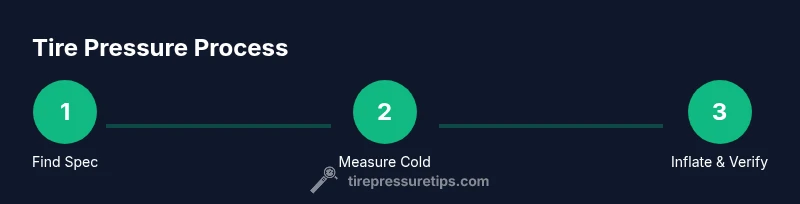
- Gather tools: a reliable gauge, an air compressor or inflation station, and your vehicle’s recommended pressure source. 2) Park in a safe, shaded area and wait for tires to cool (at least 3 hours if possible) to get an accurate reading. 3) Remove the valve cap and press the gauge onto the valve stem firmly to get a reading. 4) Compare the reading to the cold-spec value on the placard; if your tire is low, inflate in small increments. 5) Recheck after inflation to ensure you’re at the target, then screw the valve cap back on. 6) Repeat for all tires and the spare if applicable. 7) Log readings for future reference and check them regularly.
tip2:
Tools & Materials
- Tire pressure gauge (digital or dial)(Calibrated and accurate within +/-1 psi; have a backup gauge for cross-checks.)
- Air compressor or access to gas station inflation(Ensure it provides steady, controllable airflow and can reach the target pressure.)
- Vehicle owner’s manual or placard(Source for exact cold tire pressure values; check for front/rear differences.)
- Valve-cap replacement (optional)(Keep caps on to prevent dirt and moisture from entering.)
- Notebook or app to log readings(Helpful for tracking changes over time.)
Steps
Estimated time: 25-40 minutes
- 1
Prepare tools and locate the recommended pressure
Gather a reliable gauge, an inflator, and your vehicle’s official tire pressure value from the placard or manual. This baseline ensures you target the correct pressure, reducing trial-and-error inflation.
Tip: Have both a digital and dial gauge available for cross-checks. - 2
Check tires when they are cold
To avoid inflated readings, check pressures before driving or after the car has been idle for at least 3 hours. Temperature affects reading accuracy, so cold checks are essential.
Tip: If you must drive, wait at least 15 minutes after parking before testing. - 3
Read the gauge and compare to the spec
Place the gauge on the valve stem squarely and read the result. Compare it to the published cold-pressure value for your tires.
Tip: If your reading is high, wait and recheck after cooling to rule out a warm-tire reading. - 4
Inflate in small increments
If the reading is low, inflate in 1-2 psi increments and recheck after each step to avoid overshooting.
Tip: Stop inflating once you’re within a safe margin of the target. - 5
Recheck both tires on each axle
Ensure the front and rear tires on each axle reach their respective targets, as they sometimes differ.
Tip: Uneven pressures can affect handling and wear. - 6
Secure caps and log the result
Return valve caps, record the exact pressures, and note any unusual readings for future checks.
Tip: Keep a small log handy in your glove box or phone.
Frequently Asked Questions
What is the best tire pressure for my car?
The best pressure is the value listed on your vehicle’s placard or in the owner’s manual. This baseline can differ by axle, tire type, and load. Do not rely on the tire sidewall max as your target.
Use the placard or manual for the correct pressure; the sidewall max is not a recommended operating pressure.
How often should I check tire pressure?
Check at least once a month and before long trips, especially when temperatures change. Always verify when tires are cold for accuracy.
Check monthly and before long trips, especially after weather changes.
Does temperature really affect tire pressure?
Yes. Temperature changes cause air to expand or contract, altering pressure. Check in the morning or after tires have cooled to ensure accuracy.
Temperature matters; check when cold, as air expands with heat.
Why did my TPMS warning light come on if my tires seem fine?
TPMS can warn of slow leaks or sensor issues even if readings look reasonable. Inspect for punctures or leaks and check TPMS sensors if warnings persist.
If the warning stays on, inspect for leaks or sensor problems and consider a TPMS service.
What if I can’t find the placard?
Check the owner’s manual or the manufacturer’s website; contact a dealership if needed. Using a random value is unsafe; always verify from official sources.
If you can’t find it, contact the manufacturer or dealer for the exact spec.
What should I do about persistent underinflation after checking?
If underinflation returns, inspect for slow leaks, punctures, or faulty sensors. Do not drive long distances with low pressure; seek professional inspection.
Persistent low pressure? Check for leaks or a faulty sensor and get a professional check if needed.
Watch Video
What to Remember
- Know and follow your vehicle’s official tire pressure spec.
- Check cold tires with a reliable gauge before driving.
- Adjust for load, temperature, and TPMS guidance as conditions change.
- Avoid relying on readings from hot tires or the tire sidewall max.
- Regular checks improve safety, fuel economy, and tire life.