Tyre Pressure Size: A Practical Guide for Drivers
Learn how to identify the correct tyre pressure size for your vehicle, read sidewall markings, locate the recommended pressures, and maintain safe inflation using TPMS and gauges.


By the end of this guide, you will know how to identify the correct tyre pressure size for your vehicle and keep inflation safe and accurate. You’ll learn to read tyre sidewall markings, use the vehicle placard and TPMS alerts, and verify pressure with a gauge under cold conditions. This quick answer flags the essential steps and tools you’ll need.
What tyre pressure size means and why it matters
When drivers talk about tyre pressure size, they’re referring to the combination of a tyre’s physical dimensions and the recommended inflation values that keep the tyre performing safely. The size printed on the sidewall (width, aspect ratio, diameter) tells you the tire’s footprint, while the vehicle placard and TPMS provide the target pressures for those tyres in typical driving conditions. Understanding this relationship helps prevent underinflation, which reduces fuel economy and increases heat buildup, and overinflation, which can lead to uneven wear. According to Tire Pressure Tips, getting the tyre pressure size right is a foundational step for safe handling, balanced wear, and predictable braking. In this guide, we’ll connect the markings you see on the tyre to the numbers you set on the gauge, and explain how temperature, load, and speed influence those targets.
How tyre size is encoded on the sidewall
The sidewall marking, typically shown as something like 205/55R16, encodes three things: width (205 mm), aspect ratio (55%), and wheel diameter (16 inches). Each part helps determine the tyre’s contact patch with the road, which in turn affects ride quality, grip, and inflation targets. Beyond that core code, you may also see load index and speed rating, which influence allowable pressures for certain conditions. While the exact format varies by region, the principle is the same: the size informs the correct inflation strategy and compatibility with your wheels. This is a key part of understanding tyre pressure size and how it relates to everyday driving.
Where to find the correct pressures: placard and TPMS
Your vehicle’s door placard (often on the driver’s door jamb) lists the recommended cold tyre pressures for front and rear tyres. This is the most authoritative source for your tyre pressure size targets. If the placard differs from the sidewall, trust the placard as it accounts for the vehicle’s weight distribution and load. TPMS (tyre pressure monitoring system) provides real-time alerts when a tyre drops below the recommended level, but it doesn’t always show the exact pressure. Tire Pressure Tips recommends using a gauge to verify the numbers and keep a log for maintenance.
Cold inflation vs. hot pressures: the key difference
Inflating tyres while they are cold (before you drive or after at least 3 hours of non-driving) provides the most accurate baseline. Driving heats the air inside the tyre, temporarily increasing the indicated pressure. If you top up pressure after a drive, you may overinflate. Always measure when cold and adjust to the cold-Inflation target from the placard. This discipline helps maintain consistent handling, tire wear, and fuel efficiency over time.
How load, speed, and temperature affect inflation targets
Heavier loads, higher speeds, and extreme temperatures can shift the optimal tyre pressure size. Heavier loads increase the required pressure to maintain contact with the road, while high speeds can heat tyres and raise measured pressure. Cold weather generally lowers air density, reducing the pressure reading. The best practice is to use the target values on your placard or owner's manual and adjust gradually when you know you’ll be carrying added weight or driving in unusual conditions. This nuanced understanding is part of a robust tyre pressure size strategy.
Measuring tyre pressure: tools you need
To measure accurately, you’ll need a reliable gauge (preferably digital for readability) and access to an air source. Keep a small notebook or digital log to record readings over time and help you spot gradual leaks or changes. For comfort and safety, use wheel chocks when you’re inflating tyres on a slope or uneven surface. Remember to remove the valve caps and recheck after adjusting to the cold target. The combination of a good gauge, proper technique, and the right tools ensures accurate tyre pressure size management.
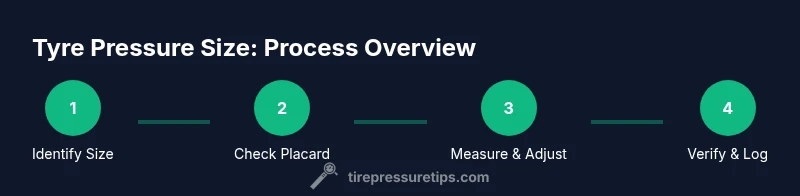
Step-by-step check: a practical routine you can follow
Safety considerations when inflating tyres
TPMS: role, limitations, and maintenance
Daily routine: a practical tyre pressure size checklist
Tools & Materials
- Digital tyre pressure gauge(Calibrated to ±1 psi; check battery and seal before use)
- Air compressor or access to a public air pump(Prefer a consistent, controllable flow; avoid overfilling quickly)
- Wheel chocks(Place both in front of and behind the tire you’re inflating for safety)
- Valve core tool or spare valve caps(Useful for valve maintenance or leaks)
- Notebook or digital log for readings(Track readings over time to spot leaks or trends)
Steps
Estimated time: 15-25 minutes
- 1
Prepare the vehicle and environment
Park on a level surface, engage the parking brake, and chock the wheels. Ensure the tyres are cool and the vehicle has been stationary for several hours if you’re checking pressures for the first time after driving.
Tip: Keep the air source nearby to avoid moving the vehicle between tyres. - 2
Identify the tyre pressure size target
Check the placard on the driver’s door jamb or the owner’s manual for cold inflation targets. Note separate values for front and rear tyres, if provided, and understand that these targets refer to the tyre pressure size appropriate for your vehicle.
Tip: When in doubt, trust the placard over the sidewall markings for inflation targets. - 3
Measure cold tyre pressures
Attach the gauge to the valve stem and read the pressure with the tyre cold. Record the reading for each tyre; repeat for consistency.
Tip: Take multiple readings to confirm accuracy. - 4
Adjust pressure as needed
If readings are below target, add air in small increments and recheck. If above target, release air gradually and recheck. Do not exceed the recommended cold target.
Tip: Fill slowly to avoid overinflating in one go. - 5
Recheck all tyres
After adjusting, recheck all four tyres to ensure even pressure and proper load-bearing capacity.
Tip: If you’ve driven since checking, measure again when the tyres have cooled. - 6
Document readings and monitor
Log the final readings and monitor for changes over the next weeks. A sudden drop may indicate a leak or a damaged valve.
Tip: Set a reminder to recheck monthly or after extreme temperature shifts.
Frequently Asked Questions
What is tyre pressure size and why does it matter?
Tyre pressure size combines the tyre’s physical dimensions with the recommended inflation values to ensure safe handling, wear patterns, and braking. Understanding the size helps you set accurate pressures for daily driving.
Tyre pressure size combines the tyre’s dimensions with inflation targets to keep you safe and reduce wear. Remember to check the placard for your exact numbers.
Where can I find the recommended pressure for my tyres?
Look on the driver’s door placard or in the owner's manual. These sources provide the cold inflation targets for front and rear tyres and reflect the vehicle’s load and axle configuration.
Check the door placard or the manual for the cold tyre pressures. These are the official targets for your vehicle.
Is it safe to inflate to the maximum sidewall pressure?
No. The maximum shown on the sidewall is the tyre’s maximum limit, not the recommended operating pressure. Inflate to the vehicle’s specified target.
Never inflate to the max sidewall pressure; use the vehicle’s target numbers for safe performance.
Does TPMS show the exact tyre pressure?
TPMS alerts you when pressure is too low or too high but does not always provide exact numbers. Always verify with a gauge for precise readings.
TPMS notifies you of a bad pressure level, but you should still measure with a gauge to know the exact value.
How often should I check tyre pressure?
Check at least once a month and before long trips, especially when seasons change. Temperature shifts can affect pressure.
Check tyre pressure monthly and before trips, especially during weather changes.
How does weather affect tyre pressure size?
Cold weather lowers air density, lowering readings; hot weather can slightly raise them. Recheck after significant temperature changes and adjust to the cold target when needed.
Weather changes can move the readings up or down; always aim for the cold targets after a temperature shift.
Watch Video
What to Remember
- Learn tyre pressure size basics and why the numbers matter
- Always measure cold and use placard targets
- Use a reliable gauge and log readings
- Address leaks or valve issues promptly