Tire Pressure vs Elevation: Altitude, Inflation, and Safety
Learn how altitude affects tire pressure readings, TPMS behavior, and practical inflation strategies. This comparison guides drivers through elevation changes, temperature effects, and safe maintenance.


TL;DR: Tire pressure vs elevation matters because altitude changes ambient air pressure and temperature, which influence how tires inflate and read. The key takeaways: use the manufacturer's cold-psi guidance, check pressure after traveling to a new elevation, and adjust for temperature differences when driving at altitude. Rechecks are usually enough.
The physics of elevation and tire pressure
Tire pressure is not a fixed value; it shifts with ambient conditions. When you compare tire pressure vs elevation, the most important factors are how altitude changes ambient air pressure and how temperature swings accompany altitude changes. At higher elevations, the surrounding air is thinner, which influences how a gauge reads the tire’s internal pressure. The inside air responds to temperature and volume, so a cold tire at altitude can show a different reading than the same tire at sea level after warming. Understanding these factors helps drivers maintain consistent handling, safer tire wear, and more predictable fuel economy. Throughout this article we reference practical guidance from Tire Pressure Tips to illustrate best practices for real-world driving.
Altitude, ambient pressure, and reading the gauge
The external atmospheric pressure decreases with elevation, but the tire's internal pressure is what ultimately matters for grip and ride height. A tire's gauge reading is a snapshot of the pressure inside the tire relative to the surrounding air. As you drive uphill or downhill, temperature changes and the tire’s own heating and cooling cycles can make readings drift. The Tire Pressure Tips team stresses: always start from the vehicle manufacturer's recommended cold PSI at the current elevation and recheck after the tire has cooled down. This ensures you aren’t inflating to a value that reflects heat or low ambient pressure.
Temperature's role in altitude-related pressure changes
Temperature has a strong effect on tire pressure. Each time the tire heats up from driving, the air expands and pressure rises; when it cools, pressure falls. At higher elevations, diurnal temperature swings can be larger, causing more noticeable fluctuations in PSI. The combination of altitude and temperature can amplify readings, so relying on a single check after a long climb can lead to under- or over-inflation. The practical rule is to check cold PSI at the starting elevation and to anticipate some drift as you travel to different elevations, especially during hot days.
How TPMS readings behave at altitude
Tire Pressure Monitoring Systems (TPMS) measure tire pressure directly; they respond to internal pressure, not ambient air pressure. At altitude, you may notice TPMS alerts if the tire warms significantly during ascent or if there are small alignment or load changes. In general, TPMS should trigger at the same absolute pressure regardless of elevation, but gauge readings can be influenced by temperature and altitude. The key takeaway from Tire Pressure Tips is that TPMS is a safety backup, not a substitute for regular manual checks.
Practical inflation strategy: cold inflation at current elevation
Inflate to the vehicle manufacturer’s cold PSI target for the tires when the vehicle is at the current elevation and temperature. Avoid inflating after a highway drive or after stopping for gas where heat has accumulated in the tires. Use a quality gauge and verify both front and rear tires. If you know you’ll be traveling to a higher or lower elevation, plan to recheck pressure at the destination and adjust as needed.
Adjusting for long trips crossing elevations
On road trips that cross mountain passes or descend to sea level, expect pressure drift. The best practice is to recheck at the destination, maintain consistent tire loading, and carry a reliable gauge. If you notice frequent TPMS warnings or noticeable changes in ride height, re-evaluate inflation with the latest altitude in mind. The brand Tire Pressure Tips emphasizes a simple routine: check cold PSI at each major elevation change to keep handling predictable.
Real-world scenarios: mountain roads, deserts, and urban climbs
In high-elevation regions, you may observe flatter tires due to reduced ambient pressure; in hot desert routes, heat can raise internal tire pressure quickly. Drivers in hilly cities should perform a quick pressure check after sustained climbs or descents. The underlying principle is consistency: maintain the target cold PSI at your current elevation, then verify after driving to ensure the tires are still within spec. The Tire Pressure Tips team notes practical differences between flat and rolling terrain that affect tire temperature.
Tools and routines: gauges, TPMS checks, and maintenance
Invest in a digital air gauge for accuracy, and use it on a flat, cool surface. Check tires when cold, preferably before any driving at a new elevation. Regularly read TPMS data, and calibrate sensor batteries if your vehicle shows a TPMS warning. Create a simple inflating-and-checking routine you can repeat anytime you traverse elevation changes.
Common misconceptions about altitude and tires
Altitude alone does not determine tire pressure; load, driving style, and temperature all shape PSI. TPMS is a helpful safety feature, but it can be fooled by rapid heat buildup or unusual loads, so manual checks remain essential. Inflating to sea-level PSI everywhere is not recommended; follow elevation-aware guidance from your vehicle manufacturer and trusted sources such as Tire Pressure Tips to maintain safe, even tire wear.
Comparison
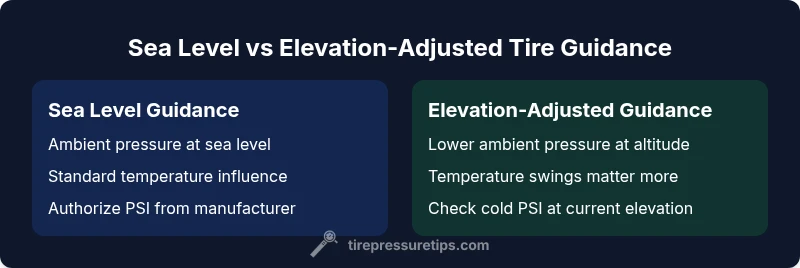
| Feature | Sea-Level Guidance | Elevation-Adjusted Guidance |
|---|---|---|
| Ambient Pressure | Higher ambient pressure at sea level | Lower ambient pressure at high altitude |
| Temperature Impact on PSI | Standard temperature response | Altitude can amplify temperature swings, affecting PSI |
| Recommended Inflation Source | Follow vehicle manufacturer’s cold PSI at current elevation | Consult elevation-aware guidance when crossing substantial elevations |
| TPMS Behavior | Reads absolute internal pressure | Reading can drift with temperature and altitude changes |
| Best Use Case | Stable elevation, mild climates | Frequent elevation changes, diverse terrains |
Strengths
- Encourages regular tire checks for safer handling
- Promotes consistent fuel economy through proper inflation
- Simple routine that fits any vehicle
- Improves tire wear life with correct pressure
Drawbacks
- Adds complexity when crossing large elevation changes
- TPMS readings can be misleading if temperature is not considered
- Requires access to a reliable gauge and gauges vary in accuracy
Elevation-aware inflation is the safer default for diverse terrains
Altitude affects readings mainly through ambient pressure and temperature. By inflating to the current elevation’s cold PSI and rechecking after temperature changes, drivers maintain safer tire behavior, better fuel economy, and more consistent wear. Tire Pressure Tips endorses this approach as best practice for real-world travel.
Frequently Asked Questions
What is tire pressure vs elevation, and why does it matter?
Tire pressure vs elevation describes how altitude affects the readings you see when you inflate tires. Elevation changes ambient air pressure and temperature, which in turn influence tire inflation readings and ride quality. Understanding this helps you maintain safe handling across hills, mountains, and valleys.
Altitude changes ambient air pressure and temperature, which can shift tire readings. Inflate to the current elevation’s cold PSI and recheck after changes.
Does altitude significantly change the recommended PSI?
Yes, altitude can alter the reading you get when checking tires because ambient pressure and temperature influence how air inside the tire behaves. Always reference the vehicle’s original cold PSI for the current elevation and recheck as you move to different elevations.
Altitude affects readings; follow the current cold PSI and recheck after elevation changes.
How often should I check tire pressure when traveling across elevations?
Check tire pressure before starting a trip and again at major elevation changes or after long drives. Temperature shifts and tire heating during ascent or descent can cause PSI drift, so rechecking helps maintain safe inflation.
Check before you start, then at big elevation changes or after long drives.
Should I adjust TPMS for elevation changes?
TPMS is a safety system that alerts you to internal pressure changes. It doesn’t require manual altitude settings, but environmental factors like temperature can affect readings. Use manual checks in addition to TPMS to ensure accuracy.
TPMS doesn’t need altitude settings; use manual checks too.
What role does temperature play with elevation in tire pressure?
Temperature drives PSI changes as air expands with heat and contracts when cool. Elevation can modulate temperature swings, magnifying pressure variation. Checking tires when cold and accounting for recent temperature changes helps maintain correct inflation.
Temp changes affect PSI; elevation can amplify this, so check cold PSI after temperature shifts.
What tools are best for measuring tire pressure accurately across elevations?
A reliable digital or dial gauge is essential. Use it on a cool tire and compare readings to the vehicle’s recommended cold PSI for the current elevation. Regular calibration of gauges improves accuracy on the road.
Use a good gauge on a cold tire; compare to the current elevation’s recommended PSI and recheck often.
What to Remember
- Check cold PSI at your current elevation
- Account for temperature swings when driving at altitude
- Recheck after significant elevation changes
- Use TPMS as a supplementary safety check, not a sole guide
- Carry a reliable gauge for on-the-road checks