Tire Pressure Sign: Detect, Interpret, and Act
Learn how to identify tire pressure signs, interpret TPMS alerts, and take safe steps to maintain proper tire pressure for safety, efficiency, and longer tire life.


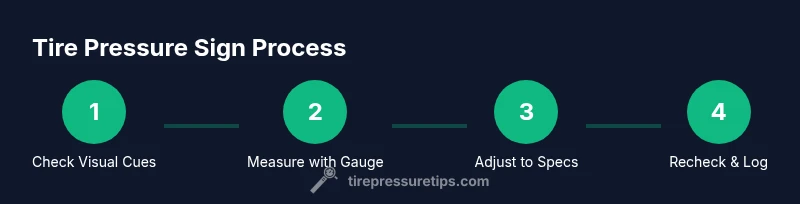
By recognizing tire pressure signs early, you can prevent uneven wear, improve fuel efficiency, and reduce blowout risk. This quick guide explains how to spot the common physical signs of under- or over-inflation, verify pressure with a reliable gauge, and respond safely to TPMS or dashboard warnings. Follow the steps, use the right tools, and maintain your tires for safer drives.
What is a tire pressure sign?
A tire pressure sign is any observable cue that inflation is off or a warning system indicates low pressure. These signs can be physical (the tire looks visibly deflated or bulging) or digital (a TPMS warning light). In many vehicles, even a small leak gradually lowers pressure, which might not trigger an alert immediately but will show up in a gauge reading. According to Tire Pressure Tips, recognizing tire pressure signs helps drivers avoid safety hazards and reduces risky driving conditions. A sign isn't a single event; it's often a pattern of changes you notice across multiple checks. The goal is to catch these signs early, before damage or unsafe handling occurs. We'll explore how to interpret common cues, how temperature and road conditions affect readings, and how to establish a reliable inspection routine.
Why tire pressure signs matter for safety and performance
Tire pressure signs influence vehicle handling, braking distance, and tire wear. Under-inflated tires ride with more rolling resistance and heat up faster, which can lead to premature tread wear or even blowouts in extreme cases. Over-inflation makes the contact patch smaller, reducing grip on wet surfaces and causing a harsher ride. Recognizing the signs helps you maintain optimal contact with the road, improve fuel efficiency, and extend tire life. Regularly inspecting signs also supports TPMS accuracy, ensuring you respond to warnings promptly rather than chasing numbers on a gauge that may change with temperature. The Tire Pressure Tips team emphasizes that combining visual checks with instrument readings is the safest approach to protecting both your tires and your passengers.
Common physical signs on tires and wheels
Physical signs that inflation is off include a tire that appears visibly soft or bulged, uneven tread wear across the edges or center, and sidewall cracking or unusual wear patterns. A tire that looks deflated compared with its siblings in the same vehicle is a strong indicator that air pressure needs checking. Temperature fluctuations can exaggerate these signs, making a routine inspection even more important. If you notice any unusual wear, shoulder wear, or a tire that looks out of shape, treat it as a sign to inspect further rather than hoping it will improve on its own.
How TPMS interacts with tire pressure signs
TPMS provides a dashboard warning when pressure falls below the vehicle's recommended level. This signal is a critical cue, especially if visual signs are subtle or the tires are not easily observable from the ground. Some vehicles also alert you to rapid pressure loss due to a puncture or leak. Remember that TPMS readings can be impacted by temperature, driving conditions, and sensor health. Always corroborate TPMS warnings with a physical gauge reading for accuracy and to determine whether you need to add air, slow release, or seek professional assistance.
Tools and checks to diagnose a tire pressure sign
To diagnose a tire pressure sign accurately, you need a cold-tire gauge, access to an air source, and a reference placard from the vehicle door jamb showing the recommended psi for front and rear tires. A log (digital or notebook) helps you track trends and verify if the sign persists. The most reliable method combines a physical pressure reading with the vehicle’s recommended values. If your gauge reads significantly below the recommended pressure, you have a clear action path: adjust air gradually and recheck until your reading matches the target range.
Temperature and seasonality: how signs change with weather
Weather and temperature shifts directly impact tire pressure. Colder air reduces pressure, while heat can increase it, especially after a long drive. This means a tire that seems normal in the morning could register as low once the engine warms up or after a cool night. The pattern is predictable: check and adjust when tires are cold, ideally before driving or after the car has cooled for several hours. Seasonal changes can require more frequent checks to maintain consistent performance.
Safe practices when you notice a sign
Safety should come first. If you notice a large bulge, a sudden drop in pressure, or a tire that looks visibly deflated, pull over to a safe, flat area and inspect the tire before continuing. Use the gauge to verify the reading, avoid over-inflation by inflating in small increments, and recheck after a few minutes of cooling. If you detect a puncture, a sidewall crack, or a rapid loss of air, do not drive on the tire and seek professional assistance.
Maintenance and prevention: building a routine
Creating a tire-pressure maintenance routine helps prevent signs from becoming unexpected hazards. Check cold tires at least once a month and before long trips, record readings, and compare over time. Replace or service tires that show consistent abnormal signs, wear unevenly, or fail to hold pressure after adjustments. Regular calibration of your gauge ensures accuracy, and using the same gauge for consistency reduces measurement variability.
When to seek professional help or tire replacement
If you detect a persistent sign that does not respond to standard re-inflation, or if you observe punctures, rapid pressure loss, or sidewall damage, seek professional evaluation. A technician can diagnose TPMS sensor issues, leaks in the valve stems, or structural tire damage that might compromise safety. In some cases, replacement becomes the most cost-effective and safe option to maintain roadworthiness.
Quick-start checklist for road trips
Before any road trip, perform a quick but thorough check: verify cold-tire pressures against the placard, inspect tires for visible signs of wear or damage, ensure TPMS warnings are understood, and have a plan to address any abnormalities on the road. Keeping a small air canister and your gauge handy can help you respond to minor fluctuations without delaying your trip.
Tools & Materials
- Digital tire pressure gauge(Calibrated to measure within +/-1 psi; use on cold tires for accuracy.)
- Owner's manual or door placard with recommended psi(Check both front and rear values; some cars have different targets.)
- Air compressor or access to a service station(Add air in small increments; recheck frequently.)
- Notebook or mobile log app(Record date, tire, psi, and conditions to track trends.)
Steps
Estimated time: 25-40 minutes
- 1
Prepare vehicle and environment
Park on a flat surface, set the parking brake, and ensure the engine is off. Gather your gauge, placard, and air source. Confirm tires are cold for the most accurate readings, especially after standing overnight.
Tip: Take readings in a shaded area to avoid heat affecting the gauge. - 2
Locate the correct tire pressures
Read the recommended psi values from the door placard or owner's manual. Note the target pressures for front and rear tires; some configurations require different targets for each axle.
Tip: If you drive a model with a spare or different wheel size, check that value too. - 3
Measure cold tire pressures
Attach the gauge to the valve stem on each tire and record the reading. Take multiple readings to ensure consistency and avoid rounding errors.
Tip: If you just drove, wait at least 3 hours for tires to cool before measuring. - 4
Compare readings to targets
If a tire is below target, plan to add air in small increments and recheck after each addition. If above target, release air slowly and recheck.
Tip: Aim to stay within 1-2 psi of the target after adjustments. - 5
Adjust inflation as needed
Use the air compressor to top up or release air to bring each tire to its target. Recheck immediately after adjustments to confirm accuracy.
Tip: Do not overfill; tires are sensitive to over-inflation in warm weather. - 6
Check all tires including the spare
Repeat measurement for all tires, including the spare if it is a full-size tire on your vehicle. Ensure uniformity across the set.
Tip: Tire wear issues on one wheel can indicate underlying suspension or alignment problems. - 7
Document and monitor
Log your readings and the date. Compare future readings to detect gradual pressure loss or changes due to temperature.
Tip: Keep a simple log that you can reference before long trips. - 8
Inspect for signs of damage
Look for bulges, cuts, cracks, or objects embedded in the tire. If you notice any deformities, stop and assess further or replace the tire.
Tip: If you suspect a leak that you cannot locate, seek professional help.
Frequently Asked Questions
What counts as a tire pressure sign?
A tire pressure sign includes both visual cues like bulges or excessive wear and dashboard alerts from TPMS. If you notice any sign that suggests under- or over-inflation, verify with a gauge and inspect the tires. Treat multiple signs as warnings to inspect further.
Visual bulges, unusual wear patterns, or a TPMS warning all count as tire pressure signs. Verify with a gauge and inspect the tire area.
How often should I check tire pressure?
Check tire pressure at least once a month and before long trips. Always measure cold tires for accuracy, and adjust based on temperature changes and seasonal shifts.
Check at least monthly and before trips, always with cold tires.
Can weather affect tire pressure signs?
Yes. Cold weather lowers tire pressure and hot weather increases it. Temperature changes can exaggerate signs, so adjust and recheck after weather swings.
Weather affects readings—check after temperature shifts for consistency.
What should I do if TPMS warning stays on after adjustment?
If the warning remains after inflating to the target, there may be a sensor issue, leak, or fault. Have the TPMS system inspected by a professional to identify sensor faults or leaks.
If the TPMS stays on after adjustment, get the system checked for sensor or leak issues.
Is it safe to drive with a tire pressure sign?
Driving with under-inflated tires can increase wear and heat buildup. If the sign is severe or persistent, stop and address it before continuing your trip.
Drive cautiously and address signs promptly; avoid driving on severely under-inflated tires.
How do I know if my TPMS sensor is faulty?
TPMS sensor faults may trigger warnings without actual pressure loss. A professional can diagnose sensor health and replace or recalibrate as needed.
TPMS could be faulty; a technician can diagnose sensor health and recalibrate.
What to Remember
- Identify signs early and verify with a gauge.
- Use cold tires for accurate readings.
- Address TPMS warnings promptly.
- Maintain a regular tire-pressure check routine.
- Log readings to track trends over time.