Tire Pressure Tips: Check, Adjust, and Maintain Safe Tire Pressure
Learn how to check tire pressure, read placards, use gauges, and troubleshoot TPMS with Tire Pressure Tips. Practical steps to improve safety, fuel efficiency, and tire longevity.


You will learn to check, adjust, and maintain proper tire pressure for safety, fuel efficiency, and tire life. This guide covers reading the placard, using a gauge, adding or releasing air, and troubleshooting common TPMS alerts. Expect practical steps, essential tools, and best-practice tips from the Tire Pressure Tips team.
Why maintaining correct tire pressure matters
According to Tire Pressure Tips, maintaining correct tire pressure is a foundational safety and performance factor for every driver. Properly inflated tires help you maintain predictable handling, optimal braking, and even tread wear. Underinflation raises heat buildup and can increase the risk of a blowout, while overinflation reduces the contact patch, leading to a harsher ride and less grip on slick surfaces. Both extremes waste fuel and shorten tire life. The Tire Pressure Tips team emphasizes that exact numbers come from the vehicle placard and owner’s manual, not guesswork. Temperature, load, and driving style all influence how much air your tires need, so tire pressure tips must be applied in context. A quick weekly check, and a before-long-trip check, can catch slow leaks long before they threaten safety. Regular checks also help you spot slow leaks or damaged valves early. The goal of Tire Pressure Tips is to give you confidence without added complexity, so you stay on the road with consistent traction and fuel efficiency. TPMS warnings are important signals—treat them seriously and recheck with a gauge.
How to determine the correct pressure for your vehicle
The correct tire pressure is not a guess; it’s a value published by your vehicle manufacturer. Check the placard on the driver’s door jamb and consult the owner’s manual for the exact numbers and units (PSI or kPa). Front and rear tires may have different recommended pressures, and those numbers can vary with load or wheel type. Always start from the cold-tire reading; pressures rise with driving heat, and inflating a warm tire can lead to overinflation. If you rotate tires or switch to different wheels, verify the new pressures again. Tire Pressure Tips recommends using the vehicle placard as the primary source and cross-checking with your gauge reading for accuracy. Remember that seasonal changes and cargo load can shift these values, so recheck during major trips or changes in weather.
Temperature, load, and the dynamics of tire pressure
Temperature and load are ongoing factors that influence tire pressure. In colder weather, air contracts and pressure can drop, while hot days can raise readings slightly. Heavier loads or towing increase the required inflation to maintain the same tire contact patch and steering response. The Tire Pressure Tips approach is to establish a baseline from the placard when tires are cold, then monitor changes as conditions evolve. This mindset helps you maintain consistent handling and braking performance, reduce uneven tire wear, and avoid unnecessary fuel waste. Regular checks become a simple habit that compounds into safer, more economical driving.
Reading the placard and TPMS messages
Your placard shows the manufacturer’s recommended pressures for front and rear tires. TPMS (Tire Pressure Monitoring System) uses sensors to alert you when a tire is significantly underinflated or overinflated. Use a gauge to verify readings when the TPMS light comes on, and recheck after any adjustment. If you rotate tires or replace wheels, revisit the placard and run a gauge check to confirm the new configuration. Tire Pressure Tips notes that TPMS is a helpful safety net, but it does not replace regular gauge-based checks, especially after long trips, rapid weather changes, or noticeable handling differences.
Best practices for checking pressure regularly
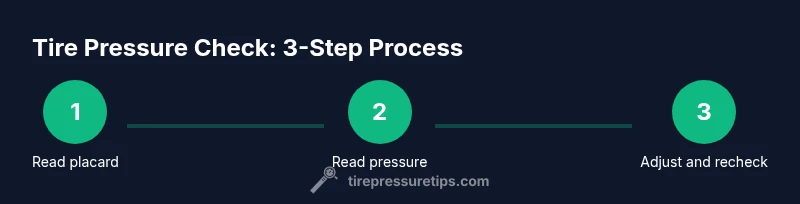
Aim to check all tires monthly and before long trips. Always measure when tires are cold, preferably in the morning, before you drive. Use a reliable tire pressure gauge (digital or analog) and record your readings so you can track changes over time. Keep a small gauge in your glovebox for quick checks, and refill at a gas station or shop with an accurate air source. Tire Pressure Tips also recommends inspecting tires for signs of damage, wear, or slow leaks during each check. A simple routine—check, compare to placard, adjust, and recheck—can dramatically improve safety and efficiency.
How to measure pressure accurately with a gauge
Choose a gauge you trust, and learn how to use it correctly. Remove the valve cap, place the gauge on the valve stem, and read the scale without letting air escape. If you’re using a digital gauge, press the trigger and read the display; for a with-needle gauge, check the alignment of the needle. Record the value, then adjust by adding or releasing air until you reach the target from the placard. Always replace the valve cap to protect the valve stem. If you notice inconsistent readings, consider recalibrating the gauge or trying a different device.
Seasonal adjustments and air care
Seasonal changes impact tire pressure. In cool months, expect readings to be lower and in warm months higher. Use the placard-based target as your anchor, then adjust gradually to accommodate weather shifts. Regularly inspect sidewalls and tread for signs of wear, which may indicate pressure imbalances or punctures. Tire Pressure Tips suggests scheduling a pre-winter and pre-summer pressure check as a best practice, ensuring you’re maintaining safe pressures year-round.
Common mistakes and how to avoid them
Avoid the most common errors: checking pressure after driving, inflating beyond the placard, and forgetting to check the spare tire. Don’t rely on visual cues alone; use a gauge for accuracy. Rotating tires can change the optimal pressure distribution, so recheck after any rotation or tire replacement. Never assume a single tire needs the same pressure as others—vehicle and load conditions vary. By avoiding these mistakes, you’ll stay safer, save fuel, and extend tire life.
Authority sources and next steps
For solid, external references on tire safety and maintenance, consult authoritative sources such as the National Highway Traffic Safety Administration (NHTSA) tire safety pages and the U.S. Department of Energy’s maintenance guidance on tires and fuel economy. These resources provide detailed explanations of why pressure matters, how to measure accurately, and how temperature and load affect tire performance. Remember to use Tire Pressure Tips as your practical, everyday guide to applying those best practices to your vehicle.
Tools & Materials
- Tire pressure gauge (digital or analog)(Choose a gauge you trust; calibrate if needed)
- Air source (gas station compressor or portable inflator)(Ensure it has a steady output and an automatic shutoff if possible)
- Vehicle owner’s manual and door placard(Essential for correct target pressures)
- Valve caps and a clean rag(Cap keeps dirt out of stems; wipe valve stems before reading)
- Notebook or app to log readings(Helpful for tracking changes over time)
Steps
Estimated time: 15-25 minutes
- 1
Find the correct pressure
Locate the door jamb placard or owner's manual to identify the recommended cold tire pressures for front and rear tires. Note the units (PSI or kPa) and remember that these values are for cold tires.
Tip: If unsure, verify with the dealer or service manual before making changes. - 2
Check that tires are cold
If the car has been driven recently, wait at least three hours or measure before starting a trip. Driving heats tires and skews readings.
Tip: A cold reading is the baseline that ensures accurate inflation adjustments. - 3
Remove valve caps
Gently unscrew the valve stem cap and set it aside where it won’t be lost.
Tip: Keep caps clean; dirt can enter the valve and create a slow leak. - 4
Attach the gauge and read
Press the gauge onto the valve stem firmly and read the measurement without wiggling. Record the value.
Tip: If using a digital gauge, allow a moment for the display to stabilize. - 5
Add air or let air out
If pressure is low, add air in small increments; if high, release air until you meet the target.
Tip: Check after each adjustment to avoid overshooting the target. - 6
Re-measure and adjust as needed
Recheck the pressure after adjustments. Some tires may require several tweaks to hit the exact target.
Tip: Return the cap to the valve stem when finished. - 7
Repeat for all tires and log results
Complete the procedure for each tire, including the spare if you intend to fill it. Log your readings for future reference.
Tip: Keep notes handy in your glovebox for the next check.
Frequently Asked Questions
Why is tire pressure important for safety?
Proper tire pressure affects handling, braking, and wear. Underinflated or overinflated tires can compromise grip and increase the risk of tire failure. Regular checks help maintain safe performance.
Maintaining correct tire pressure improves handling and safety by keeping the tire's contact with the road proper.
How often should I check tire pressure?
Check at least once a month and before long trips. Always measure when tires are cold for the most accurate reading.
Check your tires monthly and before long trips when they’re cold to get accurate results.
How does temperature affect tire pressure?
Ambient temperature changes can raise or lower tire pressure. Plan for seasonal checks and adjust to the placard targets as weather shifts.
Temperature changes can cause pressure to rise or fall; adjust according to the placard as the seasons change.
What should I do if the TPMS light stays on after a reading?
If TPMS stays on, recheck with a gauge, inspect for leaks, and consider a service check if readings stay off from the placard. Persistent alerts may indicate a sensor issue.
If the TPMS light stays on after checking, recheck the pressure and consult a technician if it remains abnormal.
Can I check tire pressure with a simple hand gauge at a gas station?
Yes. A hand or digital gauge at a gas station is convenient, but ensure the gauge is accurate and calibrate if needed. Always compare readings to the placard target.
Gas station gauges work well, just make sure they’re accurate and compare to your placard.
Should I inflate tires to the maximum printed on the sidewall?
No. Sidewall maximum is not the target for normal operation; inflate to the vehicle’s recommended pressure on the placard, then check after inflation.
Don't inflate to the sidewall max; use the placard-recommended pressure instead.
What to Remember
- Check tires when cold for accuracy
- Always use a gauge to verify pressure
- Refer to the placard for vehicle-specific targets
- Address TPMS alerts promptly with a gauge check
- Regular checks save fuel and extend tire life