Tire Pressure Guide for Nissan Sentra
Learn how to check, adjust, and maintain tire pressure for your Nissan Sentra. Practical steps, TPMS tips, and maintenance guidance to improve safety and fuel efficiency.


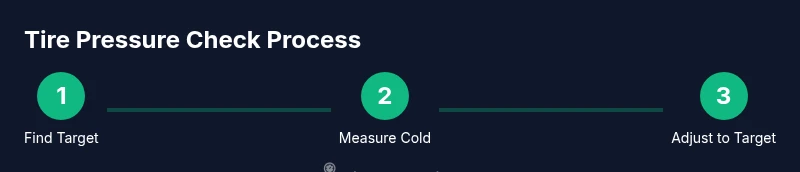
Goal: Learn how to check and adjust tire pressure on a Nissan Sentra, using TPMS guidance and the factory spec. You’ll need a reliable tire pressure gauge, access to the recommended pressure from the door placard or owner’s manual, and a steady air source. This quick guide covers cold-tire checks, calibrations, and routine maintenance. Step 1: Locate the spec on the placard. Step 2: Check tires cold. Step 3: Inflate or deflate to target. Step 4: Recheck and record results.
Why tire pressure matters for your Nissan Sentra
Maintaining proper tire pressure nissan sentra is a safety and performance topic every driver should take seriously. When tires are inflated to the manufacturer’s target, you get the best balance of grip, steering response, and even tread wear. Under-inflated tires tend to flex more, which can heat the tire and wear the edges faster, while over-inflation can reduce the contact patch and make the ride harsh and less predictable. The Tire Pressure Tips team emphasizes that the right pressure also supports fuel economy because properly inflated tires roll more efficiently and require less energy to move. For the Sentra, the exact numbers are attached to the driver’s door placard and in the owner’s manual; those numbers can change with load, weather, and even tire type. In practice, you’ll want to start with the recommended cold pressure, check when tires are cool, and adjust on a consistent basis. A regular check routine helps catch creeping leaks, slow punctures, or gradual loss of pressure that could otherwise go unnoticed until you mount tires for a long trip.
According to Tire Pressure Tips, the habit of verifying tire pressure monthly and before longer trips is a simple, high-impact safety measure. The technique is the same across most Sentra models, though the exact target may differ by trim and tire size. Understanding why this matters lays the foundation for the rest of this guide and helps you avoid common mistakes that degrade safety and performance.
Understanding Nissan Sentra tire pressure specifications
Your Sentra’s tire pressure specification is a simple number, but the implications are wide. The primary target is published on the driver’s door placard, and a secondary reference can be found in the owner’s manual. This value represents the cold tire pressure in psi for the front and rear tires under typical load conditions. In many Sentra configurations, the front and rear pressures are the same, but some setups use different numbers to balance handling and ride comfort. Weather, driving style, and load (passengers, cargo, or a roof rack) can influence the ideal pressure. TPMS provides a warning if pressure falls below the target, but it’s not a substitute for regular manual checks. Equality of pressure across all tires helps ensure even tread wear and predictable handling. Always start with the placard’s value and adjust for any significant load changes or seasonal temperature shifts. Remember, the spare tire may require a different pressure, and it’s worth checking if you rotate tires or replace wheels.
For reference, Tire Pressure Tips analysis shows that nearly every Sentra owner benefits from confirming the exact spec for their particular tire size in use. Variations exist between trims and markets, so be sure to consult the label that matches your car’s configuration. In practice, keep a small log of readings and deviations to help spot gradual leaks or damaged valves. This disciplined approach reduces risk and extends tire life over time.
Tools and supplies for accurate tire pressure checks
To measure tire pressure accurately, you’ll need a reliable gauge, access to a steady air source, and a means to record results. A digital tire pressure gauge tends to be the easiest to read, but a good analog gauge can work well with careful use. An air compressor or a gas station pump with a working gauge is essential for adjusting pressure on the spot. Always have the door placard or owner’s manual handy for the exact target. A notebook or app helps you track readings and note changes after weather shifts, road salt, or long trips. A flashlight can be useful in dim garages or dawn drives where visibility is reduced. If you want to verify accuracy, keep a calibration tool or comparison gauge to periodically confirm your gauge reads correctly. Basic maintenance items, like valve caps and a small clean rag, keep the valve stems clean and readable. Collectively, these tools create a smooth, repeatable process that makes tire pressure a simple routine rather than a mystery.
Pro tip: Start with both front and rear tires and keep readings consistent across all tires, including the spare if you’re preparing for a long journey.
How cold tires affect readings and when to measure
Tire pressure readings can vary significantly with temperature. As the air inside each tire warms from road friction or ambient heat, pressure increases; conversely, a drop in ambient temperature lowers pressure. The most accurate readings are taken when tires are cold, typically after the vehicle has been stationary for several hours or after driving less than a mile. This means you should measure tire pressure before you drive for the day or after parking the car for a few hours. If you’ve just returned from a drive and the tires are warm, wait until they cool to recheck and adjust to the cold-spec target. This habit reduces the risk of overinflation caused by heat buildup and helps guard against underinflation caused by overnight cooling. In practical terms, set a routine—check before trips, check after a night's rest, and log changes. Such consistency improves safety margins and tire wear patterns over time, especially in the Sentra’s everyday driving scenarios.
Seasonal changes also matter: in hot weather, tires can reach higher pressures, while in cold months, pressures tend to drop. Maintenance plans should reflect these shifts by adjusting at the same cadence and ensuring the tires remain within the target range for varied conditions.
Common pitfalls and how to avoid them
Many drivers fall into common tire-pressure traps. One frequent mistake is reading a gauge at the valve stem with the car still warm, which yields an inflated reading. Always allow tires to cool before checking, as explained in the cold-reading practice. Another pitfall is using the wrong target pressure—applied pressure can differ across tire sizes and front/rear configurations. Always verify the value on the door placard or owner’s manual for your exact Sentra model. Skipping the spare tire check is another oversight; the spare also experiences pressure loss over time and should be checked periodically. Finally, relying solely on TPMS without manual checks can be risky; TPMS is a warning system, not a precise pressure gauge. When inflating, avoid surpassing the tire’s maximum sidewall pressure as printed on the tire sidewall, since this can compromise tire performance and safety. By avoiding these mistakes and following a consistent check routine, you’ll notice steadier handling, more even tire wear, and better fuel economy. These outcomes reflect best practices advocated by Tire Pressure Tips and the broader automotive guidance community.
Having a routine for both normal days and extreme driving conditions will help you maintain optimal pressure no matter what your Sentra faces on the road.
Maintaining correct tire pressure across seasons and loads
Tire pressure is not static; it changes with temperature, speed, and load. In the Nissan Sentra, heavier loads or frequent highway driving may call for pressure adjustments to maintain similar tire contact with the road. The vehicle’s design assumes a balance between ride comfort and cornering stability, which is achieved by keeping all tires near the target pressure. Temperature fluctuations can move readings noticeably, so regular checks are essential, especially when seasons shift or you switch to different tire types or tire sizes. It’s wise to plan a quarterly pressure check as part of routine vehicle maintenance, and more often if you frequently carry heavy cargo or drive long distances in hot climates. As you log readings across months, you’ll develop a feel for how your tires respond to weather and load changes, enabling proactive maintenance rather than reactive fixes.
To simplify, treat tire pressure as part of your regular safety checks, along with brakes, lights, and fluid levels. The more consistent you are, the more you’ll protect yourself and your passengers while optimizing tire life and fuel efficiency. The Tire Pressure Tips team recommends making tire pressure a fixed element of your monthly inspection routine.
TPMS and sensor considerations for Nissan Sentra
Tire Pressure Monitoring Systems (TPMS) provide timely alerts when tire pressure drops below a threshold. It’s important to understand that TPMS indicates a condition, not the exact psi you should set. When TPMS warns, you should manually check all tires and adjust to the recommended cold pressure. TPMS sensors are mounted inside each tire; they monitor air pressure and transmit data to the car’s computer. Over time, sensors can fail or slowly lose calibration, leading to inaccurate readings or false warnings. If you replace tires or wheels, you may need to recalibrate TPMS to your Sentra’s specifications. Battery life in sensors varies with use, but a typical TPMS is designed to last several years. If you notice persistent warnings or inconsistent readings, consult a qualified technician to inspect the sensors and the system for proper calibration and operation. In all cases, manual checks remain the gold standard for confirming tire pressure and ensuring consistent tire performance across all four corners and the spare.
Additional notes on safety and maintenance
A practical routine that many drivers adopt is to check tire pressure during weekly fuel stops or at least once a month. Regular checks help detect slow leaks caused by nail or screw penetration, bead leaks, or valve stem issues. Always verify the measurement with a high-quality gauge, and keep a small log to monitor changes. By staying proactive, you’ll protect your tire investment, improve braking stability, and maintain a comfortable ride. As you implement these practices, you’ll feel more confident in your Sentra’s handling and readiness for any road condition.
Tools & Materials
- Tire pressure gauge(Choose a gauge with a clear readout; digital gauges reduce guessing mistakes)
- Air compressor or access to a pump(Ensure you can reach the target pressure with accuracy; avoid underpowered devices)
- Door placard and owner's manual(Use as the primary source for recommended cold pressure)
- Notebook or digital log(Record readings and changes over time)
- Flashlight(Assist with readings in dim areas)
- Valve-cap tool or spare valve caps(Keep stems clean and protect against dirt)
Steps
Estimated time: 15-25 minutes
- 1
Find the target pressure
Locate the recommended cold tire pressure on the driver’s door placard or in the owner’s manual. Note any difference between front and rear tires and consider load scenarios that might adjust the target.
Tip: If you change tire type or size, recheck the target pressure from the manual. - 2
Measure when tires are cold
Park in a shaded, level area and wait for tires to cool if you’ve driven recently. Cold readings are the baseline for accurate adjustments.
Tip: Avoid measuring right after a highway trip or after intense driving. - 3
Remove valve caps and apply the gauge
Take off the valve cap and firmly attach your gauge to the valve stem. Read the measurement without moving the gauge or the valve.
Tip: If the gauge wobbles, reseat it firmly for a stable reading. - 4
Inflate or deflate to target pressure
If underinflated, add air until you reach the target, then recheck. If overinflated, gently release air and recheck until the reading matches the target.
Tip: Do not exceed the maximum tire pressure printed on the sidewall. - 5
Recheck all tires
Return to each tire and confirm reading is within the target. Ensure consistent pressure across all four tires.
Tip: Check the spare tire if you use it regularly or anticipate long trips. - 6
Record and monitor
Log the final readings and note any leaks or unusual readings. Recheck periodically as part of your routine maintenance.
Tip: Keep a simple chart to spot gradual changes over time.
Frequently Asked Questions
What is the correct tire pressure for Nissan Sentra?
The correct pressure is specified on the driver’s door placard and in the owner’s manual for your exact tire size and load. Always use the cold-pressure target and adjust for changes in load or temperature.
Check the door placard for your exact tire pressure target, and use a cold reading to adjust as needed.
How often should I check tire pressure on a Nissan Sentra?
Check at least once a month and before long trips. Also recheck after significant temperature changes or if you notice a TPMS warning.
Check at least monthly and before long trips; recheck after big temperature changes or a TPMS alert.
What does a TPMS warning light mean for tire pressure?
TPMS indicates one or more tires are below the recommended pressure. It is a warning; you should manually verify all tires and adjust to the target pressure.
TPMS warns you when pressure is low; verify all tires manually and adjust to the target.
Is it safe to inflate tires to the maximum sidewall pressure?
No. Do not exceed the maximum sidewall pressure printed on the tire. Always aim for the manufacturer’s target on the placard for best performance and safety.
Don’t inflate beyond the tire’s max sidewall pressure; use the target from the placard.
How does temperature affect tire pressure in a Nissan Sentra?
Temperature changes can increase or decrease tire pressure. Check readings when tires are cold and adjust for seasonal changes to maintain the correct target.
Temp changes affect pressure; check when cold and adjust for the season.
Watch Video
What to Remember
- Check cold readings for accuracy.
- Follow door placard targets for all tires.
- TPMS warns, but manual checks confirm pressure.
- Regularly inspect and log tire readings.
- Avoid overinflation and unequal tire pressures.