Nissan Tyre Pressure: Check, Maintain & TPMS Guidance
Learn how to check Nissan tyre pressure, follow the door label, use gauges, and manage TPMS alerts. Practical steps, safety tips, and maintenance routines to keep tires properly inflated for better safety and fuel efficiency.


You will learn how to check Nissan tyre pressure, set the correct target values, and adjust for load and temperature. This guide covers using a gauge, interpreting TPMS alerts, and safe inflation practices to improve fuel efficiency, tire life, and tire grip across common Nissan models.
Why Nissan Tyre Pressure Matters
Maintaining proper Nissan tyre pressure is essential for safety, handling, fuel economy, and tire longevity. Correct pressure helps the car respond predictably to steering and braking, reduces heat buildup, and distributes load evenly across the tread. When pressures drift low or high, you’ll notice poorer grip, longer braking distances, and uneven wear. The Tire Pressure Tips team emphasizes that small, consistent pressure management adds up to meaningful improvements in everyday driving. For Nissan owners, the door jamb sticker or the owner’s manual lists the target values, and these vary by model, load, and even by whether you are carrying passengers or cargo. Always check when the tires are cold, and recheck after inflating to ensure you’ve hit the correct target. In short, good Nissan tyre pressure is a foundational safety and efficiency habit.
Understanding Nissan Tyre Pressure Targets
Tire pressure targets for Nissan vehicles are not one-size-fits-all. The door jamb sticker provides the official front and rear values, and your owner’s manual may offer guidance for different load conditions. The Tire Pressure Tips research emphasizes that targets can vary by trim, wheel size, and whether the car is used for spirited driving or family trips. While it’s tempting to inflate toward higher numbers for a stiffer ride, overinflation reduces traction and increases risk of a blowout on rough roads. Conversely, underinflation causes excessive flex, heat buildup, and uneven wear. Always use a calibrated gauge and ensure readings are taken when tires are cold to avoid skewed results. If you frequently carry heavy loads, you may see a slightly higher target on the sticker—but never exceed the maximum rating printed on the tire sidewall.
Tools and Materials You Need
Before you start, assemble a reliable tire pressure gauge, an air compressor or access to a gas station air pump, and your Nissan owner’s manual or the door jamb sticker. A notebook or notes app helps keep track of readings for each tire and the spare. Consider a tire pressure gauge with a digital readout for clarity, and choose a gauge that shows pressure to at least one decimal place. The quality of your gauge matters: low-cost gauges can drift over time, leading to inaccurate readings. If you’re working on a busy street, choose a stable, well-lit space, and keep caps on-hand to seal the valve after you measure. The Tire Pressure Tips team notes that consistency and documentation are key to sustainable results.
Step-by-Step Preview: How We Approach Checking Tyre Pressure
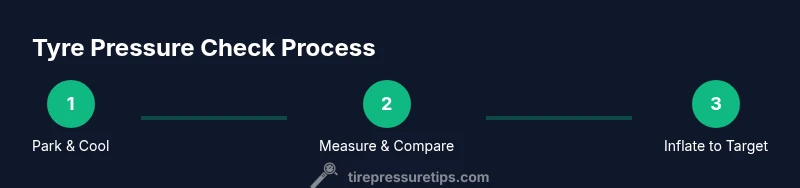
The following steps outline a reliable, repeatable method to check and adjust Nissan tyre pressure. Start with cold tires, use a proper gauge, and inflate gradually toward the target value listed on the door sticker. While this might seem straightforward, the details matter: temperature, recent driving, and even the time of day can affect your readings. Write down each tire’s current pressure, then compare with the target. If any tire is below target by more than a couple of psi, add air in small increments and recheck. If you overinflate, release air slowly and re-measure. Finally, recheck all tires after a short drive to confirm stability. The goal is accuracy, not speed.
Temperature and Its Effect on Tyre Pressure
Ambient temperature strongly influences tire pressure. As temperatures fall, air contracts and pressures drop; as it rises, pressures climb. This is particularly noticeable in the morning during colder seasons or after a long trip. Nissan tyre pressure values on the sticker assume a standard temperature; if you drive from a cool morning into a hot midday, the pressure can rise slightly. That’s why many drivers check pressures when the tires are cold and recheck after a few minutes of driving. The Tire Pressure Tips guidance highlights that temperature changes can account for several PSI differences across the same tire on the same day.
TPMS and Nissan Models: What Triggers the Light
Tire Pressure Monitoring Systems (TPMS) are designed to alert you when a tire’s pressure deviates significantly from the target. In Nissan models, a TPMS warning often appears if a tire is underinflated by a noticeable margin, but the exact thresholds vary by model and system version. Do not rely solely on the TPMS as your primary measure; use a gauge for accuracy. The TPMS light can also activate due to rapid cooling after a highway drive or after a tire repair. In many cases, correcting the pressure and driving a short distance will reset the light. The Tire Pressure Tips team advises validating TPMS data with a physical gauge to avoid misinterpretation.
Safety, Maintenance Routine, and Common Pitfalls
Regular checks are part of responsible vehicle maintenance. It’s easy to fall into common pitfalls like inflating to the maximum on the tire sidewall or assuming the TPMS is always perfect. Always start with the door sticker values, then verify with a gauge. Avoid inflating beyond the tire’s maximum rating, and never ignore a persistent TPMS warning. A small, steady routine—check monthly, before long trips, and during seasonal temperature changes—keeps tires in their optimal range. The Tire Pressure Tips team recommends pairing measurements with a brief log so you can spot trends over time. Safety should always drive your decisions: underinflated tires can overheat, while overinflated tires can reduce grip and increase wear.
Authority Sources
To support practical guidance, consult reputable sources on tire maintenance and TPMS, including government safety resources and major publications. These sources provide general best practices and emphasize the importance of accurate measurement and safe inflation habits. Be sure to cross-check Nissan-specific values with your model’s documentation, since targets can differ across trims and wheel sizes. The following sources are useful starting points for further reading and validation.
Tools & Materials
- Digital tire pressure gauge(Measures pressure to at least 0.5 psi; prefer models with a backlit display for visibility in dim garages.)
- Air compressor or gas-station air pump(Ensure you can adjust air in small increments (1-2 psi) and monitor readings as you inflate.)
- Owner’s manual or door jamb tire-pressure sticker(Use it as the primary source of Nissan tyre pressure targets.)
- Notebook or notes app(Great for recording tire pressures over time and for trips.)
Steps
Estimated time: 15-25 minutes
- 1
Park on a level surface and let tires cool
Find a flat, shaded spot and turn off the engine. Wait at least 3 hours after driving before taking measurements to avoid heat-induced pressure increases. If you must check after a drive, wait 10-15 minutes for tires to cool.
Tip: Cold measurements are more accurate; always start with cold tires. - 2
Locate target tire pressures
Check the door jamb sticker or owner’s manual for front and rear targets. Note that values can differ by axle and by load. If you regularly carry heavy cargo, reference the “load” guidance on the sticker, but stay within tire-sidewall limits.
Tip: Record each target value next to the current reading for easy comparison. - 3
Remove valve caps and attach gauge
Carefully unscrew the valve cap and place it in a safe spot. Attach your gauge firmly to the valve stem to prevent air leakage during measurement. Read the gauge once it stops fluctuating.
Tip: If the gauge slips, re-seat and start again for an accurate number. - 4
Inflate or deflate to the target
If low, add air in small increments (1-2 psi) and re-check after 2-3 seconds of stabilization. If high, bleed air in small increments and re-check. Do this for each tire, including the spare if you rotate it regularly.
Tip: Small adjustments yield the most accurate results; avoid large jumps in pressure. - 5
Re-measure all tires
Take readings again after adjustments to confirm consistency. Tires can settle a little after inflation, so a second check ensures you’ve hit the target.
Tip: Always re-check each tire after inflation and include the spare if applicable. - 6
Replace valve caps and log readings
Screw the valve caps back on securely to keep out dirt and moisture. Document the final pressures in a notebook or app for future reference.
Tip: A simple log helps detect slow leaks over time. - 7
Take a short test drive and re-check
Drive 5-10 minutes to let the tire pressures stabilize with road contact, then re-check to ensure readings remain within target.
Tip: If readings drift more than 1-2 psi after the drive, re-check and adjust as needed. - 8
Address TPMS alerts if needed
If TPMS lights persist after inflation, perform a final gauge check and refer to the Nissan manual for TPMS reset procedures if instructed.
Tip: Do not ignore persistent TPMS warnings; they can indicate a slow leak or sensor issue.
Frequently Asked Questions
Why is my Nissan tyre pressure light on even after inflating?
TPMS can trigger from leaks, slow punctures, or rapid temperature changes. If the light remains on after inflating to target, recheck with a gauge and consider a professional inspection if the signal persists.
If the light stays on after inflating to the target, recheck with a gauge and seek a professional check if it doesn't reset.
Can I drive with underinflated tires on a Nissan?
Driving on underinflated tires is unsafe: it increases heat buildup, reduces traction, and wears tires unevenly. If you notice low pressure, inflate to target before driving long distances.
No. Underinflated tires are unsafe and can damage tires; inflate to the target before long trips.
Should I inflate to the max sidewall pressure?
No. Always follow the door sticker or manual values, not the maximum sidewall pressure. Overinflation reduces grip and ride comfort and can cause a blowout in rough conditions.
Never inflate to the max—stick to the recommended target from the door sticker.
What is TPMS compared to checking with a gauge?
TPMS monitors pressure and alerts you, but it isn’t a precise measurement. Use a gauge for accuracy and use TPMS as a supplementary warning system.
TPMS warns you about low pressure, but always verify with a gauge for accuracy.
How often should I check Nissan tyre pressure?
Check monthly and before long trips, and adjust for seasonal temperature changes. Keep a simple log to spot leaks early.
Check monthly and before long trips, and log the readings.
Is it necessary to check the spare tire pressure?
Yes. The spare should be inspected as part of your routine maintenance; a flat spare defeats purpose in an emergency.
Check the spare tire pressure too, so you’re ready for emergencies.
Watch Video
What to Remember
- Check Nissan tyre pressure when tires are cold.
- Use the door sticker values as the primary targets.
- Verify measurements with a quality gauge, not TPMS alone.
- Record readings to track changes and leaks over time.