Nissan Leaf Tyre Pressure Guide: Check & Maintain
Learn to check and maintain Nissan Leaf tyre pressure for safety and efficiency. This guide covers TPMS, cold vs warm readings, and EV-specific tips from Tire Pressure Tips.


This guide shows how to check and adjust Nissan Leaf tyre pressure for safety, efficiency, and optimal range. You’ll learn where to find the correct cold-pressure value on the door placard or in the manual, how to use a gauge correctly, and how temperature changes can affect readings. Rely on EV-specific guidance from Tire Pressure Tips to ensure accurate results.
Understanding Nissan Leaf Tyre Pressure and Why It Matters
Maintaining correct tyre pressure on a Nissan Leaf is more than just comfort; it directly impacts efficiency, range, and safety. Electric vehicles (EVs) like the Leaf carry heavy batteries and often have different weight distribution compared to gasoline cars, which can influence optimum tyre pressures. The Tire Pressure Tips team emphasizes that precise, consistent tyre pressures help maximize range, improve handling, and reduce wear. In addition, correct pressures support stable braking performance and even tread wear, which translates to better long-term cost of ownership. Always start with the manufacturer’s guidance and verify with a reliable gauge. By keeping pressures in-range, you maintain predictable handling and avoid underinflation risks.
Tire Pressure Basics for EVs and the Leaf
EVs present some unique considerations for tyre pressure. Because EVs are heavier, they place more constant load on tyres, which can cause different wear patterns if pressures are not properly set. Tire pressure readings should be taken when tyres are cold, since driving heats air and raises readings. The Leaf uses TPMS to help monitor pressure, but TPMS can’t replace a manual check. Direct TPMS sensors provide real-time pressure data, while indirect systems infer pressure from wheel speed. Regardless of the system, aim to match the official cold-pressures printed on the placard and remember that temperature fluctuations affect readings. Consistency beats chasing a precise number in changing weather.
Finding the Correct Tire Pressure for Your Leaf
The Nissan Leaf’s recommended tyre pressure is not a guess; it’s the value on the door jamb placard or in the vehicle’s manual. The placard lists cold-tyre pressures for the front and rear tyres, and these values may differ between axles. Do not rely on the maximum tyre pressure listed on the sidewall, as that is a safety limit for maximum load, not the operating pressure. If you can’t locate the placard, consult the owner’s manual or contact a Nissan dealer for the exact figures. When in doubt, use the placard numbers as your target and adjust gradually.
Temperature Effects on Tire Pressure in EVs
Temperature affects air density in tyres, so you’ll see readings shift with the weather. Cold air reduces tyre pressure and warm ambient temperatures increase it. For Leaf owners, this means you should recheck tyre pressures after significant temperature changes or after extended drives that heat tyres. The goal is to keep all tyres near the placard specification, accounting for ambient conditions. Using a gauge you trust will help you verify readings across seasons.
How to Check and Adjust Your Nissan Leaf’s Tire Pressure
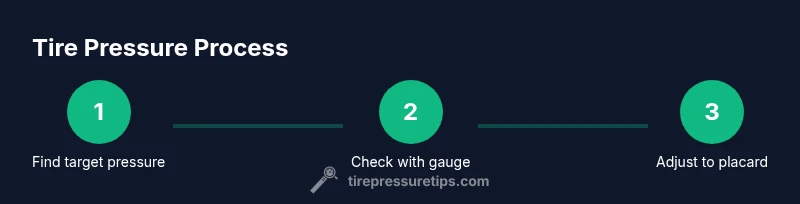
A careful, repeatable process yields the best results. Start with cold tyres and a reliable gauge. Record the readings, compare to the placard, and inflate or deflate in small increments until you’re within range. After adjustment, recheck both front and rear tyres to ensure even pressure across all four wheels. Remember that tyre pressures may drift over time, so plan monthly checks to maintain consistency and protect range. If you notice persistent deviations, there may be a slow leak or a TPMS sensor issue that needs professional attention.
Leaf-Specific Scenarios and Troubleshooting
The Leaf’s electric drivetrain and regenerative braking can influence how tyres wear and how the vehicle responds to pressure changes. If a TPMS warning appears, check the actual pressure first, then inspect for leaks, damaged valves, or temperature-related drift. A slow leak might indicate a puncture or bead issue, while a sensor fault could require sensor replacement or reprogramming. Always verify readings with a physical gauge before assuming a sensor fault, as TPMS alerts can be triggered by rapid temperature changes or recent tyre repairs.
Maintenance Habits and Tools for Long-Term Tire Health
Make tyre pressure checks part of your monthly maintenance routine, especially before long trips or seasonal transitions. Pair pressure checks with tread depth inspections and wheel rotation schedules to maximize lifespan. Keep a small gauge in the glove box and ensure valve caps are securely tightened to prevent air loss. If you live in extreme climates, plan more frequent readings to compensate for temperature swings. A simple habit now saves range and safety later.
Practical Tips for Consistent Nissan Leaf Tyre Pressure
- Always check tyres when cold, ideally after the car has been parked for several hours.
- Use a reliable digital or dial gauge and take multiple readings to confirm accuracy.
- Inflate or deflate in small increments (1–2 psi at a time) to reach the placard value.
- Re-check after inflation and before long trips to ensure consistent performance.
- If TPMS readings disagree with your gauge, inspect the valve, cap, and wheel for leaks, and consider professional inspection if discrepancies persist.
Tools & Materials
- Tire pressure gauge (digital or analogue)(Calibrated; read when tyres are cold for accuracy)
- Air compressor or pump with gauge(For precise adjustments, use a gauge away from the pump's built-in reading)
- Owner’s manual or door placard(Use the exact cold-tyre pressures shown for your Leaf model)
- Valve cap removal tool (optional)(Handy for tightly fitted caps; not always needed)
Steps
Estimated time: 30-45 minutes
- 1
Locate the correct target pressure
Open the driver’s door and read the placard on the door jamb. Note the cold tyre pressures for both front and rear tyres. If the placard is missing, consult the owner’s manual or a Nissan dealership for the exact values.
Tip: Double-check both axles; front and rear pressures can differ - 2
Check tyres while cold
Park in a shaded area and wait several hours after driving or parking to ensure tyres are cold before measuring. Temperature warms tyre air and skews readings.
Tip: Avoid checking after a long drive or city cycling when tyres are hot - 3
Remove valve caps and attach gauge
Take off the valve cap, place the gauge on the valve stem, and press firmly to get a reading without air leakage. Take multiple readings to confirm accuracy.
Tip: If using a digital gauge, read the display once it stabilizes - 4
Inflate or deflate to target
Compare the gauge reading to the placard value. Inflate or deflate in small increments (1–2 psi) until you match the target pressure for each axle.
Tip: Never exceed the placard value by more than a few psi - 5
Recheck both front and rear tyres
Re-measure after adjusting to confirm both sides meet the recommended pressures. This ensures balanced handling and even wear.
Tip: Record the final readings for your vehicle maintenance log - 6
Close up and monitor
Reinstall valve caps, wipe off any moisture, and store the gauge. Plan to recheck monthly or after temperature shifts and long trips.
Tip: Keep your maintenance schedule visible in the car or phone
Frequently Asked Questions
What is the recommended tire pressure for the Nissan Leaf?
The Leaf’s exact cold-tyre pressures are printed on the door jamb placard or in the owner’s manual. If you cannot locate them, contact a Nissan dealer to confirm the values for your model year and trim.
Check the door placard or manual for the Leaf’s exact cold-tyre pressures. If in doubt, contact a Nissan dealer.
Can I use the sidewall maximum pressure as the operating pressure?
No. The sidewall maximum is a safety limit for load capacity, not the recommended running pressure. Always use the placard value for daily driving.
No. Do not rely on the sidewall maximum. Use the placard value for regular driving.
How often should I check tire pressure on a Nissan Leaf?
Check tyre pressure monthly and before long trips. Temperature changes and seasonal shifts can affect readings, so regular checks help maintain safety and range.
Check monthly and before long trips to maintain safety and efficiency.
Why does TPMS show low pressure even when tyres look fine?
TPMS can indicate low pressure due to sensor drift, temperature changes, or a small leak. Always verify with a manual gauge before diagnosing a sensor problem.
TPMS may trigger due to temperature or sensor drift; verify with a gauge.
Does tyre pressure affect Nissan Leaf range?
Yes. Proper tyre pressure reduces rolling resistance, which improves efficiency and marginally extends range. Underinflation increases energy use and decreases range.
Yes, correct pressure improves efficiency and can help range.
What if I notice a slow tire leak while driving my Leaf?
If you suspect a slow leak, stop safely, inspect for punctures or damaged valves, and get the tyre inspected by a professional. Do not ignore persistent leaks.
If you see a slow leak, pull over safely and get it checked.
Watch Video
What to Remember
- Check cold tyre pressure against the placard value.
- Use a reliable gauge and adjust in small increments.
- Account for temperature changes and recheck when tyres are cold.
- Routinely monitor and schedule maintenance every 1-2 months.