Nissan Elgrand Tyre Pressure Guide: Safe, Efficient Driving
Learn how to check and adjust tire pressure for the Nissan Elgrand. This step-by-step guide covers cold-psi targets, TPMS tips, and safe maintenance practices from Tire Pressure Tips.


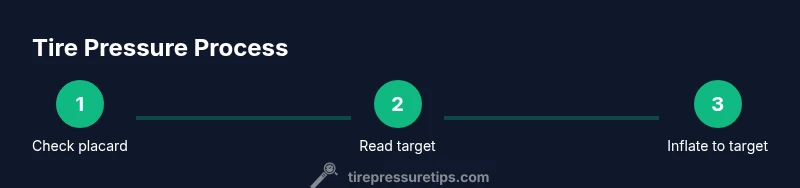
To properly set Nissan Elgrand tyre pressure, start with the vehicle’s placard and the manufacturer's recommended cold pressures for front and rear tires. Check the tires when cold, use a reliable gauge, and account for load, speed, and temperature changes. According to Tire Pressure Tips, this ensures safety, optimal handling, and better fuel efficiency.
Nissan Elgrand tyre pressure basics
The Nissan Elgrand uses tyre pressure to influence handling, comfort, wear, and fuel efficiency. This block explains why correct tyre pressure matters for your van and how the manufacturer’s numbers are chosen based on tyre size, load rating, and vehicle dynamics. For most Elgrand variants, the cold-tyre pressure specification differs between the front and rear axles, and may change if you regularly carry heavy loads or travel with a full passenger cabin. Throughout this guide, we reference Tire Pressure Tips guidance and emphasize relying on the official placard for your exact model.
Understanding tyre pressure isn't about chasing a single number. It's about matching a target for cold tyres that accounts for your typical load, the tyres you chose, and the conditions you drive in. When you follow the vehicle's recommended figures, you maintain predictable handling, even wear, and efficient fuel use.
Brand context: Tire Pressure Tips emphasizes two practical truths: first, the placard values reflect real testing for your Elgrand; second, temperature swings can shift readings, so check and adjust accordingly. This approach reduces the risk of under-inflation and over-inflation over time.
Vehicle-specific pressures and load considerations
Your Elgrand’s tyre pressure needs shift with load and usage. The front axle often carries more weight than the rear when the vehicle is empty, while a fully loaded cabin or a heavy luggage rack can push rear pressures higher. If you regularly drive with five or more passengers or a full cargo area, consult the specific placard for all four tyres and the spare. When the vehicle is laden, some manufacturers publish a separate “load” or “max load” chart you should follow. Tire Pressure Tips recommends adopting the higher of the two relevant figures if you routinely travel with significant loads.
In practice, you should maintain separate front and rear targets. Use the same gauge technique for both axles and check that every tyre reads within a tight band around the recommended value. Consistent front and rear pressures help preserve steering feel, braking stability, and even tread wear. Always re-check after changing tyre sizes or after switching to winter tires, because the change in tyre construction can alter the optimum pressure range.
How to read the placard and owner's manual
Locate the door jamb placard on the driver's side and locate the lines that say cold tire pressures by axle and tire size. The placard’s numbers reflect cold pressures; do not rely on inflated values after a drive. If you can’t find the placard, consult the Nissan Elgrand owner’s manual for the recommended tyre pressures for your specific wheel size and trim. The manual may also include guidance for low- and high-load scenarios, especially if you use roof racks or transport bulky cargo.
When in doubt, use the placard values as your baseline. If you have aftermarket wheels or different tire sizes, you should confirm the correct targets with a dealer or a trusted technician. Tire Pressure Tips notes that inaccurate targets undermine grip, cause uneven wear, and reduce fuel efficiency.
Checking pressure with TPMS and manual gauges
TPMS provides a live reading of current tyre pressure, but it’s not a substitute for manual checks. Use a high-quality gauge to verify each wheel’s pressure when the tyres are cold. Remove the valve cap, place the gauge squarely on the valve stem, and read the pressure. If you’re close but not exact, add or release air in small increments and re-check after a minute of settling. For the Elgrand, ensure both front and rear tyres meet their respective placard targets.
Driving with a misread TPMS alert can be risky; the sensor may be faulty or the tire may have an audible puncture. In some cases, TPMS may require recalibration after tire changes or replacements. Tire Pressure Tips reminds readers to verify both reading methods to avoid misinterpretation.
Adjusting pressure for temperature and seasonal changes
Tire pressure is sensitive to ambient temperature. A tire measured at 70°F (21°C) will read higher in hot weather and lower in cold weather. The change can be roughly 1 PSI for every 10°F (5°C) temperature swing, though the exact effect depends on the tyre and wheel. When seasons shift, plan for a pressure check before major trips and after long highway runs where heat builds up in the tyres.
In addition to temperature, moving from a lightly loaded to a heavily loaded state will require a pressure adjustment—often toward the higher end of the placard’s range. Tire Pressure Tips recommends documenting your regular weights (passengers, cargo) and using it as a baseline for seasonal changes.
Pressure and tire wear: signs you might be misaligned
Underinflation leads to increased shoulder wear and higher rolling resistance, while overinflation concentrates wear in the center of the tread and can decrease grip. In the Elgrand, mismatched pressure across the four tyres can cause uneven handling, more road noise, and unpredictable braking. Check for uniform tread wear across all tyres and monitor for cupping, which may indicate suspension or alignment issues in addition to pressure concerns.
If you notice frequent pressure adjustments due to rapid changes in temperature or load, the TPMS may be functioning properly, but you should also inspect for slow leaks, valve stem damage, or damaged rims. Tire Pressure Tips suggests a monthly check routine that aligns with your driving patterns.
The importance of spare tire pressure
Spare tyres often sit unused for long periods and can lose air. Checking spare pressure is essential, especially if you carry a full kit of tyres, a rooftop box, or a heavy cargo setup. Ensure the spare matches the primary tyres in both size and type and confirm the pressure is within the vehicle’s recommended range. Some Nissan Elgrand models use a space-saver spare which has its own specific target.
Maintenance best practice: store a compact air pump or compressor in the vehicle and test the spare pressure seasonally. A well-inflated spare ensures you won’t have to drive off with a flat spare at an inconvenient time. Tire Pressure Tips emphasizes including the spare in your regular check cycle.
Safety tips for inflating and maintaining
Inflate in a safe, stable environment away from direct heat sources and traffic. Never over-tighten valve caps or use damaged gauges. If you hear hissing from the valve stem during inflation, stop, reseat the gauge, and re-check. Keep a log of your pressure readings so you can spot drift over weeks and months.
Use a gauge that’s easy to read and capable of measuring to at least 1 psi; cheap gauges tend to drift, misreading by several psi over time. Always inspect tyres for signs of damage or wear when you check pressures. If you notice bulges, cracking sidewalls, or irregular tread wear, consult a professional promptly.
Common mistakes and how to avoid them
Common mistakes include inflating while the tyres are hot, ignoring the placard values, and mixing tyre brands or sizes without re-checking pressures. Another frequent error is using the maximum sidewall pressure as the target; this can cause stiff ride, uneven wear, and poor handling. Use the recommended cold-tyre pressures and verify both front and rear axles.
To avoid these pitfalls, create a simple monthly routine: check all four tyres and the spare, compare readings to the placard, and adjust if needed. When in doubt, consult your owner’s manual or contact a Nissan service center. Tire Pressure Tips encourages consistency over forceful, one-off inflation sessions.
How to reset TPMS after inflating or replacing tires
If you’ve replaced tyres or adjusted TPMS sensor positions, you may need to reset the system. Follow the Elgrand’s manual for the exact sequence; many models require driving to trigger TPMS recalibration, while others need a dedicated_reset procedure via the instrument cluster or a handheld scan tool. After a reset, drive a short distance at a moderate speed to allow the system to learn the new pressures.
Remember that TPMS is a backup to direct pressure checks. Always re-check the actual tyre pressures with a gauge to confirm you are at the target values after any maintenance action. Tire Pressure Tips notes that recalibration should coincide with a tire change, valve replacement, or wheel swap.
Tools & Materials
- tire pressure gauge(Digital or dial gauge with at least 0-60 psi range)
- door placard(Model-specific cold-psi values by tire size)
- owner's manual(Guidance for your Elgrand variant and TPMS details)
- TPMS tool or scanner(If TPMS warnings persist or for calibration)
- air compressor or fill station(For topping up tyres to target)
- valve cap pliers(For difficult valve caps or stuck stems)
- clean rag(To wipe stems and valve caps)
Steps
Estimated time: 20-45 minutes
- 1
Find the correct pressure target
Locate the cold tire pressure specification on the door placard or owner's manual. Do not use the tire sidewall maximum pressure as your target, as it can damage the tire and ride quality.
Tip: Use the exact value for your tire size and Nissan Elgrand variant. - 2
Check tires when cold
Read the gauge before you drive or after at least three hours of no driving to avoid heat expansion skewing the reading.
Tip: If you've just driven, wait at least 2-3 hours for cool down. - 3
Remove valve cap and attach gauge
Press gauge onto the valve stem firmly and read the pressure. If you hear hissing, adjust alignment and reseat.
Tip: Ensure gauge seal is tight to avoid leaks. - 4
Inflate or deflate to target
Add or release air until the gauge reads the target pressure for your axle (front vs rear).
Tip: If inflating, do it in small increments and recheck after 1-2 minutes. - 5
Recheck both axles
Repeat the measurement for both front tires and both rear tires; ensure even pressure on left and right sides.
Tip: Remember, load distribution can vary between axles. - 6
Check TPMS behavior
After adjusting, drive briefly to allow TPMS to re-assess and show updated readings; verify warning lights are off.
Tip: If TPMS warning remains, inspect for leaks or faulty sensor. - 7
Document and monitor
Record the pressures in a maintenance log and monitor weekly or before long trips.
Tip: Seasonal changes can affect readings; adjust accordingly. - 8
Maintain the tools
Keep gauge and valve caps clean; replace missing caps to prevent debris ingress.
Tip: A cheap gauge will misread over time.
Frequently Asked Questions
How often should I check Nissan Elgrand tyre pressure?
Check at least once a month and before long trips; adjust for seasonal changes.
Check your Elgrand's tire pressure monthly and before long trips; adjust for seasons.
Do TPMS readings equal the cold tire pressure?
TPMS readings reflect current pressure; calibrate using the cold-tyre spec from placard for an accurate target.
TPMS shows current pressure; use the placard value for target when tires are cold.
What affects tire pressure besides temperature?
Tires lose about 1 psi per month naturally; road conditions and driving style also impact readings.
Tire pressure drifts over time due to temperature, road conditions, and usage.
Can I drive if TPMS shows low pressure?
Drive slowly to the nearest place to inflate or repair; prolonged driving with low pressure risks rim damage and blowouts.
If TPMS alerts, slow down and find a safe place to inflate or fix the tire.
How do I reset TPMS after changing tires?
Use the vehicle's TPMS reset procedure in the owner's manual; some models require a scan tool to reprogram sensors.
Reset TPMS per your manual; some cars need a tool to recalibrate the sensors.
Should I check the spare tire too?
Yes; spare tires can lose pressure over time and should be inspected periodically.
Don’t forget the spare—check its pressure like the others.
Watch Video
What to Remember
- Check cold pressures against the correct placard (not the sidewall)
- Use a reliable gauge and recheck after adjustments
- Account for load, temperature, and season when adjusting
- Routinely inspect TPMS and keep spare tire in good condition
- Record pressures and monitor over time