Nissan Sentra Tire Pressure: Practical Maintenance Guide
Learn how to check and maintain tire pressure on the Nissan Sentra, using TPMS guidance, a reliable gauge, and practical tips for safety, fuel efficiency, and tire longevity.


In this guide, you'll learn how to check and adjust tire pressure on a Nissan Sentra using TPMS alerts, a reliable gauge, and the car's recommended psi. We'll cover how ambient temperature affects readings, how to interpret TPMS warnings, and steps to bring your tires to the correct spec for safety and fuel efficiency.
Why Tire Pressure Matters for the Nissan Sentra
Maintaining correct tire pressure is a foundational part of safe driving, efficient fuel use, and even tire wear. For the Nissan Sentra, proper tire pressure helps the car respond precisely to steering inputs, maintain even tread contact, and reduce heat buildup during highway driving. When pressures swing too low or too high, you may notice poorer braking performance, stiffer ride, and faster tread wear on edges. The Tire Pressure Tips team emphasizes that small adjustments in pressure can yield meaningful improvements in handling, mileage, and tire longevity. Remember: the goal is a consistent, manufacturer-approved range that matches your load and driving conditions.
Note: Always verify figures with your door jamb placard and owner's manual, since different Sentra trims and tires can have distinct targets. Temperature and load variations also affect readings, so regular checks are essential across seasons.
How to Find Your Nissan Sentra’s Correct Tire Pressure
Your Sentra’s recommended tire pressure is not a one-size-fits-all value. Locate the exact target on the door jamb placard adjacent to the driver’s door, or in the owner’s manual. The front and rear tires often have the same target on many Sentra models, but some trims or different tire sizes may differ. Use a precise tire pressure gauge (digital or analog) and measure when the tires are cold, meaning the vehicle hasn’t been driven recently. If you’ve just parked after a long trip, wait several hours before measuring. Note that the pressure for the spare tire is sometimes listed separately. Always document the target numbers for quick reference during future checks.
If you’re unsure, consult a dealer or trusted maintenance guide. Consistency matters more than chasing a single exact number, especially when weights and speeds vary.
TPMS Basics: What Triggers the Tire Pressure Light
The Tire Pressure Monitoring System (TPMS) is designed to alert you when any tire drops below its threshold, typically due to a slow leak, puncture, or temperature-related shrinkage. When you inflate or deflate a tire, the system may recalibrate after a short drive, but it won’t instantaneously reflect changes. If the light stays on after you’ve corrected pressure, there could be a leak, a damaged sensor, or a sensor battery issue. In some Sentra models, TPMS resets automatically after a proper pressure update; in others, a manual reset via the onboard computer menu may be required.
If you frequently see TPMS warnings in cool mornings but not after driving, this can indicate seasonal temperature effects rather than a persistent leak. Tire Pressure Tips advises verifying pressures with a gauge to avoid unnecessary tire or TPMS service visits.
Temperature and Tire Pressure: What You Need to Know
Temperature changes have a direct effect on tire pressure readings. Cold air contracts, reducing pressure; as the tires warm up during operation, pressure rises. If you measure after a drive, you’ll likely see a higher reading than when cold. To obtain consistent results, measure pressures when the tires are cold and after the vehicle has sat for a few hours. For the Nissan Sentra, this means checking pressures in the morning or after the car has cooled down. Keeping a log of readings across trips and seasons helps you notice gradual leaks or slow changes.
Tools You Need to Check Tire Pressure
Essential tools for accurate tire pressure checks include a reliable tire pressure gauge (digital or analog), a source of clean air (home compressor or gas station), and the Nissan Sentra’s door placard or manual for the target PSI. A notebook or mobile app helps you track readings over time. Optional but helpful items include soapy water to locate slow leaks, a flashlight for valve areas, and a small brush to clean valve stems before inspection. Always use a gauge you trust, and calibrate it against a known reference gauge periodically.
Common Mistakes When Checking Nissan Sentra Tire Pressure
Common missteps include checking pressure immediately after driving, inflating to a value from memory without confirming on the placard, and neglecting the spare tire. Another frequent issue is relying solely on TPMS without using a gauge; TPMS can lag behind real changes or misreport after a sensor issue. Don’t mix different tire pressures in each axle unless the placard allows it, and avoid overinflating, which can lead to a harsher ride, reduced grip, and increased risk of tire damage.
Regularly verifying pressures and using a gauge for every tire creates a reliable baseline and reduces surprises on hot days or long trips.
Seasonal Checks: Winter and Summer Tire Pressure
Seasonal temperature swings can mask slow leaks or changes in tire pressure. In colder months, pressure readings tend to be lower; in hot months, readings can creep higher. For the Nissan Sentra, plan monthly checks and more frequent checks before long drives or on longer trips. If you store a spare tire, check its pressure seasonally as well, since it may be exposed to different temperatures than the other tires. Consistency is key to maintaining safe handling and optimal tire wear.
How to Prepare for Long Trips
Before any long drive, inspect all tires for signs of wear or damage, check tread depth, and verify pressure across all tires including the spare. Inflate tires to the vehicle manufacturer’s recommended PSI for the load you’re carrying. If you’re carrying heavy cargo or multiple passengers, consider adjusting within the placard’s tolerance, while never exceeding the maximum tire pressure listed on the sidewall. Bring a portable gauge and air source, and plan rest stops to recheck pressures during the trip.
When to Inspect Leaks or Damaged Valves
If you notice a slow leak, a hissing sound near the valve stem, or consistent pressure loss over several days, inspect for a puncture, bead leak, or a faulty valve stem. Clean the area and apply a soapy water test to identify bubbles indicating a leak. If a leak is suspected, avoid driving long distances before repair, as driving with a persistent leak can cause heat buildup and premature tire wear. Seek a professional inspection if the leak persists.
The Spares: Do You Need to Check Spare Tire Pressure?
Yes. The spare tire deserves the same care as the others, especially if it’s a full-size spare or a space-saver with different pressure requirements. Check the spare’s pressure regularly, store the valve cap, and ensure the tire is ready for use in emergencies. If you rotate tires, remember that the spare’s PSI target may differ from the other tires, so always verify with the placard or manual.
Tools & Materials
- Tire pressure gauge(Choose digital or analog; ensure accuracy within ±1 psi)
- Access to a reliable air source(Air compressor at home or gas station; avoid used or damaged compressors)
- Door jamb placard or owner's manual(Source for the Sentra’s exact PSI targets; may differ by trim)
- Notebook or mobile app(Track readings and dates for trend monitoring)
- Soapy water (for leaks)(DIY leak test if you suspect a slow puncture)
- Valve stem brush(Clean stem before inspection to improve seal checks)
Steps
Estimated time: Estimated total time: 25-40 minutes
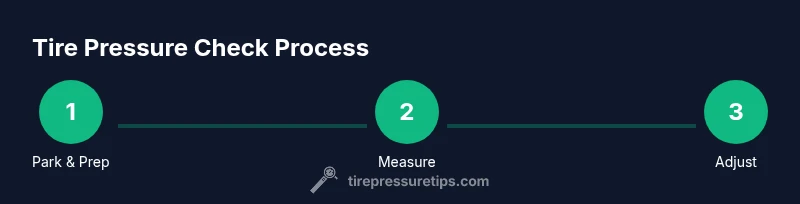
- 1
Park on a level surface
Turn off the engine and apply the parking brake. Let the car sit for a few minutes so the tires are not warm. This provides a cold baseline for accurate measurement.
Tip: Level ground improves measurement consistency; avoid measuring on soft soil or uneven pavement. - 2
Find the target PSI
Consult the door placard or owner’s manual to locate the recommended PSI for your tires. Note whether front and rear tires share the same target or differ by axle.
Tip: If you’re carrying a heavy load or passengers, a slightly higher target within the placard range may be appropriate. - 3
Remove the valve cap and attach gauge
Remove the valve stem cap, place the gauge on the valve, and press firmly to get a stable reading. Record the result.
Tip: Hold the gauge steady and avoid air leaks around the stem for an accurate read. - 4
Inflate or deflate to target PSI
Add air or release air to bring the tire to the target PSI. Recheck after adjustments to confirm accuracy.
Tip: Small pressure changes can have a big effect; adjust in small increments and recheck. - 5
Repeat for all tires
Check all four tires and the spare (if equipped). Ensure even pressure across the wheel set to promote balanced handling.
Tip: Always perform checks on all tires in a single session for consistency. - 6
Re-seat valves and clean up
Replace valve caps securely. Wipe away any residue and note the time and values in your log.
Tip: Tighten caps to prevent moisture ingress, which can cause reading errors. - 7
Test drive and re-check (if needed)
Take a short test drive and re-check pressures if you adjusted recently; TPMS may re-sync after driving.
Tip: If a tire dips again after a drive, inspect for a leak or damage. - 8
Document the maintenance
Log the date, PSI readings for each tire, and any notes about tires or the TPMS.
Tip: Keeping a log helps you notice gradual changes over time and plan timely maintenance.
Frequently Asked Questions
Where can I find the Nissan Sentra's recommended tire pressure?
Check the door jamb placard near the driver’s door or the owner’s manual for the exact PSI target. Targets can vary by trim and tire size.
Look at the door placard or the owner’s manual to find the exact PSI for your Sentra.
Why does the TPMS light come on even after inflating?
TPMS can stay on if a tire has a slow leak, a faulty sensor, or if the system hasn’t recalibrated after inflation. Double-check with a gauge and inspect for leaks.
TPMS can stay on due to leaks or faulty sensors; verify with a gauge and check for leaks.
Is it better to check tire pressure when the tires are cold or warm?
Always check when cold for the most accurate measurement. A warm tire shows higher pressure and can mislead you about the true target.
Check when cold for accuracy; warm tires show higher readings.
How often should I check tire pressure?
Check at least once a month and before long trips. More frequent checks are helpful in extreme weather or after significant load changes.
Check at least monthly and before long trips.
Can low tire pressure damage tires?
Yes. Running at low pressure increases heat buildup and accelerates wear, potentially leading to a blowout if ignored.
Low pressure can damage tires and be unsafe; fix it promptly.
What should I do if the TPMS warning keeps coming back after adjustment?
If the warning returns, inspect for leaks, faulty sensors or a need for TPMS recalibration. A professional inspection is recommended if readings remain inconsistent.
If the TPMS warning persists, get a check for leaks or sensor issues.
Watch Video
What to Remember
- Check tires when cold for accuracy.
- Follow the door placard for PSI targets.
- Use a gauge to verify TPMS readings.
- Record readings to track tire health.