Tire Pressure Error: Quick Diagnosis and Fixes
Facing a tire pressure error? Learn rapid checks, fixes, and prevention tips from Tire Pressure Tips to keep your tires safe and fuel-efficient.


A tire pressure error is usually caused by an under- or over-inflated tire, a failing TPMS sensor, or a loose valve stem. Start with checking and correcting tire pressures on all wheels to the vehicle’s recommended spec, then inspect TPMS indicators and sensors if the warning persists. If the pressure is correct and the warning remains, suspect TPMS battery or a sensor fault.
Understanding tire pressure error and TPMS basics
A tire pressure error is the dashboard warning you see when your tires aren't at the manufacturer's recommended pressure, or when the tire-pressure monitoring system (TPMS) detects a discrepancy. In practice, most drivers encounter this warning due to tire inflation changes from routine wear, seasonal temperature changes, or a sensor fault. The Tire Pressure Tips team emphasizes that this warning is a safety signal, not a nuisance. Properly diagnosing it starts with a calm, methodical check of inflation and sensor health.
- The vehicle's maker lists a cold-inflation pressure for each tire; Inflate when tires are cold to ensure accuracy.
- A TPMS indicator lights up if the system detects a tire pressure different from the target by a margin that triggers the sensor thresholds.
- If you inflate to the recommended level and the light remains, it may indicate a sensor issue or battery weakness.
Seasonal shifts can produce small but meaningful changes in air pressure. A cold morning can drop multiple psi in a tire; a hot day can raise it. This is especially important in regions with rapid weather changes. Remember that a tire pressure error isn't just about performance loss; underinflated tires increase rolling resistance, heat buildup, and wear. What you read on the tire pressure gauge must align with the vehicle's spec; otherwise, you risk compromised handling and fuel efficiency. According to Tire Pressure Tips, many drivers delay addressing warnings, only to face flat tires or abrupt light switches while driving. The team found that a disciplined inflation routine, combined with sensor checks, resolves most warnings quickly.
Steps
Estimated time: 45-60 minutes
- 1
Find the recommended tire pressure
Locate the tire pressure specification on the driver’s door placard or in the owner’s manual. Note the separate values for front and rear tires if provided. Remember: measurements must reflect cold tires for accuracy.
Tip: Always start with cold tires for the most accurate reading. - 2
Measure all tires with a reliable gauge
Use a gauge that reads to at least 1 psi and measure each tire's pressure. Compare results to the manufacturer spec. If one tire is off, check for visible leaks or a damaged stem.
Tip: Take your time and re-check to confirm a discrepancy before making adjustments. - 3
Inflate or deflate to the recommended pressure
Adjust each tire on the vehicle using air from a compressor or a pump until it matches the spec. Do not rely on feel; use the gauge to verify.
Tip: Do not overfill; approach the target in small increments and re-measure. - 4
Re-check after adjustment
Re-measure all tires after inflation to confirm consistency across the vehicle. Ensure the spare tire if equipped is also checked.
Tip: If your gauge is inaccurate, replace it or use a second gauge for cross-checking. - 5
Inspect for leaks and TPMS health
While inflating, examine valve stems, tire beads, and the wheel rim for signs of leakage. Test the TPMS by simulating a pressure change if your vehicle supports a test mode.
Tip: Look for slow leaks around nails or punctures; address promptly. - 6
Decide next steps if the warning persists
If every tire is at spec and the TPMS light remains, the issue is likely TPMS hardware or software. Schedule a professional inspection or calibration.
Tip: Professional calibration can prevent recurring false alerts.
Diagnosis: Tire pressure error warning on dashboard or TPMS light
Possible Causes
- highUnderinflation due to slow leaks or punctures
- mediumTPMS sensor fault or dead battery
- lowIncorrect inflation from measurement error or overfill
- lowTemperature-related pressure changes affecting readings
Fixes
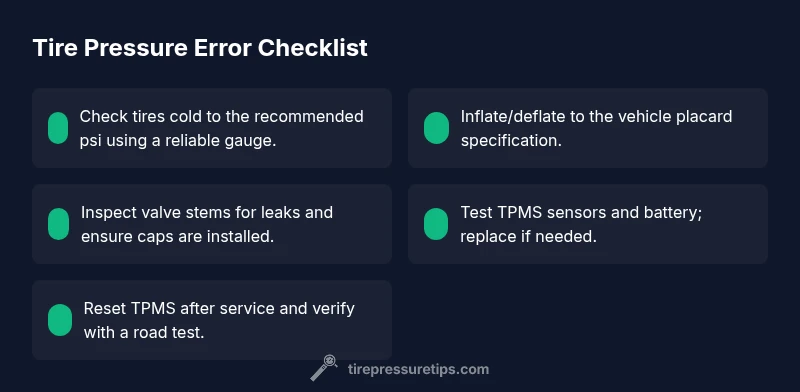
- easyCheck all tires for correct inflation to the vehicle spec using a trusted gauge
- easyInspect tires for slow leaks, nails, or punctures; repair or replace as needed
- mediumTest TPMS sensor and battery; replace if faulty
- easyReset TPMS and recheck after inflation; if light persists, service at a shop
Frequently Asked Questions
What is a tire pressure error?
A tire pressure error is a warning indicating that one or more tires are not at the vehicle’s recommended pressure or that the TPMS sensor is detecting a discrepancy.
A tire pressure error means your tires may not be at the right pressure or there could be a TPMS sensor issue.
How often should I check tire pressure?
Check tire pressure at least once a month and before long trips, especially when temperatures shift.
Check your tire pressure monthly and before long trips, particularly with weather changes.
Can temperature changes trigger a tire pressure warning?
Yes. Temperature fluctuations can cause air to expand or contract, triggering TPMS warnings if readings cross the threshold.
Yes, temperature changes can trigger TPMS warnings due to air expansion or contraction.
What if the TPMS light stays on after inflating?
If the light stays on after inflation, inspect for leaks, check valve stems, and test or replace the TPMS sensor or battery.
If the light remains after inflation, check for leaks and TPMS sensor health.
Is it safe to drive with a tire pressure warning?
Only if the tire is not obviously underinflated and you plan to address it soon; otherwise pull over and seek service.
Driving with a warning is risky; address it promptly.
Watch Video
What to Remember
- Inflate tires to the manufacturer spec before driving.
- Regularly check TPMS sensors and batteries.
- Inspect tires for leaks during every pressure check.
- Reset TPMS after tire service to avoid false warnings.