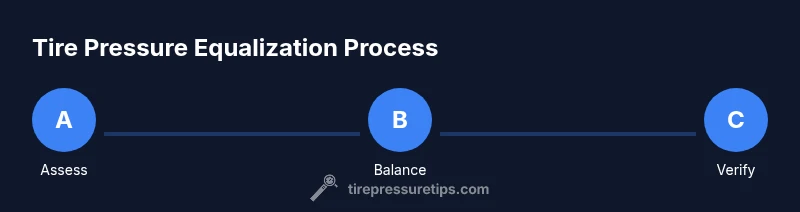
Tire Pressure Equalization System: A Practical Guide
Learn how a tire pressure equalization system (TPES) balances tire pressure across axles, improves handling, and integrates with TPMS for reliable maintenance and safer driving. Practical steps, maintenance tips, and expert guidance from Tire Pressure Tips.


Definition: A tire pressure equalization system (TPES) links tires through a controlled network to balance air pressure across axles or the entire vehicle. It helps maintain uniform tire pressures, improves stability and handling, reduces uneven wear, and works best with a compatible TPMS and regular maintenance checks. In practice, TPES can respond to load, speed, and temperature to minimize pressure differences and protect tire life.
What is a Tire Pressure Equalization System?
A tire pressure equalization system (TPES) is a connected network that links tires so air can move between tires to balance pressure across axles or the entire vehicle. The goal is to keep all tires at similar pressures under varying conditions, which improves stability, handling, and tire life. While most passenger cars rely on a TPMS and manual checks, some vehicles—especially fleets or premium models—can employ TPES for continuous balance. According to Tire Pressure Tips, TPES aims to reduce pressure variation caused by load, cornering, and temperature shifts. In practice, TPES uses small lines or channels, valves, and a central regulator or manifold to allow controlled air flow, either automatically or under user control. When properly set up, it responds to tire-level data from sensors and adjusts air distribution to maintain uniform pressures. Read on to learn how TPES works with TPMS and why it matters for everyday driving.
Key takeaway: TPES is designed to keep pressures even, improving predictability and tire life when conditions shift.
How TPES Works in Practice
A TPES system typically includes a network of lightweight air lines that connect valve stems on each tire to a central regulator or manifold. At the heart of the system is a regulator (or electronic controller) that monitors tire pressure through TPMS sensors and directs airflow to equalize pressure where needed. When a tire loses pressure due to a small leak or temperature change, air is shared from other tires to restore balance, while valves prevent cross-flow that would create overinflation. Some designs use a passive reservoir and check valves to smooth rapid fluctuations, while others rely on active control that automatically responds as you drive. The result is a more consistent pressure landscape across the tire set, which can improve grip, steering feel, and tire wear stability. Remember, TPES is meant to complement, not replace, routine pressure checks and TPMS alerts.
Benefits for Daily Driving and Fleet Operations
The primary benefit of TPES is more uniform tire pressures, which translates into steadier handling, more predictable steering, and more even wear across the tire footprint. By reducing pressure gradients, the system helps the vehicle respond consistently during acceleration, braking, and cornering, particularly when loads shift. For fleets, TPES can simplify maintenance by maintaining baseline conditions without constant manual adjustments, potentially reducing downtime and the risk of underinflation-related damage. For everyday drivers, it can improve comfort and confidence in variable weather and road conditions, while still requiring regular inspections and adherence to manufacturer tire pressure recommendations. In all cases, TPES should be viewed as a supplementary technology that complements TPMS and routine maintenance rather than a replacement for them.
Differences from Traditional TPMS and Manual Checks
Traditional TPMS alerts when a single tire deviates from its target pressure, usually triggering a dashboard warning. A tire pressure equalization system, by contrast, focuses on balancing pressure across multiple tires to minimize variations, which can reduce wear and improve consistency. TPES does not eliminate the need to check pressures with a gauge or to follow vehicle manufacturer guidelines, and it relies on accurate sensors and proper calibration. Some drivers may notice smoother ride and steadier grip as the system maintains balance, while others may not perceive a dramatic change unless heavy loads or temperature swings are common. The best results come from integrating TPES with regular manual checks and the vehicle’s TPMS notifications.
Compatibility, Installation, and Maintenance
Not all vehicles support TPES; OEM implementations are common in some fleets and specialized models, while aftermarket retrofits are less common and require professional installation. Before considering TPES, verify with the manufacturer, dealer, or a qualified technician whether your vehicle can accommodate a TPES network, and review warranty implications. Post-installation, technicians typically calibrate the system to your tires, wheel sizes, and load patterns. Regular maintenance includes checking for leaks, inspecting lines and connectors, and revalidating calibration after tire rotations or air pressure changes. Expect to schedule periodic checks as part of routine tire maintenance.
Common Misconceptions and Safety Considerations
A frequent misconception is that TPES eliminates the need to monitor tire pressures. In reality, TPES works best when paired with TPMS alerts and regular gauge checks. Another misconception is that any random retrofit will automatically improve performance—compatibility and correct calibration are essential. Safety considerations include the potential for leaks, incorrect valve connections, and improper calibration, which can impact ride quality and braking performance. Always follow manufacturer instructions and rely on qualified technicians for installation and service.
Tools & Materials
- tire pressure gauge(Digital or dial gauge; ensure accuracy to at least 0.5 psi increments)
- air compressor(A compressor with adjustable pressure and a fitting compatible with your tires)
- line adapters/hoses(Properly rated hoses for TPES connections and tire valves)
- safety gear(Gloves and eye protection for handling pressurized lines)
- service manual or OEM installation guide(Helpful for OEM TPES compatibility and calibration steps)
Steps
Estimated time: 60-90 minutes
- 1
Check system compatibility
Review your vehicle specifications, owner’s manual, and any dealer notes to confirm whether TPES is present or available as an option. If the system isn’t listed, plan a consult with a qualified technician before attempting any retrofit.
Tip: Use the VIN to verify model-specific support and any factory limitations. - 2
Assemble required tools and documentation
Gather a tire pressure gauge, air compressor, hoses/adapters, a service manual, and any TPES installation instructions. Having everything ready reduces trips to the toolbox and helps you stay organized during the process.
Tip: Lay tools on a clean mat in a well-lit workspace to avoid misplacing small parts. - 3
Inspect system components for wear
Check hoses, valves, connections, and the regulator manifold for signs of wear or leaks. Replace damaged parts before proceeding to avoid later failures during balancing.
Tip: Apply soapy water to joints to reveal slow leaks before the system is pressurized. - 4
Establish baseline tire pressures
Inflate all tires to the vehicle’s baseline recommended pressures from the door placard or owner’s manual, ensuring all tires start from a consistent reference point.
Tip: Use a calibrated gauge and recheck after a few minutes of stabilization. - 5
Test air flow and balance
With the TPES connected, run a short drive or perform a controlled test to observe air flow between tires and the regulator. Note any abnormal readings or noises that indicate leaks or incorrect calibration.
Tip: Document any deviations and recheck connections if you notice unexpected behavior. - 6
Document results and schedule maintenance
Record test results, calibration settings, and tire conditions. Plan follow-up checks after tire rotations or significant weather changes to maintain balance.
Tip: Keep a maintenance log in the vehicle’s manual or a digital file for easy reference.
Frequently Asked Questions
What is a tire pressure equalization system?
A TPES is a network that balances air pressure across tires to maintain uniform pressures, improving stability and wear. It relies on sensors, valves, and a centralized regulator to move air as needed. It does not replace routine tire pressure checks or TPMS alerts.
A TPES balances tire pressures across tires to keep performance steady, especially under changing loads and temperatures. It works with sensors and regulators, not a substitute for regular checks.
Is TPES suitable for most passenger cars?
TPES is more common in fleets and some premium or specialized vehicles. For typical passenger cars, TPES is less common and TPMS plus manual checks remain the standard approach. Always consult your manufacturer before considering retrofit.
For most passenger cars, TPES isn’t common; check with your manufacturer to see if it’s supported.
Can I retrofit TPES myself?
Retrofits are complex and require professional installation to ensure proper calibration, leaks prevention, and warranty compliance. Attempting DIY retrofits can create safety risks and void certifications.
Retrofits should be handled by professionals to avoid leaks or calibration errors.
How will I know TPES is working correctly?
Indicators include smoother handling, more uniform tire wear, and consistent TPMS readings after calibration. If you notice persistent variations or leaks, consult a technician.
If handling feels steadier and wear is even after calibration, TPES is likely balancing correctly.
Are there safety concerns with TPES?
Yes—an improper retrofit or leaks can affect braking and stability. Always use approved components and have installation performed by qualified technicians; monitor for unusual noises or warning lights.
Yes, safety matters; ensure professional installation and monitor for leaks or warnings.
Watch Video
What to Remember
- Verify compatibility before installation.
- Regularly check pressures to support TPES.
- Pair TPES with TPMS for alerts and safety.
- Professional installation improves reliability and warranty adherence.