Tire Inflation: A Practical How-To Guide for Safe Driving
Master tire inflation with a practical, step-by-step guide. Learn to check tires, use gauges, and maintain correct pressures for safety, improved fuel efficiency, and longer tire life.


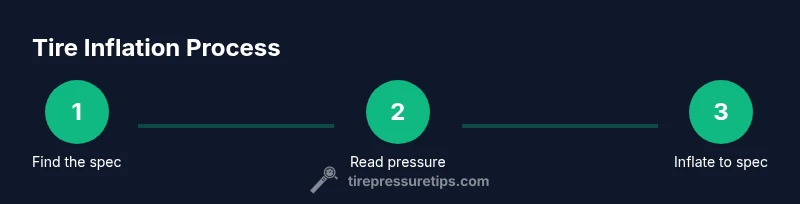
Inflate tires to the vehicle’s recommended cold pressure, using a reliable gauge. Check when cold, adjust if underinflated, and recheck after a short drive. This quick rule helps optimize wear, fuel economy, and safety. See our full guide for steps.
What tire inflation means and why it matters
Tire inflation refers to the amount of air pressure inside each tire, expressed in psi (pounds per square inch) or kPa. Proper inflation helps the tire maintain its intended shape, distributing load evenly and providing optimal contact with the road. When tires are underinflated, more of the tread bears the load, creating higher rolling resistance, uneven wear, reduced fuel efficiency, and a greater risk of heat buildup that can lead to a blowout. Overinflation, by contrast, reduces the tire’s footprint, causing harsher rides, reduced wet traction, and accelerated center-tread wear. The right pressure balances comfort, handling, and longevity. According to Tire Pressure Tips, staying close to the manufacturer’s specification mitigates wear and helps you get the most from your tires. In daily driving, ambient temperature, highway speeds, and load influence the actual pressure. Checking cold recommends ensures you’re reading the baseline setting rather than a warmed-up value. Keep in mind that TPMS may alert you if a tire sits below the recommended level.
typeHinting":null,
Where to find your official tire pressure spec
Your official tire pressure spec comes from two reliable sources: the vehicle’s door jamb placard and the owner’s manual. The placard (usually on the driver’s door edge, glove box, or fuel filler cap) lists the recommended cold PSI for both front and rear tires, and sometimes for the spare. The owner’s manual provides model-specific guidance, including any variations for different tire sizes or accessory wheels. Remember that the spec is for cold tires; after driving, the pressure will rise slightly. If you notice a discrepancy between front and rear readings, recheck after a cold soak to confirm the correct target. For most cars, inflation targets are the same on both axles or slightly higher in the rear; always verify for your exact model.
Temperature’s effect on tire inflation
Temperature changes affect air pressure. When the ambient temperature drops, air contracts and pressure reads lower; when it rises, air expands and pressure increases. This means readings taken in cold weather can understate the ideal pressure, while hot conditions can overstate it. To minimize inconsistency, check tire pressures when the tires are cold and allow at least a few hours of rest after driving before taking readings. If you drive a lot in fluctuating weather, consider scheduling a quick pressure check weekly or before long trips to maintain safe, efficient inflation.
Tools and gauges for precise inflation
Accurate tires start with reliable tools. A digital gauge typically provides a clear reading and is easy to use, while a traditional analog gauge is durable and quick for on-the-road checks. Ensure any gauge reads to at least 0.5 psi (or 0.05 bar) precision for best results. For portable inflation, a compact air compressor is handy, but calibration matters—test the gauge against a known standard periodically. Keep the gauge and nozzle clean; dirt can cause inaccurate readings. If you share your vehicle with others, label your recommended pressures clearly in the glove box to reduce mix-ups.
How to check tire pressure without guesswork
Always read pressure when tires are cold, ideally after the car has sat for several hours or after the vehicle has been parked overnight. Remove the valve cap, attach the gauge firmly to the valve stem, and note the reading. If underinflated, add air in small increments (about 2-4 psi), recheck, and repeat until you meet the target. If overinflated, release air gradually, then recheck. Replace the valve caps securely to prevent dirt entry and preserve valve integrity.
Common mistakes and how to avoid them
A common error is inflating hot tires, which can give an inaccurately high reading. Another pitfall is assuming both axles require the same pressure; many vehicles have different front and rear specs. Forgetting to recheck after adding air is another frequent misstep. Finally, relying on an old or inaccurate gauge leads to incorrect inflations. Regularly calibrate gauges and follow manufacturer specs to avoid these issues.
TPMS, warnings, and calibration basics
Tire Pressure Monitoring Systems (TPMS) alert you to unsafe pressures, but they aren’t a substitute for regular manual checks. Remember that TPMS targets can differ from the stated placard; use the TPMS as a cue to verify with a gauge. If a TPMS light stays on despite reading near the recommended value, inspect for slow leaks, punctures, or damaged sensors. Calibration or sensor replacement may be required if the system doesn’t read accurately.
Seasonal changes and payload considerations
Winter air is denser and can lower tire pressure, while heavy cargo or rear-seat passengers add load that increases pressure. For seasonal changes, check pressures more frequently during rapid temperature swings and for loaded trips with heavy cargo or equipment. If you switch to winter tires or you frequently carry valuable loads, consult your placard for any special inflation guidance and adjust accordingly.
Maintaining accurate inflation: routines and records
Create a simple routine: check pressures at least once a month and before long trips. Keep a small log noting the tire pressures and ambient temperature readings when you measure, so you can detect gradual leaks or changes. If you replace tires, reset to the new recommended pressures and recheck after the first 100-200 miles of driving. Consistency is key to maximizing tire life, fuel economy, and overall safety.
Tools & Materials
- Vehicle owner’s manual or door jamb placard(Shows recommended cold PSI for each tire, often front vs rear.)
- Tire pressure gauge (digital or analog)(Aim for ±1 psi accuracy; calibrate if needed.)
- Air compressor or access to a gas station air pump(Use a gauge while inflating; avoid guessing.)
- Thermometer or weather data (optional)(Helpful for understanding temperature-related changes.)
Steps
Estimated time: 20-30 minutes
- 1
Gather tools and locate the spec
Collect the gauge, air source, and your vehicle’s recommended cold tire pressure from the placard or manual. Confirm the front and rear values, noting any differences. This upfront check saves you from multiple trips to the gauge and inflator.
Tip: Double-check the target pressures before you begin. - 2
Check tires when cold
Park in a shaded area if possible and let the car sit for several hours. Read each tire’s pressure on a cold tire to get an accurate baseline. If you’ve just driven, wait at least 3 hours before measuring.
Tip: Never read pressure after a short drive; heat skews numbers. - 3
Remove valve caps and prepare the valve
Unscrew the valve cap and set it aside. Inspect the valve stem for damage or leakage, which can affect readings. If you see cracks or bulges, do not inflate—get the valve repaired first.
Tip: A damaged valve is a common cause of slow leaks. - 4
Attach gauge and read current pressure
Place the gauge on the valve stem firmly and read the pressure. Record the result for each tire. If you’re unsure about the gauge reading, try a second gauge for verification.
Tip: Ensure a clean valve stem and gauge mouth for an accurate seal. - 5
Inflate or deflate in small increments
If underinflated, add air in 2-4 psi increments and recheck after each addition. If overinflated, release air in small amounts until you reach the target. Make changes gradually to avoid overshooting.
Tip: Small adjustments prevent overcorrection. - 6
Recheck after adjustments
Read each tire again after inflation to confirm you’ve hit the target for all tires. Recheck the front and rear as specified by the placard.
Tip: If readings vary, consider new gauges or valve issues. - 7
Replace valve caps and finalize
Screw valve caps back on securely to keep out dust and moisture. Record the final pressures and the ambient temperature if you’re maintaining a log.
Tip: Cap placement matters for valve longevity. - 8
Repeat for all tires including the spare
Perform the same steps on the spare and any other tires your vehicle uses. Spares can have different pressures; check your manual.
Tip: Don’t forget the spare—it’s your emergency tire.
Frequently Asked Questions
How do I know the recommended tire pressure for my vehicle?
Look for the placard on the driver’s door jamb or check the owner’s manual. It lists cold PSI targets for front and rear tires and may include the spare. Always start from those values before driving.
Check the door placard or manual for your cold tire pressures, then follow the targets before driving.
How often should I check tire inflation?
Check at least once a month and before long trips. Also inspect tires after noticeable temperature changes or when you notice handling changes.
Check monthly and before trips, especially when weather shifts.
Can I inflate tires when they are hot?
Inflating hot tires is not recommended because readings are higher than the cold baseline. Always measure and adjust when tires are cold.
Avoid inflating hot tires; wait for them to cool before checking and adjusting.
What should I do if one tire stays underinflated?
Inspect for leaks, punctures, or damaged valves. If no issue is found, recheck after a proper inflation; persistent low pressure may require professional service.
If one tire stays low, inspect for leaks and consider professional check if it won’t hold air.
Is TPMS replacement required if I change tires?
TPMS might need recalibration after tire changes or wheel swaps. Follow the vehicle’s procedure for resetting TPMS and consult a technician if the light stays on.
TPMS may need recalibration after tire changes; follow the manual or get professional help if the light stays on.
Are digital gauges more accurate than analog?
Both can be accurate if calibrated properly. Digital gauges are generally easier to read, while analog gauges are durable. Ensure any gauge is within its calibration range.
Both types work well if properly calibrated; pick what you find easiest to read.
Watch Video
What to Remember
- Check cold tire pressures first.
- Use a reliable gauge for accuracy.
- Inflate to the vehicle spec for front and rear tires if required.
- Recheck after inflation to confirm correctness.