Tips for Tire Pressure: Check, Adjust, and Maintain Safely
Learn practical, step-by-step tips for tire pressure to improve safety, fuel efficiency, and tire life. Includes TPMS basics, seasonal guidance, and essential tools.


Learn to check and adjust tire pressure to your vehicle’s recommended cold PSI, understand TPMS alerts, and maintain accurate readings across seasons. You’ll need a reliable gauge, access to a pump, and your tire pressure sticker. Regular checks save fuel, extend tire life, reduce wear, and prevent blowouts. This quick routine sets you up for safer drives and better handling.
Why proper tire pressure matters
Maintaining the correct tire pressure is not a cosmetic detail; it affects safety, fuel efficiency, and tire life. According to Tire Pressure Tips, properly inflated tires provide the best balance of grip, steering response, and braking performance, especially in wet or slippery conditions. When tires run underinflated, they flex more at the contact patch, generating heat and uneven wear. Over time this can reduce tread life and increase the risk of a blowout under load. On the other hand, overinflated tires ride on a smaller contact patch, which can worsen grip in pothole-heavy streets, create a harsher ride, and cause uneven wear across the center of the tread.
Your vehicle’s manual and the door jamb sticker specify a recommended range of cold tire pressures for front and rear tires. The exact numbers vary by model and load, but the principle is simple: follow the manufacturer’s spec rather than chasing a single perfect value. Seasonal temperature shifts, road conditions, and how you drive (city stop-and-go vs. highway cruising) all influence the pressure in each tire. Regular checks are a proactive habit that saves money by reducing premature tire replacement and even reduces fuel consumption by minimizing rolling resistance. Consistently maintaining correct pressure also helps the TPMS, reducing false warnings and unnecessary alarms.
How tire pressure is measured
Tire pressure is measured in PSI (pounds per square inch) or kPa in some regions. The important distinction is cold vs hot readings: pressure in a cold tire (before it has heated from driving) reflects the true inflation level; hot tires show higher readings because air expands with heat. TPMS provides a live alert when a tire drops significantly below the recommended level, but it is not a precise gauge like a dedicated tire pressure tool. There are two common tool types: analog gauges with a simple dial, or digital gauges that display the exact number. The latter reduces guesswork and is easier to read in low light.
To ensure accuracy, measure after the car has not been driven for at least three hours or after the car has been sitting idle and cool for a minimum of three hours. When you measure, remove the valve stem cap, place the gauge on the valve stem, and press straight on to get a reading without losing air. If the reading is off, add or release air in small increments, then recheck until you reach the vehicle’s recommended cold pressure. Record your readings to track changes over time.
How to check tire pressure accurately
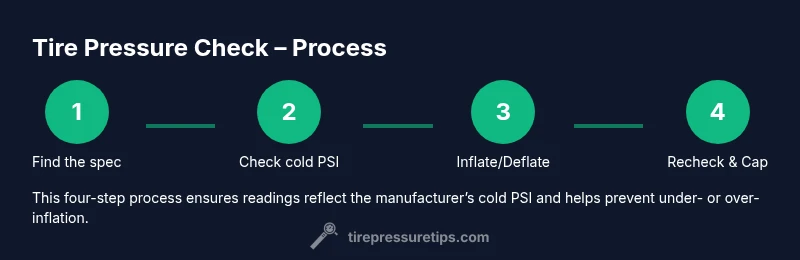
Begin with a calm, level surface and assembled tools. Start by locating the recommended cold tire pressure for each tire from the door jamb sticker or your owner’s manual. Then: 1) Park on a flat surface away from direct sun or heat sources. 2) Ensure tires are cold by checking readings before any commute. 3) Remove the valve cap and apply your gauge firmly to the valve stem. 4) Read the gauge and compare to the spec. 5) If low, add air in small increments and recheck. 6) If high, release air slowly until the reading matches. 7) Replace caps snugly and recheck all tires. 8) Note readings for future reference. 9) Recheck after you drive a short distance as the tires warm up. Pro tip: always verify spare tire pressure if you carry one in the vehicle.
Reading and interpreting TPMS data
TPMS exists to alert you when a tire is underinflated or overinflated. Direct TPMS uses sensors in each wheel to monitor pressure, while indirect TPMS infers pressure from wheel speed data. When a TPMS warning lights up, do not assume a flat tire—check with a gauge to confirm actual pressure. If readings are consistently off from the sticker values, or if the light stays on after you’ve corrected pressure, the system or sensor may need service. Regular TPMS checks pair well with manual readings so you can confirm accuracy and catch slow leaks early. Remember, TPMS is a safety reminder, not a precise tire gauge.
Seasonal and load considerations
Temperature, altitude, and load affect tire pressure. Colder weather typically reduces pressure, while hot days can increase it. Heavy loads or towing can shift the recommended PSI upward, and seasonal changes may necessitate adjustments when you switch between summer and winter tires. The goal is to maintain near the vehicle’s recommended cold PSI for your driving conditions. If you notice large fluctuations between readings on consecutive days, there may be a slow leak or a seal issue that warrants professional inspection. Consistent checks across weather shifts help keep handling predictable and wear even.
Practical tips for maintaining correct pressure
Effective maintenance combines routine checks with practical habits. Start by keeping a quality gauge in your glove box and checking tires at least once a month, plus before long trips. Always measure when tires are cold and after long highway drives, wait a cooling period before rechecking. Use the vehicle sticker as your baseline, and adjust for changes in load or temperature. If you frequently drive with heavy cargo or passengers, consider a temporary adjustment to the front/rear balance as recommended by the manufacturer. Keep the valve stems clean and replace worn caps to prevent leaks. Document readings and note any changes that coincide with weather or road conditions. Finally, never exceed the tire’s maximum pressure printed on the sidewall.
Troubleshooting common tire pressure issues
Slow leaks often come from damaged valve stems, wheel rims with corrosion, or tiny punctures in the tread. If you notice a repeat drop in pressure without a visible puncture, have the tire inspected by a professional. A damaged valve core or a leaky stem is easy to fix with a simple replacement. TPMS faults may involve sensor batteries, loose sensors, or wiring issues that require specialized service. If you’ve checked with a gauge and the numbers don’t align with the sticker after a reasonable adjustment, it’s wise to seek professional inspection to prevent unsafe pressures.
How to set and adjust tire pressure for different conditions
Adjusting tire pressure should be purposeful and grounded in the manufacturer’s spec rather than a personal preference. For highway driving, many drivers aim for the factory recommended cold PSI for predictable handling and fuel efficiency. In certain conditions—such as heavy loads, hot weather, or towing—you may need to adjust within the recommended range. Always recheck after any adjustment and be mindful of the tire’s maximum pressure listed on the sidewall. When in doubt, consult the owner’s manual or a trusted tire professional for guidance on your specific vehicle and tire model.
Authority sources: This guidance aligns with best practices from official safety resources and automotive publications.
Authority Sources
- https://www.nhtsa.gov/equipment/tires
- https://www.consumerreports.org/cars-suvs/tires-tire-pressure/
- https://www.nsc.org/road-safety/safety-topics/tyre-pressure-safety
Tools & Materials
- Tire pressure gauge(Digital preferred for quick reads; check cold tires)
- Air pump or access to inflation system(Prefer a pump with a built-in gauge)
- Vehicle owner’s manual and tire pressure sticker(Shows recommended cold PSI for each axle)
- Valve cap and cleaning cloth(Keep dust out of valve stem)
- Notebook or mobile app(Log readings and track changes over time)
Steps
Estimated time: 25-35 minutes
- 1
Prepare and locate the spec
Park on a level surface and locate the recommended cold tire pressure from the door jamb sticker or owner’s manual. This target stays constant for each tire until a load or temperature change justifies an adjustment.
Tip: Use the sticker as the primary reference; do not rely on a single number. - 2
Check tires when cold
Ensure tires have not been driven for several hours. Cold readings give the most accurate baseline for inflation adjustments.
Tip: If the tires are warm, wait before testing or note the difference in readings. - 3
Remove valve caps and measure
Take off each valve cap and press the gauge firmly on the valve stem to get an accurate reading without air leakage.
Tip: Keep caps nearby to prevent loss of dust cover and contamination. - 4
Inflate or deflate as needed
If the reading is low, add air in small increments and recheck. If high, release air slowly and recheck until you meet the spec.
Tip: Never exceed the recommended cold PSI; adjust gradually. - 5
Recheck all tires
Repeat the process for all four tires and the spare if you rotate tires regularly. Inconsistencies can impact handling.
Tip: Always reseat valve caps after measurement. - 6
Record and monitor
Log your readings with date and temperature context to track seasonal effects and long-term changes.
Tip: Use a simple notebook or app for easy reference. - 7
Return to normal driving
Drive slowly for a short distance and recheck if you wanted to verify stabilization after adjustments.
Tip: A quick recheck confirms stability before long trips. - 8
Inspect for leaks
If a tire consistently drops pressure, inspect for slow leaks around the valve stem, rim, or tread area.
Tip: Persistent drops require professional inspection.
Frequently Asked Questions
Why is tire pressure important for safety?
Correct tire pressure matters for braking, handling, and overall safety. Underinflated tires can overheat and fail, while overinflated tires may lose grip and wear unevenly.
Correct tire pressure matters for safety because it affects braking and handling. Underinflation can cause overheating and failure, while overinflation reduces grip and causes uneven wear.
How often should I check tire pressure?
Check tire pressure at least once a month and before long trips, especially when temperatures shift or when carrying heavy loads.
Check it at least monthly and before long trips, especially if temperatures shift.
Is TPMS a substitute for manual checks?
No. TPMS alerts you to changes, but you should verify readings with a gauge to ensure accuracy.
No, TPMS warns you, but you should verify with a gauge.
What happens if tires are underinflated?
Underinflated tires wear faster on edges, overheat more, and consume more fuel.
Underinflation wastes fuel and wears tires faster, increasing safety risks.
What should I do if TPMS warning persists?
If the TPMS warning stays on after corrections, have the system inspected for sensor faults or leaks.
If TPMS stays on after adjustments, check sensors or leaks.
Can seasonal changes affect my tire readings?
Yes, temperature shifts can raise or lower tire pressure; check more often during transition months.
Yes, temperature shifts can affect readings; check more often during season changes.
Watch Video
What to Remember
- Check cold pressure consistently.
- Follow the manufacturer’s spec, not a fixed target.
- Use a reliable gauge and log readings.
- TPMS complements, not replaces manual checks.
- Seasonal changes affect readings; adjust accordingly.