Tesla PSI: Check & Maintain EV Tire Pressure for 2026
Learn to check, adjust, and maintain Tesla tire pressure with a practical, EV-focused approach. Understand psi targets, TPMS, and how temperature changes affect your tires. Tips from Tire Pressure Tips help drivers maximize safety and efficiency in 2026.


To ensure safe EV operation and optimal efficiency, you’ll learn how to check tire pressure for Tesla models, including target psi ranges and TPMS behavior. This guide covers how to verify pressures, account for temperature shifts, and what to do if readings differ from the label. Start by checking cold psi before driving.
Why Tesla psi accuracy matters for EVs
Tesla vehicles rely on precise tire pressure to optimize efficiency, handling, and safety. For EVs, maintaining proper psi is crucial because low pressures can increase rolling resistance and reduce range, while overinflation can cause uneven wear and harsher ride. The Tire Pressure Tips team emphasizes that small pressure changes translate into noticeable differences in grip and energy use. According to Tire Pressure Tips analysis, checking tire pressure regularly helps you avoid TPMS warnings and extends tire life. In cold weather, you may see rapid changes in psi, so start with a cold reading before driving and adjust accordingly. Always use the tire label on the door jamb or the owner's manual for the exact Tesla psi targets for your model and tire size. If your tires show uneven wear or frequent alerts, that may indicate leaks or valve issues that require service. The goal is consistent readings within the manufacturer’s recommended range, not the maximum rating on the sidewall.
How to check tire pressure on a Tesla
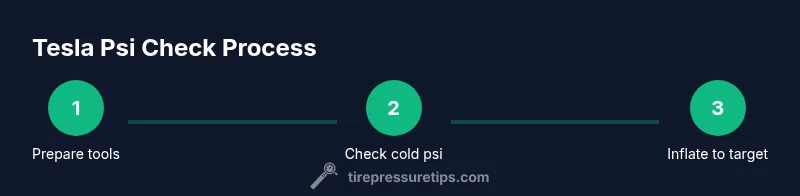
Checking tire pressure on a Tesla is straightforward once you follow a cold-reading discipline. Begin with the tires cold, either before you drive or after at least three hours of no driving. Use a reliable tire pressure gauge—digital gauges provide the clearest readout and are preferred by many drivers. Remove the valve cap, press the gauge onto the valve stem firmly, and note the reading. If the pressure is below the vehicle’s recommended Tesla psi, add air until you hit the target, then recheck both to confirm accuracy. If you’re using a pump at a gas station, pause briefly after inflating to allow the tire to settle and then re-measure. The Tire Pressure Tips analysis shows that EV owners who verify cold psi regularly tend to ride with more consistent wear and fewer TPMS-triggered events. Remember to replace valve caps securely after checking.
Tesla-specific psi targets by model
Tesla model lines—S, 3, Y, and X—often have distinct tire size and load-based psi targets. For your specific model and tire size, consult the door jamb placard or the owner’s manual. Front and rear tires may have different targets depending on performance, load, and suspension setup. Because these targets can differ by tire type and wheel size, never rely on a generic value. Instead, locate the exact Tesla psi information for your configuration and adjust accordingly. This attention to model-specific guidance helps maximize range, handling, and tire life over the vehicle’s lifetime.
Temperature effects on psi and TPMS behavior
Tire pressure is sensitive to ambient temperature. As air cools, psi tends to drop; as it warms, psi rises. In EVs like Tesla, this means your readings can swing with the weather, affecting range and TPMS alerts. Use cold psi readings as your baseline and avoid inflating in warm garages or after long drives. Temperature shifts can also influence TPMS readings, especially when sensors drift slightly or battery voltage affects sensor electronics. In practice, a well-maintained pressure plan that accounts for seasonal weather will keep your tires in the optimal zone and prevent unnecessary wear.
Troubleshooting inconsistent readings and slow leaks
If you see inconsistent readings between gauges, re-check with a second gauge to rule out tool error. Slow leaks are typically caused by nail or screw punctures, damaged valve cores, or bead-seat issues. Inspect for cracks around the valve stem and around the tire bead. If a leak persists, consider visiting a tire shop for a bead-seal or patch and to re-check TPMS sensor integrity. In some cases, TPMS sensors themselves may drift over time; reprogramming or sensor replacement may be required. Regular checks help catch leaks early and prevent sudden pressure loss.
Practical tips for maintaining optimal tire pressure
- Use a digital tire pressure gauge for precise readings every time.
- Check cold psi before long trips or seasonal temperature changes.
- Always reference the owner’s manual for Tesla psi targets by tire size.
- Factor in load and driving style; heavier loads may require slight adjustments.
- Keep a small air compressor in the trunk for on-the-go adjustments.
- Schedule periodic TPMS battery and sensor checks with a qualified shop.
Safety and maintenance considerations for EV tires
EV tires endure unique wear patterns due to instant torque and heavier weight. Maintain proper psi to reduce rolling resistance and preserve range, while avoiding overinflation that reduces grip. TPMS reliability is essential; ensure sensors are calibrated after tire service or replacement. Regular inspections for cracks, bulges, and tread depth help prevent blowouts. Always perform tire maintenance in a well-ventilated area and use eye protection when handling air systems. In short, disciplined checks protect your Tesla’s performance and safety.
Choosing and using tire pressure gauges
Choose a gauge that reads to the nearest 1 psi and is easy to read in low-light conditions. Digital gauges provide quick results, while high-quality analog gauges remain reliable when electronics fail. Calibrate your gauge periodically against a known reference and keep it in your glovebox for quick checks on the road. Using a dependable gauge helps you maintain the correct Tesla psi and optimize range.
Quick checklist for Tesla psi before road trips
- Confirm cold psi against the model’s target chart.
- Check all four tires and the spare if equipped.
- Inspect valve stems for damage and secure caps.
- Recheck after inflating to ensure stability.
- Consider a professional balance and TPMS check if readings seem off.
Tools & Materials
- Tire pressure gauge (digital preferred)(READ TO 1 psi; bring for all four tires.)
- Air compressor or access to pump(Use consistent airflow; avoid overfilling.)
- Owner's manual or door jamb placard(Identify exact Tesla psi targets for your tire size.)
- Valve caps (spare)(Keep spares on hand; replace if damaged.)
Steps
Estimated time: 15-25 minutes
- 1
Find the correct tire pressure target
Locate the vehicle’s recommended psi on the door jamb placard or owner’s manual for your Tesla model and tire size. This is your baseline and should be treated as the authoritative target. If you have load or performance considerations, use the higher end of the range if specified.
Tip: Always start with a cold reading before any driving to ensure accuracy. - 2
Prepare your tools
Assemble your digital gauge and air source, remove valve caps, and ensure you are in a safe, level area. Having the gauge ready prevents delays that can warm the tire, skewing readings.
Tip: Keep the gauge clean and free of debris to ensure accurate seals. - 3
Check each tire’s pressure
Press the gauge onto the valve stem firmly to get a precise reading. Record each value for comparison against the target. If any tire reads low, proceed to the inflation step; if high, deflate gradually and re-check.
Tip: If you’re unsure about a reading, verify with a second gauge. - 4
Inflate or deflate to target
Add air or release air to bring each tire to the recommended psi. Inflate in small increments, then recheck to confirm stability. For EVs, it’s especially important to avoid overinflation on light loads.
Tip: Inflate in 1-2 psi increments and verify after a short wait. - 5
Recheck all tires
After adjusting, recheck every tire to confirm uniform readings. Ensure valve caps are replaced and the wheels are in good condition. A final check prevents a second trip back to the pump.
Tip: A final check ensures no slow leaks developed during inflation. - 6
Document and monitor
Note the final psi readings and the date of measurement. Regular follow-ups—especially during seasonal changes—prevent drift and maintain performance.
Tip: Set a reminder to recheck every 4-6 weeks or before long trips.
Frequently Asked Questions
How often should I check Tesla psi?
Check your Tesla tire pressure at least once a month and before long trips. Always verify cold psi for accuracy, especially after temperature changes.
Check your tires monthly and before long trips, making sure to measure when the tires are cold.
Can TPMS show incorrect psi readings?
Yes, TPMS readings can drift or be affected by temperature. Always verify with a handheld tire gauge to confirm the numbers.
TPMS can drift; use a gauge to confirm the numbers.
Is psi the same for all tires on a Tesla?
Not necessarily. Front and rear tires may have different targets depending on load, tire size, and drivetrain. Always check the specific target for each position.
Front and rear tires may have different targets; check the exact spec for each position.
What if I have a slow leak?
Look for nails or punctures, inspect the valve stem, and consider a bead-seat inspection. If the leak persists, see a tire professional.
If you have a slow leak, have it inspected by a professional if it doesn’t stop after a quick check.
Should I inflate to the maximum psi on the tire sidewall?
No. Inflate to the manufacturer’s target psi, not the maximum printed on the sidewall, which is a limit not a target.
Never inflate to the max; follow the target psi from the label.
Watch Video
What to Remember
- Check cold psi first before driving
- Always follow model-specific Tesla psi targets
- Use a reliable gauge and inflate in small increments
- Temperature shifts affect psi; recheck after weather changes
- Maintain TPMS and replace faulty sensors when needed