Tesla Model 3 Air Pressure: Check, Set, and Maintain
Learn how to check and maintain tire pressure for the Tesla Model 3, including TPMS guidance and temperature effects. Practical steps, safety tips, and maintenance routines from Tire Pressure Tips.


According to Tire Pressure Tips, this guide helps you check, set, and maintain Tesla Model 3 air pressure to optimize range and safety. You’ll verify the correct cold- PSI from the placard, use a reliable gauge, adjust each tire, and recheck after driving. Essential tools include a gauge and the vehicle label.
Why correct tire pressure matters for Tesla Model 3
Maintaining the right tire pressure is foundational for safety, efficiency, and performance. For electric vehicles like the Tesla Model 3, correct air pressure helps maximize range because underinflated tires create more rolling resistance and heat up more quickly. Overinflation, conversely, can reduce grip and lead to a harsher ride. The Tire Pressure Tips team emphasizes that consistent, correct pressures help preserve tire wear and provide predictable handling in all road conditions. For Model 3 owners, this means a simple routine—check, adjust, and monitor pressure—becomes a core part of vehicle maintenance. The science behind it is straightforward: air pressure inside tires varies with temperature, load, and speed, so regular checks guard against performance drift. According to Tire Pressure Tips, the aim is to keep tires within the vehicle’s recommended range rather than chasing a single “perfect” number, since that range accommodates variations in tires and conditions.
Understanding the Tesla Model 3 tire pressure specs
The Tesla Model 3 follows the same principle as most modern cars: tires have a specific cold-pressur e specification printed on the door jamb placard or in the owner's manual. These pressures are set by the manufacturer based on tire size and vehicle weight. It’s common for front and rear tires to have different recommended pressures to balance handling and load. Do not rely solely on the maximum tire pressure listed on the tire sidewall; that number is the maximum safe pressure, not the target ride pressure for daily driving. When in doubt, always default to the vehicle placard values and the guidance in the owner’s manual. The Tire Pressure Tips analysis notes that a small deviation from these targets is normal depending on temperature and recent driving, but large shifts should be addressed promptly to preserve tire life and range.
Checking pressure when tires are cold
Always measure tire pressure when the tires are cold to get an accurate reading. A short drive can heat tires and raise the reading, leading to underinflation being overlooked. For most drivers, checking after the vehicle has sat for several hours or overnight yields the best baseline. If you add or remove air, recheck after it has settled to avoid chasing a fluctuating value. In colder months or after a long trip, you may notice pressure changes; the goal is to maintain the recommended range consistently.
How to measure with a gauge: step-by-step guidance
A high-quality digital or analog gauge provides the most reliable readings. Remove the valve cap, press the gauge onto the valve stem, and note the reading. If using a digital gauge, wipe the stem to remove dust that can distort the reading. Compare the result to the door jamb placard and the owner’s manual. If readings vary more than 1-2 psi between adjacent tires, recheck with the gauge to confirm accuracy. The goal is to obtain a stable, repeatable number from a cold state.
Inflating or deflating to target pressure on Model 3
If a tire reads low, inflate in small increments (about 1 psi at a time) and recheck after the tire cools. If it’s high, safely release air in small amounts and recheck. Do not exceed the recommended cold-psi for any tire, and never exceed the tire’s maximum pressure printed on the sidewall. For EVs like the Model 3, consider slight adjustments in warmer weather to offset heat buildup during driving. Always inflate all tires to the recommended range to maintain even rolling resistance and handling.
When inflating, ensure your air source is clean and stable, and recheck each tire after filling. If you’re unsure about the accuracy of your gauge, cross-check with another gauge or have it calibrated. Regular checks help you spot leaks, slow punctures, or valve issues before they become safety problems.
TPMS and troubleshooting: understanding warnings
Tire Pressure Monitoring System (TPMS) is designed to alert you when a tire falls outside the recommended range. It uses sensors in each wheel to monitor pressure and temperature changes. If the TPMS light comes on, use the gauge to confirm readings and compare with placard values. If a tire reads low despite not showing obvious damage, inspect the tire for punctures or slow leaks, and consider professional inspection if the reading remains inconsistent or the warning persists after a reset.
Temperature effects on tire pressure and range
Temperature is a silent variable that moves tire pressure. Colder temperatures typically reduce pressure, while heat can raise it. EVs, including the Model 3, can experience a noticeable shift in range when pressures drift due to temperature changes. A practical approach is to check pressures seasonally and before long trips, especially during start-of-season transitions. Keeping tires within the recommended range helps maintain range efficiency and traction across weather conditions.
Common mistakes and safety tips
Common mistakes include ignoring cold-state readings, inflating to the maximum sidewall pressure, and using a faulty gauge. Always verify with a trusted gauge and avoid inflating beyond the placard value. Do not rely on TPMS alone; it’s a backup system that can be affected by sensor faults or calibration drift. Safety tips: never work on tires while the car is on a slope; secure the vehicle, use wheel chocks if needed, and work away from traffic.
Logging pressure and maintenance cadence
Develop a simple cadence: check once a month, recheck after long trips, and re-evaluate in the transition between seasons. Maintain a small log of readings for each tire to spot slow leaks or gradual changes. This habit can extend tire life and help you manage range more reliably. The Tire Pressure Tips team recommends maintaining a consistent routine that fits your driving pattern and climate.
Tools & Materials
- Digital tire pressure gauge(Choose +/−1 psi accuracy if possible)
- Tesla Model 3 owner's manual or door jamb placard(Use it to confirm cold-psi targets)
- Portable air compressor or access to air service(Ensure it can deliver stable pressure with minimal fluctuations)
- Valve cap removal tool (optional)(Useful for damaged caps or TPMS sensors)
- Tire pressure log (notebook or app)(Track readings over time)
- Spare tire or run-flat kit(Optional emergency equipment)
Steps
Estimated time: 30-40 minutes
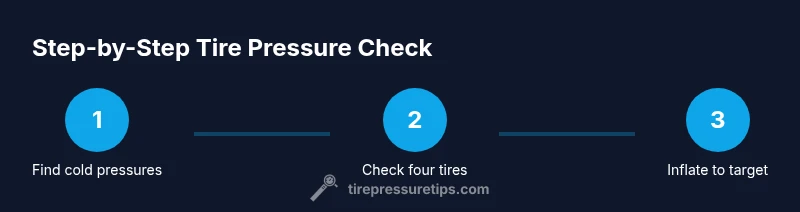
- 1
Find the correct cold pressures
Locate the door jamb placard or owner's manual to confirm the recommended cold psi for both front and rear tires. Record the values for your specific tire size and load. This establishes your target range before any adjustments.
Tip: Write the numbers down; it helps avoid confusion during a quick roadside check. - 2
Check tires when cold
Wait for tires to cool after driving, ideally several hours or overnight. Take readings on all four tires using a quality gauge and compare to the placard targets. If readings differ noticeably between tires, recheck with a second measurement to confirm accuracy.
Tip: Avoid measuring after a short drive; heat skews the results. - 3
Prepare the valve and gauge
Remove the valve cap, wipe the valve stem, and apply the gauge firmly. If using a digital gauge, let it auto-zero; if using a mechanical gauge, ensure the needle rests cleanly at zero before taking a reading.
Tip: Keep valve stems clean to prevent debris from affecting readings. - 4
Inflate or deflate to target
If pressure is low, inflate in small increments (about 1 psi). If high, release air in small bursts and recheck. Repeat until all tires are within the target range on a cold reading.
Tip: Avoid overshooting; small adjustments yield the best accuracy. - 5
Recheck and reseal
After adjusting, recheck each tire to confirm the final psi. Reinstall valve caps and reset any TPMS or onboard systems if needed.
Tip: Double-check the valve caps; loose caps can cause slow leaks. - 6
Log and monitor
Record the readings and note any changes over the next few weeks. Use this log to catch slow leaks or seasonal shifts, and adjust your cadence accordingly.
Tip: Set a reminder to recheck monthly and before long trips.
Frequently Asked Questions
Where can I find the Model 3's recommended tire pressure?
Check the door jamb placard on the driver's side and consult the owner's manual for the exact cold-psi targets for your tire size. The placard accounts for load and road conditions.
Find the recommended pressure on the door jamb placard or owner's manual.
Should I check tire pressure when cold or warm?
Check when tires are cold for the most accurate readings; driving heats tires and raises pressure, giving a misleading result if checked hot.
Always check when cold for accuracy.
How often should I check tire pressure in a Tesla?
Check at least monthly and before long trips. Temperature changes and load affect readings, so schedule regular checks.
Check monthly and before trips.
What if TPMS light stays on after adjusting pressure?
If the TPMS light remains on after adjustments, recheck all tires for leaks and ensure the sensors are functioning. If unresolved, seek service.
If TPMS stays on, recheck and consult a tire professional.
Can temperature changes affect tire pressure significantly?
Yes. Colder temperatures reduce pressure, while heat increases it. Expect some drift with seasonal changes and adjust checks accordingly.
Temperature changes affect tire pressure.
Is it safe to drive with low tire pressure?
Driving on underinflated tires can cause heat buildup and poor handling. Stop and inflate to the recommended range as soon as possible.
No, not safe—inflate to recommended pressure as soon as you can.
Watch Video
What to Remember
- Check cold tires against the placard before driving.
- Use a reliable gauge and verify readings.
- Inflate to target range and recheck after cooling.
- Monitor TPMS and temperature effects to maintain range.
- Log readings to track changes and timing for checks.