Small Tire Pressure Guide: Check and Maintain Safely
Learn how to check, adjust, and troubleshoot small tire pressure with a practical, step-by-step approach. This guide covers TPMS basics, cold-inflation targets, and safety tips from Tire Pressure Tips.


Goal: Learn to check, adjust, and troubleshoot the pressure in a small tire safely and accurately. This guide covers how to use a gauge, interpret TPMS alerts, and apply the correct cold-inflation pressure for common small tires on compact cars and scooters. According to Tire Pressure Tips, maintaining proper tire pressure reduces wear, improves handling, and boosts fuel economy.
Why small tire pressure matters
Small tires, including those on compact cars, scooters, or light motorcycles, demand careful pressure management. When the pressure is too low, the tire's contact patch increases, which raises rolling resistance, heat buildup, and the risk of heat-induced failure. Too high a pressure reduces the tire's ability to absorb road irregularities, leading to harsher rides and uneven wear. In both cases, fuel economy can suffer because the engine works harder to move the vehicle.
According to Tire Pressure Tips, maintaining the manufacturer-recommended cold tire pressure is essential for predictable handling, braking, and tire life. Temperature, load, and speed all influence the pressure inside a tire. For small tires, changes of just a few psi can shift steering response and traction. This is especially important when carrying passengers or cargo, driving on rough roads, or encountering weather swings that push temperatures up or down during the day.
To start, find the exact cold-inflation value on the vehicle placard or in the owner's manual. That number accounts for the tire size, axle load, and typical driving conditions for your model. Always verify that the target applies to the current tires (e.g., if you've installed a different brand or size).
How temperature and load affect tire pressure on small tires
Temperature and load are two of the most common factors that influence tire pressure over time. Cold temperatures can lower the indication on your gauge, while heat from driving raises the air inside the tire. A tire that carries a heavier load or is driven aggressively will heat up more quickly, causing the pressure to rise during a trip. For small tires, these effects are magnified because the overall tire volume is smaller and the pressure changes can be more noticeable.
The best practice is to always target the cold tire pressure printed on the door placard. When a tire warms up after a drive, the air expands and the reading on a gauge will be higher. This means you should measure when the tire is cold, such as right after the car has been parked for a few hours. If you need to add air after a drive, wait for the tire to cool before taking a new reading to avoid over-inflation.
How to check tire pressure on small tires
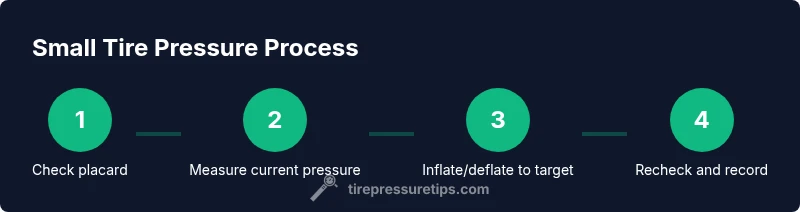
Start by pulling over in a safe, level spot and turning off the engine. Remove the valve cap from the tire you are checking and use a reliable tire pressure gauge. Place the gauge on the valve stem and press firmly to get a steady reading. Compare the reading to the cold inflation specification found on the placard or in the owner's manual. If you see a deviation, you can add or release air as needed, ensuring the tire returns to the target value when cold.
Remember to check all tires, including the spare if it will be in use soon. If the gauge reads a number that is clearly out of the expected range, inspect the tire for damage or punctures and consider professional inspection if the reading is inconsistent across checks.
Determining the correct pressure for a small tire
The correct pressure is not the same for every vehicle or tire. Use the vehicle manufacturer’s specification, typically found on the driver door placard or inside the glove compartment manual. Front and rear tires may have different recommended pressures based on load distribution, steering dynamics, and braking requirements. If you have changed tire brands, sizes, or wheels, recheck the recommended inflation value. Always use the cold pressure reference, since warm readings can mislead you about the actual target.
If you drive with extra cargo or passengers, the tire may require a slight adjustment within the manufacturer’s tolerance. Do not exceed the maximum pressure printed on the tire sidewall, which is a safety limit. When in doubt, err on the side of the manufacturer’s recommended value rather than inflating to a personal target.
Adjusting pressure safely and maintaining it
Once you know the target cold pressure, you can adjust by inflating or deflating. Use an air compressor with a built-in gauge or a dedicated portable gauge, and add small amounts of air, then recheck frequently. If you overinflate, release air in tiny increments until the gauge matches the target value when cold. Recheck the reading after the tire cools to confirm accuracy. After adjusting, reinstall the valve cap to protect the valve stem from dirt and moisture.
If you perform maintenance on multiple tires, keep a simple log of readings and adjustment times. This log helps you notice trends, such as gradual pressure loss in a particular tire that may indicate a slow leak or a faulty TPMS sensor.
Common mistakes and TPMS pitfalls
A frequent mistake is inflating to a rough target rather than the vehicle specified cold pressure. Temperature swings and aggressive driving can cause readings to vary, but the official placard remains the true target. Relying solely on TPMS without cross-checking with a gauge can lead to inaccuracies, especially if a sensor is malfunctioning or has a weak battery. Another pitfall is neglecting the spare tire; small tires often travel with limited reserves, and a neglected spare can lead to unsafe situations when needed.
To reduce these risks, check pressures with a gauge on all tires at least monthly, and before long trips. If you notice a TPMS warning and the gauge confirms a low pressure, address it promptly. If you suspect a tire is leaking or the TPMS sensor is faulty, seek professional service for safety and accuracy.
Seasonal considerations and temperature changes
Temperature fluctuations across seasons have a noticeable effect on tire pressure, especially for small tires with smaller volumes. A drop in temperature typically lowers the pressure, while a heat wave or long highway drive increases it. The guide is to always measure cold pressure and adjust to the value printed on the placard, accounting for occasional seasonal needs. In very cold regions, more frequent checks may be warranted during winter months to prevent underinflation, which can contribute to reduced grip and increased wear. In hot climates, frequent checks help prevent overinflation after long drives.
A practical maintenance plan for small tires
Create a simple monthly routine that includes checking all tires, including the spare, and recording the readings. Keep the vehicle in a shaded area if possible to avoid heat influencing the reading. Replace worn valve caps and check the tire sidewalls for damage during each inspection. If a tire has been repaired or a patch job completed, recheck the pressure after driving and ensure the reading aligns with manufacturer recommendations. A preventive approach reduces the risk of unexpected flats and helps maintain optimal handling and fuel efficiency.
Tools & Materials
- Tire pressure gauge(Choose a gauge with a clear scale; both analog and digital types work well)
- Access to an air compressor or reliable inflation device(Gas station compressors or portable units; ensure calibration if possible)
- Vehicle owner’s manual or door placard(Contains the official cold tire pressure values for your tire size)
- Valve caps(Keep caps on to protect the valve stem from dust and moisture)
- Notebook or digital log(Helpful for tracking readings and trends over time)
Steps
Estimated time: 15-25 minutes
- 1
Locate the recommended cold pressure
Before touching the tires, locate the official cold tire pressure value on the door placard or in the owner’s manual. This value is tailored to your tire size, load, and typical driving conditions. Note whether the target applies to both front and rear tires, as some vehicles have different recommendations.
Tip: Check the placard with the tires cold for the most accurate starting point. - 2
Prepare the vehicle and tools
Park on a level surface and let the tires cool for at least 3 hours if possible. Gather your gauge, access to an inflation device, and a notebook to log readings. Remove the valve caps so you can access the valve stems easily.
Tip: Avoid measuring after a long drive or immediately after driving; heat changes readings. - 3
Check each tire's pressure
With the tire cold, press the gauge onto the valve stem and take a reading. If the reading is lower than the placard value, you will add air. If it is higher, release air gradually until you reach the target.
Tip: Make sure the gauge is perpendicular to the valve stem for an accurate read. - 4
Inflate or deflate to target
Add air in small increments and recheck. If you overinflate, release air in small amounts until the needle lands on the target. For deflation, release air with the gauge on the valve stem.
Tip: Patience matters—small changes prevent overshooting the target. - 5
Recheck after cooling
After adjusting, wait a few minutes, then recheck the tire to ensure it remains at the cold-required target. Temperatures and driving heat can affect the reading, so a final check confirms accuracy.
Tip: Recheck ensures you’re not over or underinflated after the tire warms up. - 6
Seal and document
Reinstall the valve caps and log the date, tire, and readings. This helps you track changes over time and spot gradual leaks or sensor failures.
Tip: A simple log can save time during seasonal checks. - 7
Check the spare
If you carry a spare, apply the same cold-pressure check and keep it ready for use. A well-inflated spare reduces risk during emergencies.
Tip: Ensure the spare matches vehicle requirements and is in usable condition. - 8
Review the TPMS status
If TPMS shows warnings after adjusting pressures, verify readings with a gauge, and reset the sensor if required by the vehicle’s manual. If warnings persist, seek service to diagnose potential sensor or valve issues.
Tip: Not all TPMS issues are tire pressure; some may involve sensor battery life or calibration.
Frequently Asked Questions
What is the correct pressure for a small tire?
The correct pressure is the value listed on the vehicle placard or owner's manual for your tire size and load. It refers to cold inflation and may differ between front and rear tires.
Check your placard for the exact cold pressure; it is the safe target.
Why does TPMS warn even when a tire looks normal?
TPMS uses sensor data to detect suboptimal pressure, leaks, or sensor issues. A light can stay on if a tire is gradually losing air, the sensor battery is weak, or a wheel has been swapped.
A TPMS warning isn't just about appearance; it signals pressure issues.
How often should I check tire pressure?
Check at least once a month and before long trips, since small tires are more sensitive to temperature and load changes.
Check monthly and before trips.
Can I inflate small tires above the recommended level in winter?
Inflation targets stay the same regardless of season; you may see lower pressure in cold weather, so measure cold and adjust to the placard.
Seasonal changes can lower air pressure; adjust to the recommended cold value.
What if I puncture a small tire?
Do not drive on a punctured tire. If possible, replace or repair per manufacturer guidance and seek service.
If you have a puncture, pull over safely and get service.
How do I reset TPMS after adding air?
Many vehicles reset automatically after driving; some require a manual reset via the vehicle settings. Consult your manual.
Some cars reset on their own; others need your input.
Watch Video
What to Remember
- Check all tires on a regular schedule
- Use the placard value as the target for cold inflation
- Recheck after any adjustment to ensure accuracy
- Address TPMS warnings promptly and consult a professional if needed