Right Tire Pressure: Find, Check, and Maintain Your Optimal PSI
Learn how to determine the right tire pressure for your vehicle, how to check it accurately, and how to adjust for load, temperature, and driving conditions. Practical steps, tools, and safety tips from Tire Pressure Tips.


You will learn how to determine and set the right tire pressure for your vehicle, how to check it safely, and how to adjust for load and temperature. Essential tools include a tire pressure gauge, access to an air source, and your vehicle's recommended psi from the door jamb placard or owner's manual.
Why Right Tire Pressure Matters
Maintaining the right tire pressure is one of the simplest, most impactful aspects of vehicle maintenance. Correct pressure improves handling, safe braking, and tire wear while helping to maximize fuel economy. Underinflated tires create more rolling resistance, which can reduce efficiency and increase heat buildup that shortens tire life. Overinflated tires reduce the contact patch with the road, making traction uneven and increasing the risk of a harsh ride and blowouts on rough surfaces. In daily driving, the right tire pressure also reduces uneven wear patterns and helps TPMS (tire pressure monitoring systems) alert you to genuine problems rather than random changes. The Tire Pressure Tips team notes that regular checks keep you safer and save money in the long run, even if you don’t drive high-mileage routes. As you’ll see, the “right” pressure isn’t a single number for every car; it’s a specification tied to your vehicle’s design, load, and operating conditions.
How to Determine the Right Tire Pressure for Your Vehicle
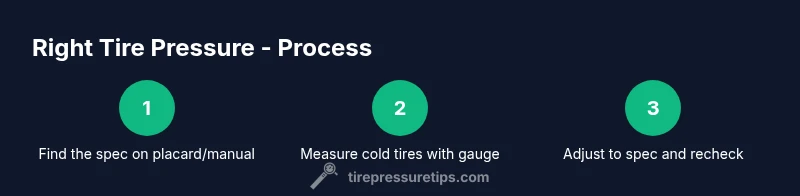
The correct tire pressure is not a guess. Start with your vehicle’s official specification found on the placard inside the door jamb on the driver’s side or in the owner’s manual. Note that there is often a different specification for front and rear tires, and some vehicles specify different pressures for normal and high-load driving. The recommended pressure is given as a cold reading (tires haven’t been driven recently). Your TPMS will indicate when a tire falls significantly below or above the target pressure, but you should verify with a gauge for accuracy. If you carry heavy loads or regularly drive at highway speeds, you may require a slightly different target; always confirm with the owner’s manual. Consistency matters: use the same gauge and the same reference location each time you measure to reduce variability. According to Tire Pressure Tips, aligning your tires to the manufacturer’s right tire pressure is a foundational step for safety, fuel efficiency, and tire longevity.
Where to Find Your Recommended Tire Pressure
Your vehicle’s recommended pressure is typically shown as ‘XX PSI cold’ for each tire. The exact value may differ by tire size and front vs rear positions. You can locate this information on the door jamb placard, on a sticker in the glove box, or in the owner’s manual. If you cannot access the placard, search the make, model, and year of your vehicle for the correct tire pressure specification from reputable sources. Remember that seasonal changes, varying load, and tire wear can affect the value, so use the manufacturer’s numbers as the baseline rather than any ad hoc target. The Tire Pressure Tips guidance emphasizes always starting from the official spec and then adjusting for your actual driving context.
How to Check and Adjust Tire Pressure Safely
Begin with cold tires for the most accurate reading. Remove the valve stem cap, place the gauge on the valve, and read the pressure. Compare the reading to the cold-tyre specification. If low, add air in small increments (about 1-2 PSI at a time) and recheck after each addition. If high, release air gradually until you hit the target. After adjusting, recheck all four tires to ensure uniformity. Don’t forget the spare tire, if you carry one. Use a gauge you trust, ideally a digital model for accuracy, and verify that the gauge numbers align with the vehicle’s specification. This process may take 10-15 minutes per full check, depending on the size of your tire set and your tool quality.
How Temperature, Speed, and Load Affect Tire Pressure
Tire pressure is dynamic. As ambient temperature drops, air contracts and pressure falls; warming weather or aggressive driving can increase it. Superior handling and improved fuel economy depend on maintaining consistent pressure, especially when you drive in extreme weather or carry heavy loads. A single PSI variation can affect ride comfort, tire contact patch, and fuel efficiency. If you routinely drive with a full load or engage in high-speed driving, you may need to adjust pressure per the manufacturer’s guidance in your owner’s manual. The Tire Pressure Tips analysis highlights the practical reality: adjust for conditions, then verify with a gauge to prevent under- or over-inflation.
Common Mistakes and How to Avoid Them
Common errors include inflating tires while hot, relying solely on TPMS alerts, and using an uncalibrated gauge. Don’t assume all tires must always match the same PSI—differences between front and rear axles and varying tire sizes matter. Avoid over-inflating as a quick fix for wear or vibration, because it reduces traction and can cause a harsher ride. Conversely, underinflation leads to excessive heat buildup and uneven tread wear. Keep a simple log of your readings and dates. If a TPMS warning persists, have the tire system inspected for sensor failure or slow leaks. Staying disciplined about checks prevents small issues from becoming costly repairs.
How Regular Maintenance Pays Off
Making tire pressure checks a regular habit pays dividends in safer driving, longer tire life, and improved efficiency. Set a monthly reminder, and check your tires before long trips or after air temperature shifts of 20 degrees Fahrenheit or more. A simple routine—measure, compare, adjust, and recheck—turns tire maintenance into a quick, repeatable task rather than a dreaded annual chore. By consistently using the official right tire pressure values, you reduce irregular wear and maintain predictable handling. The Tire Pressure Tips team encourages drivers to keep a lightweight log or digital note of readings, so you can spot gradual changes and take timely action.
Tools & Materials
- Tire pressure gauge(Prefer a gauge with a digital readout for accuracy)
- Air source (air compressor or pump)(Ensure it can reach the vehicle's recommended psi)
- Vehicle owner’s manual / door jamb placard(Contains official psi values for all tires)
- Gloves (optional)(Keeps hands clean and protected when handling valve caps)
- Notepad or mobile notes app(Record readings for trend tracking)
Steps
Estimated time: 15-25 minutes
- 1
Check tires cold
Before driving or after the vehicle has cooled for several hours, inspect each tire’s pressure with your gauge. Cold readings provide the most accurate baseline. If you’ve just driven, wait at least 3 hours or drive less than a mile to cool the tires enough for a reliable measurement.
Tip: If you must drive to reach a station, check again after the drive and re-adjust to the spec. - 2
Remove valve caps
Carefully unscrew the valve caps and place them somewhere clean. Dirt in the valve stem can cause inaccurate readings or slow leaks. Keep track of all caps, especially if you have a wheel with a tight valve stem.
Tip: Inspect valve stems for cracks or corrosion while caps are off. - 3
Read current pressure
Press the gauge onto the valve stem straight and firmly to avoid air escaping. Read the gauge quickly and record the number. Ensure you’re reading the correct tire as per the door placard (front vs. rear may differ).
Tip: If readings bounce, wait a few seconds and try again with a steady press. - 4
Adjust to the recommended pressure
If your reading is too low, add air in 1–2 PSI increments and recheck after each addition. If too high, release air until you reach the target. Do not overshoot; small adjustments yield the best accuracy.
Tip: Always recheck after adjusting; a single measurement can be misleading. - 5
Re-check all tires
Repeat the process for remaining tires and the spare if you carry one. Ensure all four tires are within a narrow tolerance of the recommended PSI. Inconsistent readings can indicate leaking valves or a gauge issue.
Tip: Compare all four tires to the same reference value. - 6
Document results
Log your readings with date, time, and conditions. This helps identify trends over time and informs maintenance decisions. If any tire repeatedly drifts away from spec, schedule a professional inspection.
Tip: Keep a simple chart on a phone note or notebook for quick reference.
Frequently Asked Questions
What is the right tire pressure for my vehicle?
The right tire pressure is the specification listed on your vehicle’s placard or in the owner’s manual. It may differ by tire position and load. Always start with the manufacturer’s recommended cold PSI and adjust for season, load, and driving conditions.
Check your placard or manual for the exact PSI. Adjust for load and temperature, then recheck with a gauge.
How do I know if the TPMS is working?
TPMS alerts you when a tire is under or over the recommended pressure. If the light stays on or flashes, there may be a leak, a sensor issue, or a calibration problem. It’s best to verify with a gauge and inspect the tire for leaks.
If the light stays on, check the tires with a gauge and inspect for leaks. If needed, have the TPMS calibrated.
Does increasing tire pressure improve fuel economy?
Slight increases toward the recommended value can improve efficiency, but overinflation reduces traction and causes uneven wear. Always stay within the manufacturer’s spec and avoid the temptation to overshoot for fuel savings.
Sticking to the recommended PSI is safest for fuel economy and tire wear.
Should I check tire pressure when tires are hot or cold?
Check tires when they are cold for the most accurate reading. Reading after driving will show a higher pressure due to heat, leading to incorrect adjustments.
Always measure when cold to get an accurate reading.
How often should tire pressure be checked?
Check monthly and before long trips. Temperature changes can also affect pressure, so a quick check after a major cold-to-warm swing helps keep readings accurate.
Monthly checks plus before long trips keep you aligned with the right tire pressure.
What happens if tires are consistently underinflated?
Consistent underinflation increases heat buildup, accelerates tread wear, and raises the risk of blowouts. Inflate to spec and monitor for slow leaks.
Underinflation raises wear and heat; fix it to stay safe on the road.
Can I mix different tires with different pressures?
If your vehicle’s manual allows different sizes, follow the spec for each position. Do not mix pressures that deviate from the recommended values for front and rear tires.
Stick to the recommended PSI per tire position; don’t mix mismatched pressures.
Watch Video
What to Remember
- Check official right tire pressure from placard/manual.
- Measure cold tires for accuracy, then adjust carefully.
- Use a reliable gauge and recheck after adjustments.
- Account for load, temperature, and driving conditions.
- Maintain a simple log to detect gradual changes.