When to Fix Tire Pressure: A Practical Guide for Drivers
Learn when to fix tire pressure, how to read PSI, and steps to safely adjust your tires for better safety, fuel efficiency, and tire wear.


You will learn how to determine if and when to fix tire pressure, including safe pressure ranges, how to use a gauge, and when to adjust. Key requirements: a reliable tire gauge, knowledge of your vehicle's recommended PSI, and awareness of TPMS alerts.
Why Timing Tire Pressure Matters
According to Tire Pressure Tips, understanding when to fix tire pressure can prevent uneven wear, improve fuel efficiency, and reduce the risk of blowouts. Knowing when to fix tire pressure is a practical skill every driver should master, because small changes in pressure can compound into bigger problems over time. Tire conditions are dynamic: ambient temperatures, road load, and driving style all influence how your tires behave; a slight deviation can worsen grip, increase rolling resistance, or shorten tire life. The Tire Pressure Tips team found that drivers who actively monitor and adjust tire pressure experience fewer flat tires and longer tire life, while also benefitting from steadier handling. This section explains the core idea: pressure is not fixed, it fluctuates, and timely adjustment helps protect you and your vehicle. In this guide you will discover the right thresholds, how to interpret readings, and how to adjust quickly and safely. By the end, you’ll know exactly when to fix tire pressure for everyday driving and for seasonal changes.
Maintaining proper tire pressure is a maintenance habit that pays off in real terms: better fuel economy, safer braking, more consistent wear, and fewer blowouts. If you’re unsure how to begin, this article from Tire Pressure Tips provides a clear path with practical steps and common-sense checks. Remember: this is not about chasing perfect numbers in every scenario, but about staying within the manufacturer’s recommended range and recognizing when a deviation warrants action.
How to Read Your Vehicle's Recommended Tire Pressure
Your vehicle’s recommended tire pressure (PSI) is not a single universal value; it’s specific to each vehicle and sometimes to each axle. The door jamb placard on the driver's side door usually lists the recommended cold tire pressure for the front and rear tires. In some vehicles, the owner's manual provides alternative values for different load conditions or tire sizes. When to fix tire pressure depends on how far readings drift from these numbers. Always measure tire pressure when the tires are cold, because driving heats tires and temporarily inflates the air inside. If you cannot check them cold, anticipate a small deviation when you check after a drive. The reading you take should be compared to the recommended PSI, not the maximum tire pressure printed on the sidewall. If you inflate beyond the maximum rating printed on the tire sidewall, you risk overinflation and a harsher ride, as well as increased risk of a blowout under load.
Interpreting PSI requires attention to consistency: two tires on the same axle should show equal pressure within 1–2 psi, and all tires should be within 3 psi of the recommended value. If your readings show a significant gap, you may have a slow leak, a damaged valve stem, or a shifting TPMS sensor that needs inspection. In the next sections we’ll discuss practical thresholds, how temperature affects readings, and how to act when you see a drift.
TPMS, Temperature, and Pressure Changes
Tire pressure is sensitive to temperature. For every 10°F (about 5°C) drop in ambient temperature, tire pressure can fall by about 1 psi. This is why seasonal changes often trigger the question of when to fix tire pressure. Modern vehicles employ TPMS (tire pressure monitoring systems) to alert you when a tire drops below or above the safe range. When a TPMS warning is illuminated, you should stop safely, check the tire with a gauge, and adjust to the manufacturer’s recommended cold pressure. If your TPMS warning persists after inflation, inspect for leaks, slow leaks, or a faulty sensor battery. TPMS data can also indicate if the issue is network-related or sensor miscalibration, which may require a professional service. Always reset or recalibrate TPMS after inflating to the correct pressure, if your vehicle requires it. Temperature fluctuations + driven miles can affect readings, so plan monthly checks, especially before long trips or in extreme weather.
Experts emphasize that relying solely on TPMS is not enough; a gauge check confirms the actual air pressure and helps you set the correct target for inflations. Regular verification is a simple habit with big safety dividends.
Tools, Gauges, and Checklists
Before you start, gather the essential tools to measure and adjust tire pressure accurately. A reliable tire pressure gauge is non-negotiable, and you’ll want one that can read to at least 1 psi. An air compressor or access to an air pump at a gas station is also needed for adjustments. A tire gauge is only part of the equation; you’ll need to know the target PSI for your vehicle (front and rear can differ) and have a safe, level surface on which to work. A small notebook or smartphone note can help you track readings over time and notice patterns. If you’re working on a cold tire, minimum tools should also include a flashlight for darker hours and a valve-core tool for quick leak checks. Optional but helpful: a tire pressure chart printed for your vehicle and a quality flashlight for night-time checks. By assembling these items, you’ll minimize delays and avoid guessing when you check tire pressure. A well-stocked setup also supports your longer-term maintenance routine.
Safety is paramount: never work under a vehicle supported only by a jack; always use jack stands and chocks if you need to lift. If you suspect a dangerous leak or a damaged tire, seek professional service immediately.
A practical checklist will keep you organized: verify cold readings, confirm door jamb PSI for each tire, compare to target values, inflate or deflate as needed, recheck all tires, and reattach TPMS if applicable. With the right tools, the job becomes straightforward and repeatable.
Step-by-Step Preview: What to Expect in the Inflate-and-Check Process
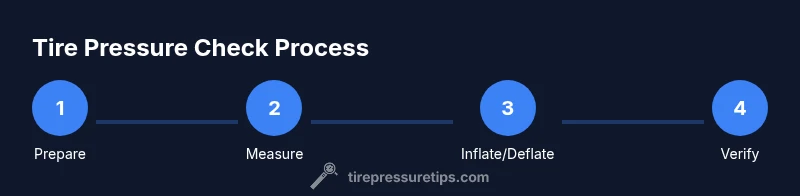
This section previews the key steps you’ll perform in the official step-by-step guide. First, prepare your vehicle and locate the correct target PSI values for your tires. Then, measure current pressure with a gauge on cold tires. After that, adjust each tire by adding or releasing air to align with the recommended pressure, ensuring you recheck after inflation. Finally, record your readings and monitor changes over time to spot potential slow leaks. Each step is designed to be simple and repeatable, with a clear purpose so you can do it confidently on your own.
In the next sections you’ll see a detailed, numbered walkthrough with times, tips, and safety notes. The goal is to help you complete the task quickly without errors, saving you time, money, and worry on the road.
Common Scenarios: Underinflation, Overinflation, and Leaks
Underinflation is the most common problem, typically causing higher rolling resistance, poorer fuel economy, increased tire wear on the edges, and a higher risk of heat buildup and failure under load. Overinflation can lead to a harsher ride, uneven contact with the road, and reduced traction in wet conditions. In both cases, the tire’s contact patch is altered, which affects handling and braking. Leaks can be slow or puncture-related; some leaks manifest as a hissing sound or a sudden drop in pressure and require immediate attention. Seasonal temperature shifts frequently trigger readings that drift beyond the ideal range, so a routine check is essential. When you see TPMS alerts, or if you notice changes in ride quality, inspect the tire with a gauge and re-check after adjusting. If a leak is suspected, consider sealant products only for temporary use and seek professional help for persistent leaks, damaged rims, or valve stems. By recognizing these patterns you’ll know when to fix tire pressure and avoid costlier repairs later.
Real-world scenarios show how a small pressure variance can escalate. A driver might see a 1–2 psi drift after a winter commute, which may be acceptable if the tires are still within the recommended range. If the drift grows beyond 3 psi, you should inflate or deflate as needed. In long trips, plan a mid-trip check to ensure tires stay within safe thresholds. When you’re unsure, err on the side of slightly underinflated tires within the recommended range if TPMS signals are unclear; underinflation is generally safer than overinflation in many driving conditions.
Maintenance Routines: Keeping Tire Pressure Consistent Across Seasons
Consistency is the goal of tire pressure maintenance. Establish a monthly check schedule and perform more frequent checks during seasonal transitions when temperatures swing widely. Keep a log of readings, especially if you drive with heavier loads or carry passengers and cargo. Temperature, road conditions, and driving style all contribute to pressure fluctuations, so an informed routine will help you stay within the target range. If you replace tires or adjust wheel sizes, always recheck the specified PSI for the new configuration. Remember that the target pressure is usually listed as cold PSI, and measurement should occur after tires have cooled for several hours or minutes. If you use winter tires, ensure you adjust PSI according to the tire size and manufacturer guidance; cold-season changes can affect the number you read on your gauge. Maintaining consistent tire pressure can reduce fuel consumption by lowering rolling resistance, improve tire wear patterns, and support safer braking in rain or snow. This section provides a practical calendar-based plan you can follow to keep your tires in peak shape year-round.
Practical habits include carrying a portable gauge, keeping a small air compressor in your trunk, and checking tire pressure before long trips. For most drivers, a quick check on a weekend morning is enough to stay within safe limits, but you may need to adjust more frequently if you drive a lot, carry heavy loads, or live in areas with extreme temperatures. Consistency beats perfection when it comes to tire pressure management; the goal is to maintain pressures within the manufacturer’s recommended range as closely as possible.
Final Reminders: Should You Worry About Tiny Deviations?
A few psi of deviation from the recommended range is not automatically dangerous, but persistent or large deviations can reduce safety margins. The most important sign is your TPMS indicator, which provides a real-time warning when pressure slips beyond safe thresholds. If your tires appear visibly under-inflated or bulged on the sidewalls, stop and assess—danger signs are not worth risking a ride. If you’re unsure whether a reading is accurate, re-check with a different gauge and in cold conditions. It’s also a good idea to check for leaks around valve stems and tires with slow leaks, as small leaks can gradually cause underinflation and poor mileage. In many cases, addressing a slow leak early prevents costly repairs later. Finally, remember to check inflation pressure after long trips and on very hot days; heat can inflate tires and mask lower pressures until you cool down. Keeping a routine helps you maintain safety and improves efficiency, so make tire pressure checks part of your regular vehicle maintenance.
Quick-Checklist You Can Use Right Now
- Check the owner’s manual and door jamb sticker for the correct cold PSI values. - Use a reliable gauge and check tires when cold. - Compare each tire’s reading to the prescribed values and adjust within a 1–3 psi range. - Recheck after inflation and reset TPMS if your vehicle requires recalibration. - Record readings over time to spot trends and leaks. - Consider seasonal adjustments for winter and summer conditions. - If you notice signs of damage, leaks, or persistent TPMS warnings, seek professional help promptly.
Tools & Materials
- Tire pressure gauge(Digital or analog; accurate to at least 1 psi; always check cold tires.)
- Air compressor or access to a public air pump(Ensure it can deliver stable pressure to the tires' range.)
- Owner's manual / door jamb PSI chart(Needed to confirm the correct target PSI for your vehicle.)
- Notebook or smartphone for logs(Useful to track readings and identify trends over time.)
Steps
Estimated time: 15-20 minutes
- 1
Prepare and locate target PSI
Park on a level surface and ensure tires are cold. Find the recommended PSI in the door jamb placard or owner’s manual for your exact tire setup. This establishes the goal for inflation or deflation.
Tip: Write down the target PSI for each tire if you have different front/rear values. - 2
Measure current pressure
Remove the cap from each valve stem and press the gauge onto the valve to get a reading. Note the result and compare to the target value. Repeat for all tires.
Tip: If you started after a drive, wait and cool tires for 10–15 minutes for an accurate cold reading. - 3
Inflate or deflate to target
Add air in small increments if reading is low, or release air in small increments if reading is high. Recheck after each adjustment to avoid overshooting the target.
Tip: Do not exceed the maximum pressure printed on the tire sidewall. - 4
Recheck and confirm
Recheck each tire after inflation to confirm readings are within 1–3 psi of the target. If TPMS is present, ensure the system is calibrated as needed.
Tip: Keep a log of readings and the date to monitor changes over time.
Frequently Asked Questions
What is the ideal PSI for my tires?
The ideal PSI is the value listed by the manufacturer for your vehicle and tire combination. It can vary between front and rear tires and may change with load. Check your door jamb sticker or owner's manual for the exact numbers and aim to stay within that range.
The ideal PSI is the number from your sticker or manual, which may differ between tires. Stay within that range for safety and efficiency.
How often should I check tire pressure?
Check monthly and before long trips. Temperature changes and load can cause pressure to drift. Regular checks help maintain safety, tire wear, and fuel efficiency.
Check once a month and before long trips to keep tires safe and efficient.
Why does tire pressure change with temperature?
Air expands when warm and contracts when cold, altering PSI readings. Cold mornings can show lower pressures, while hot roads can raise them. This is why checks at different times or seasons matter.
Temperature changes affect PSI; read cold, and adjust after temperatures shift.
What should I do if the TPMS stays on after inflation?
If TPMS stays lit, recheck all tires with a gauge, inspect for slow leaks, and ensure sensors are calibrated. A persistent warning may require professional service.
If the light stays on after inflating, recheck and consider a sensor or leak check.
Can underinflated tires cause damage?
Yes. Underinflation increases rolling resistance, heat build-up, and wear on the tire edges. It can also shorten tire life and reduce braking performance.
Underinflation increases wear and reduces safety; fix it promptly.
Are digital gauges more accurate than analog?
Both can be accurate if properly calibrated. The key is to use the same gauge consistently and read the tire pressure when cold for comparison.
Digital is easy to read, but accuracy depends on calibration and using it consistently.
Watch Video
What to Remember
- Know your target PSI from the manufacturer.
- Check tires when cold for accuracy.
- Use a reliable gauge and recheck after inflation.
- Monitor TPMS and keep a maintenance log.