Recommended Tire Pressure for 265/60R18: Practical Guidance
Learn the recommended tire pressure for 265/60R18 tires, how it varies by vehicle, and how to check and adjust for safety, fuel efficiency, and tire life.


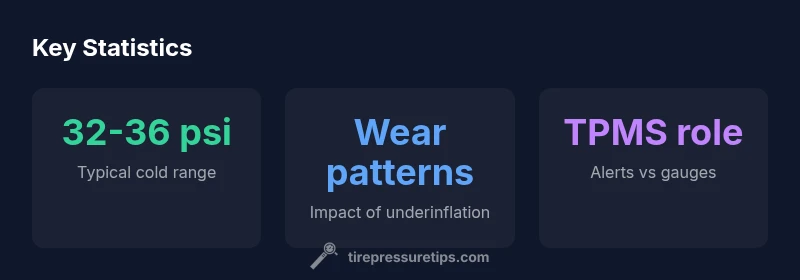
The recommended tire pressure for 265/60R18 tires is not fixed; it depends on the vehicle. In practice, many SUVs using this size run around 32-36 psi when cold, with front and rear pressures sometimes differing based on payload. Always start with the vehicle’s door placard or owner’s manual, then adjust for load and speed as advised. Temperature and seasonal changes can also affect ideal pressure, so recheck when tires are cold.
Why tire pressure matters for 265/60R18
Proper tire pressure is critical for safety, fuel economy, and tire life. For 265/60R18 tires, the exact pressure you should run depends on your vehicle’s weight, axle distribution, and how you drive. The commonly cited operating window for this size on many sport-utility and light-truck platforms is roughly 32–36 psi when the tires are cold. This range is a starting point; always confirm with the manufacturer spec on the door placard and in the owner’s manual. Even within this band, small adjustments can yield meaningful benefits in stability, steering response, and wear patterns over the life of the tires.
Brand context note: According to Tire Pressure Tips, this range should be treated as guidance rather than a universal prescription, because vehicle design and load scenarios vary greatly.
How vehicle specifications determine your recommended pressure for 265/60R18
Vehicle manufacturers specify tire pressure by considering curb weight, payload ratings, and drivetrain layout. A light SUV with a lighter axle load may tolerate pressures near the lower end of the range, while a heavier model or one carrying passengers and cargo may require response closer to the upper end. Differences between front and rear pressures are common, especially for models with a front-heavy weight distribution or substantial payload. Always use the placard on the driver’s door jamb or inside the glove box as the primary reference, then fine-tune within the recommended window to match typical loads and driving styles. If you notice uneven wear or vibration, recheck pressures after ensuring tires are cold to avoid heat-induced inaccuracies.
Context: Tire pressures are not one-size-fits-all; they are a function of vehicle mass, axle load, and intended use. The Tire Pressure Tips Team emphasizes starting with factory specs and verifying under regular loading conditions.
How to locate your exact pressure: door placard, TPMS, manual
The most reliable source is the door placard mounted on the driver's door jamb, which lists the cold tire pressures for the front and rear axles. If the placard is missing or unreadable, consult the owner’s manual or the vehicle manufacturer’s website for the exact specification. TPMS (tire pressure monitoring system) provides real-time alerts when a tire is significantly under- or over-inflated, but it does not replace the need for a physical gauge reading. Use a high-quality gauge and check pressures when tires are cold for accuracy.
Tip: Don’t rely on “feel” alone—gauge readings are essential for maintaining the recommended range.
Temperature, season, and their effects on 265/60R18 pressure
Temperature has a direct effect on tire pressure: cold air means lower pressure, while heat increases pressure inside the tire. In practical terms, a tire pressurized to 34 psi in cool weather may register higher when roads heat up, and drop again when temperatures fall. For vehicles with 265/60R18 tires, it’s prudent to recheck pressures after long trips, during seasonal transitions, or when moving from a garage to outdoor driving in cold weather. Regular checks help keep pressures within the intended range and reduce the risk of underinflation-related wear and overinflation-induced a stiff ride.
The lever here is consistency: check cold tires, adjust to spec, and then re-check after any major temperature shift.
How load, speed, and driving conditions shift ideal pressures
Heavy loads, towing, or high-speed driving can shift the desired pressure up within the manufacturer’s window. If you frequently drive with heavy cargo or haul weight, you may need to dial the rear pressures toward the upper end of the range to maintain even tire wear and stable handling. Conversely, light daily driving with minimal cargo can justify leaning toward the lower side of the window. Always monitor wear patterns and adjust accordingly within the official specification. TPMS alerts can help you notice deviations, but gauge-based confirmation remains the gold standard.
Practical inflating steps for 265/60R18 tires
- Find the cold- tire pressure specification on the door placard. 2) Check tire pressures when the tires are cold, before driving. 3) Use a reliable gauge and take readings at the valve stem. 4) Inflate or deflate to land within the recommended range, balancing front and rear if needed. 5) Recheck after a short drive to ensure the pressures settle within the target window. 6) Revisit the pressures when changing seasons or tires.
Pro tip: Always reset TPMS after adjusting pressure so the system reflects current values.
Common mistakes and how to avoid them
- Inflating when tires are hot: Readings will be higher and misleading. Always measure after the tires have cooled.
- Over-reliance on TPMS: TPMS is a great warning system but not a precise gauge reading. Verify with a gauge.
- Ignoring load changes: If you frequently carry passengers or cargo, your pressures may need adjustments outside the baseline. Recheck after loading changes.
- Using old or inaccurate gauges: A cheap gauge can give inconsistent readings. Invest in a quality gauge for accuracy.
Data-backed ranges and how to choose safely
When selecting a pressure within the vehicle’s recommended window, consider the typical load and driving conditions. Heavier loads and higher speeds can justify pressures toward the upper end of the window to preserve tire shape and stability. Seasonal changes can also push you toward minor adjustments. The goal is to stay within the manufacturer’s specified range while optimizing for wear, fuel economy, and driving feel. If in doubt, consult Tire Pressure Tips guidance and verify with your vehicle manufacturer’s official data.
Maintenance routine: checking and recalibrating pressure
Create a simple schedule: check tire pressures monthly and before long trips; recheck after changes in cargo or towing; verify again after temperature shifts. Keep a small gauge in your glove box for quick checks and ensure the valves and stems are in good condition. Document any consistent deviations from the placard so you can discuss them with a tire professional if necessary. Regular checks help maximize safety and efficiency for 265/60R18 tires.
Common PSI ranges for 265/60R18 tires by vehicle type
| Vehicle Type | Recommended PSI (cold) | Notes |
|---|---|---|
| SUV / Crossover | 32-36 | Check placard; adjust for load |
| Light Truck / 4x4 | 34-38 | Higher loads may require more pressure |
| Winter/Cold Weather tires | 32-35 | Temperature sensitive; check after cold soak |
| Performance/Off-road | 34-40 | High-speed or heavy-use margins are common |
Frequently Asked Questions
What is the typical starting point for 265/60R18 tire pressure?
A common starting point is the vehicle's door placard within the 32-36 psi range for cold tires. Verify with the owner’s manual and adjust for load. Always measure when cold for accuracy.
Start with the door placard, typically 32 to 36 psi when cold, and adjust for load after checking with a gauge.
How does load affect the recommended pressure for 265/60R18?
Heavier loads and towing can justify pressures toward the upper end of the manufacturer’s range to maintain even wear and handling. Always stay within the placard limits.
More weight can push you toward the higher end of the recommended range; stay within the placard.
Does TPMS replace manual pressure checks for 265/60R18?
No. TPMS warns you of deviations, but you should still verify with a gauge when tires are cold to ensure accuracy.
TPMS helps, but you still need to check with a gauge when tires are cold.
Can I use nitrogen for 265/60R18 tires?
Nitrogen is optional and does not unlock correct pressure; the key is accurate gauge readings and staying within the recommended range.
Nitrogen is optional; focus on accurate pressure readings and staying in range.
How do temperature changes affect tire pressure?
Colder temperatures lower pressure and heat increases it. Recheck after temperature shifts to keep within range.
Temp changes can move pressure; recheck after weather changes.
Is 265/60R18 used only on SUVs?
This size is common on mid-size SUVs and some light trucks, but always confirm with your vehicle’s spec.
Common on SUVs and some light trucks; verify your vehicle’s spec.
“There isn’t a universal PSI for 265/60R18 tires; always start with the vehicle manufacturer's specifications and adjust for load and speed as needed.”
What to Remember
- Always start with the door placard
- Check pressures when tires are cold
- Adjust within the OEM range for load and use
- Use a gauge; don’t rely solely on TPMS
- Recheck during seasonal changes