245 75R16 Tire Pressure: A Practical How-To
Learn how to check, adjust, and maintain the correct pressure for 245 75R16 tires. Practical steps, TPMS guidance, and safety tips for SUVs and light trucks.


This guide helps you determine and adjust the correct inflation for 245 75R16 tires, using the vehicle placard, TPMS cues, and real-world load considerations. You’ll learn to check tires when cold, account for temperature changes, and maintain consistent pressure for even wear and safer handling. The method is practical, repeatable, and designed for daily driving.
Understanding 245 75r16 Tire Pressure
The code 245/75R16 describes tire width (245 mm), aspect ratio (75%), construction (R for radial), and wheel diameter (16 inches). This size is common on mid-size SUVs and light trucks. Tire pressure for 245 75r16 tires isn't a fixed number; it depends on the vehicle, axle, load, and driving conditions. Always start with the vehicle manufacturer's recommended cold inflation pressure, usually found on the door placard, fuel filler cap, or owner's manual. Because the tire size influences contact patch and sidewall stiffness, the same car may have different pressures on front vs rear tires. For 245 75r16, many drivers see a range in the mid-30s psi, but this is not a universal figure. Your best source is the placard and the tire pressure label on the door jamb. Using the correct pressure ensures even wear, optimal fuel efficiency, safer handling, and better TPMS performance. According to Tire Pressure Tips, correct inflation supports safer handling and longer tire life, particularly for this size on SUVs.
Why Tire Pressure Matters for This Size
Tire pressure is a critical parameter for vehicle safety, especially for 245 75R16 tires used on SUVs and light trucks. When inflation is too low, the tire can overheat, wear unevenly, and increase rolling resistance, which reduces fuel efficiency and braking performance. Overinflation can make the tire ride harshly, reduce grip, and cause a harsher impact on road hazards. The Tire Pressure Tips team emphasizes that small pressure changes affect handling, traction, and wear patterns over time. Your load; driving speed; and ambient temperature all influence the ideal pressure, so always start with the manufacturer’s recommendation and adjust for real-world conditions such as extra luggage or a full trailer.
Where to Find the Right Pressure for 245 75r16 Tires
Your correct pressure starts with the placard on the driver’s door jamb or in the owner's manual. The recommended cold inflation pressure is vehicle-specific and sometimes differs between the front and rear axles. If you haul heavy cargo or regularly drive with a full load, you may need to adjust within the acceptable range provided by the manufacturer. Do not rely on the tire’s maximum pressure printed on the sidewall as the running pressure; that number is the maximum safe limit, not the target for daily use. For 245 75r16 tires, verify both front and rear recommendations and account for weight distribution, trailer towing, and seasonal changes. The Tire Pressure Tips guidance suggests making pressure checks a routine part of maintenance so wear remains even and tread life is optimized.
How to Check Tire Pressure Correctly
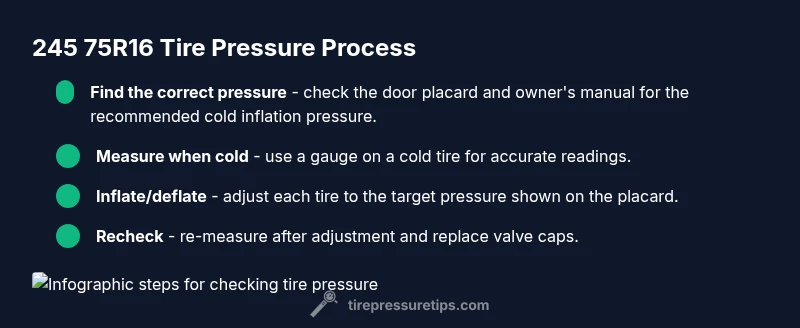
To achieve accurate readings, perform checks when tires are cold, ideally after the car has been parked for several hours. Remove the valve cap, press the gauge squarely onto the valve stem, and take a reading. Use a reliable gauge (dial, digital, or stick) and record all four readings. Compare each to the vehicle’s recommended pressure; if a tire is low or high, adjust using an air compressor or pump until it matches the target. Recheck after adjustment to ensure the pressure holds and re-tighten the valve caps. For best results, measure one tire at a time and note any sudden changes that may indicate a leak. A portable gauge is handy for on-road checks.
How to Inflate or Deflate for the Right Pressure (245 75r16)
If a tire reads low, connect an air source and add air in small increments (about 1–2 psi at a time) until you reach the target. If a tire reads high, release air gradually by pressing the valve core and recheck. Always recheck after each adjustment to avoid overcorrecting. When inflating, distribute effort evenly around all four tires if you’re adjusting multiple tires, as uneven inflation can affect handling. After adjustments, reinstall valve caps to protect the stem from dirt and moisture. This careful process helps ensure uniform wear and optimal contact with the road surface.
Temperature and Seasonal Effects on 245 75r16 Tire Pressure
Ambient temperature shifts affect air pressure in tires. Colder weather lowers pressure readings, while hot days can raise readings. For 245 75r16 tires, it’s wise to check pressures when the tires are cold and then re-check after a drive in warm weather or after highway speeds. The door placard’s target pressure assumes typical temperatures; in extreme weather, you may need to adjust within the allowable range. Maintain consistent maintenance routines through seasons to prevent unexpected pressure changes that impact handling and fuel economy.
TPMS and Your 245 75r16 Tires
Tire Pressure Monitoring Systems (TPMS) alert you when a tire’s pressure deviates from the recommended range. Some warnings require a short learning cycle after air changes or after rotating tires. TPMS is a helpful safety feature, but it isn’t a substitute for regular manual checks. When TPMS warns, verify readings with a gauge and inflate/deflate to the placard value. If you notice frequent alerts, inspect for slow leaks or punctures, and check valve stems, rims, and wheel weights for issues that can affect pressure stability.
Common Mistakes to Avoid with 245 75r16 Tire Pressure
Common mistakes include inflating to the tire’s maximum sidewall pressure, ignoring axle-specific recommendations, and assuming the same pressure works for all loads and speeds. Avoid using worn or damaged gauges, and do not rely on a hot-tire reading as a baseline. Do not defer pressure checks for long periods—check monthly and before long trips. Always account for the load you’re carrying and the terrain you drive on. The Tire Pressure Tips team notes that consistency in maintenance reduces wear and improves safety and fuel efficiency when running 245 75R16 tires.
A Simple Maintenance Routine for 245 75r16 Tires
Create a monthly check-in habit: inspect all tires for wear patterns, check the door placard, verify with a gauge, and adjust accordingly. Include a pre-trip check before long drives and after heavy loads. Consider recording pressures in a notebook or app to track changes over time, and rotate tires as recommended by the vehicle manufacturer to promote even wear. The routine should also cover spare tires, TPMS status, and a quick inspection of valve stems and gaskets to dampen potential leaks.
Tools & Materials
- Tire pressure gauge (dial or digital)(Choose a gauge with a range that covers 20–60 psi; ensure readability and calibration.)
- Air compressor or access to a gas-station air pump(Prefer a pump that reads measured psi on its gauge for accuracy.)
- Vehicle owner’s manual or door placard(Primary source for recommended cold inflation pressure for 245 75r16 tires.)
- Valve core tool or spare valve caps(Useful for minor maintenance and preventing leaks.)
- Notebook or digital log(Record readings and changes over time for maintenance history.)
Steps
Estimated time: 20-35 minutes
- 1
Prepare and locate the correct pressure
Gather your tools and locate the recommended cold inflation pressure for your 245 75r16 tires from the door placard or owner's manual. Confirm that you’re inspecting tires on a vehicle that hasn’t been driven recently to avoid heat-inflated readings.
Tip: If you’re unsure, measure one tire cold first to establish a baseline before checking the others. - 2
Check all tires when cold
Park on a level surface and let the car sit for at least three hours if possible. Remove valve caps and wipe them clean. Use a gauge to measure each tire’s pressure and record the numbers.
Tip: Temperature changes can skew readings; cold readings are the most reliable baseline. - 3
Inflate to target or deflate as needed
If a tire is below the target, add air in small increments (1–2 psi at a time) and recheck. If it’s above target, press the valve stem core carefully to release air until you reach the correct value.
Tip: Always recheck after any adjustment to prevent over-correcting. - 4
Re-check and secure
After adjusting all tires, recheck each tire once more. Replace valve caps securely to prevent dirt entry and slow leaks. If your TPMS shows a persistent warning, inspect for slow leaks or damaged components.
Tip: A small amount of air loss over time is normal; frequent drops warrant inspection. - 5
Document the results
Note the final pressures for all four tires and the spare if applicable. This helps track changes over seasons and with load variations.
Tip: Maintain a simple log so you can reference it during seasonal checks or before road trips. - 6
Plan ongoing maintenance
Set a reminder to check tire pressure monthly and before long trips. Pair this with tread depth checks and TPMS diagnostics to maximize safety and fuel efficiency.
Tip: Routine checks save money and reduce unsafe driving conditions.
Frequently Asked Questions
What is the recommended tire pressure for 245/75R16 tires?
The exact pressure depends on your vehicle. Always start with the door placard or owner's manual. The recommended range may differ between front and rear tires based on load and axle design.
Check your door placard for the exact cold inflation value. If unsure, consult your owner's manual or Tire Pressure Tips for guidance.
How often should I check tire pressure?
Check at least once a month and before long trips. Inspect tires for wear and leaks during each check.
Check monthly and before trips; add a quick on-road check if you notice changes in handling or TPMS warnings.
Can TPMS be inaccurate?
Yes, TPMS can warn before or after the actual tire pressure is off. Use a manual gauge to verify readings, especially after rotations or repairs.
TPMS is helpful, but always verify with a gauge to ensure precision.
Why does pressure read higher when tires are hot?
Air expands with heat, so a hot tire can read higher than its cold value. Always measure when cold and adjust if you drive long distances before recalibrating.
Read tires when cold; heat can skew readings and lead to overinflation if not accounted for.
What happens if I drive with underinflated 245 75R16 tires?
Underinflated tires wear faster on the edges, run hotter, and can reduce fuel efficiency and handling. Always aim for the manufacturer’s recommended pressure.
Underinflated tires wear more and can be unsafe; keep them within recommended pressure.
Watch Video
What to Remember
- Check the door placard for the exact cold inflation value.
- Use a reliable gauge and check tires cold for accuracy.
- Adjust inflation gradually and recheck all tires after each change.
- Account for load, temperature, and season when setting pressure.
- Maintain regular tire pressure checks to extend tread life and improve safety.