265 70 R17 Tire Pressure: A Practical Guide
Comprehensive steps to check, adjust, and maintain the correct 265 70 R17 tire pressure. Learn how TPMS, temperature, and vehicle specs affect psi and how to keep tires safe, fuel-efficient, and long-lasting.


By checking and maintaining the correct tire pressure for 265 70 r17 tires, you improve safety, fuel economy, and tire wear. This guide explains how to find the manufacturer’s recommended pressure, how temperature affects readings, and the right steps to adjust safely. You will need a tire pressure gauge, a gauge-ready surface, and access to your vehicle’s door jamb sticker or owner's manual.
Understanding Tire Size and Pressure Basics
The 265 70 r17 designation communicates three things about the tire: width 265 mm, aspect ratio 70%, and 17-inch wheel diameter. This size affects contact patch and heat buildup, which in turn influence the recommended cold tire pressure. According to Tire Pressure Tips, starting with the vehicle manufacturer's recommended psi is essential; your car's sticker usually lists this in the door jamb. Beyond the numbers, remember that tire pressure is not a static value—it changes with load, speed, and temperature, so you must check it regularly to maintain safe handling and fuel efficiency.
Why Pressure Warnings Matter (TPMS and Tire Health)
Most modern vehicles use TPMS to alert you when a tire is underinflated or overinflated. The Tire Pressure Tips team found that TPMS alerts are most effective when you also perform manual checks with a gauge, because sensors can drift and wear over time. Consistently maintaining the recommended range helps even tread wear, reduces risk of blowouts, and protects wheel rims from damage caused by underinflation.
How to Find the Right Pressure for 265 70 r17 Tires
To know the correct pressure, check the door jamb sticker on the driver’s side or consult the owner's manual. The recommended cold pressure typically applies to the tire’s normal load; heavy loads or high-speed driving might require adjustments described by the manufacturer. If you drive an SUV with 265/70R17 tires, the front and rear pressures may differ; use the sticker values or a vehicle-specific guideline, not the tire's maximum pressure printed on the sidewall.
Using a Gauge: Types and How to Read It
Invest in a reliable tire pressure gauge: digital, analog, or dial gauges each have pros and cons. Digital gauges provide quick readings, analog gauges show more subtle changes, and dial gauges can be easier to read in glare. When reading, ensure the gauge is fully seated on the valve stem to avoid leaks, and note the cold pressure before inflating. If readings are consistently high or low, recalibrate your gauge or replace it.
Temperature and Seasonal Effects on Tire Pressure
Pressure readings rise with heat and fall when tires are cold. A 10-degree Fahrenheit drop can lower psi by approximately 1 psi, depending on the tire and load. The Tire Pressure Tips guidance emphasizes checking pressure after the tires have cooled for several hours to get an accurate baseline. In winter, you may see a noticeable drop in pressure, which can alter handling and fuel efficiency.
Adjusting Pressure Safely: Steps to Reach Recommended Range
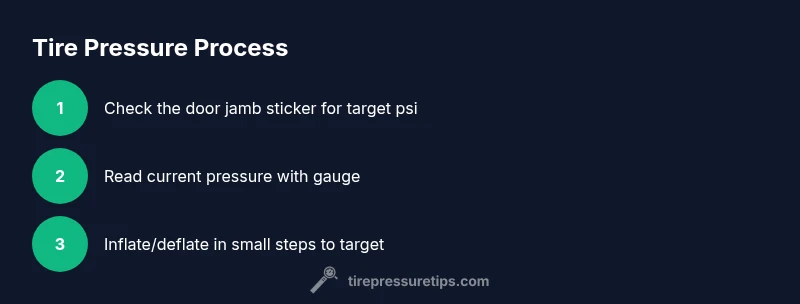
First, verify the target pressure from the sticker or manual. Then, remove the valve cap and attach the gauge. Inflate or deflate in small increments (around 1–2 psi at a time), recheck, and repeat until you land within the recommended range. Never exceed the maximum pressure printed on the tire sidewall, and never mix inflators across tires in a single session.
Common Mistakes When Checking and Adjusting Tire Pressure
Relying on canned air or leaving the pump running too long can over-inflate. Forgetting to account for temperature changes or inflating while tires are hot leads to inaccurate numbers. Not checking both sides of the car or neglecting the spare tire pressure can cause uneven wear.
TPMS: Understanding Alarms and Calibration
TPMS types include direct sensors and indirect systems. When alarms trigger, inspect for leaks, damaged valves, or a failing sensor battery. Some vehicles require a manual reset after tire changes; consult the owner's manual for the procedure. Your TPMS warning light should go off once the tires are within the correct range and the system has updated.
Maintenance Schedule: How Often to Check Pressure
Make tire pressure checks part of your monthly maintenance and before long trips. Even if you aren't noticing a soft ride, small losses can add up over time. Temperature shifts, load changes, and tire wear will influence readings; set a reminder to inspect all tires at least once per month.
Practical Scenarios: SUVs, Sedans, and 265/70R17
Different vehicles have different load profiles; a family SUV with 265/70R17 tires may have slightly different optimal ranges than a compact sedan. Always use the vehicle manufacturer’s numbers rather than the tire brand’s maximum pressure. For winter tires on the same size, pressure targets may differ slightly; adjust accordingly and recheck after installation.
Troubleshooting Low Pressure and Leaks
Low tire pressure can be caused by slow leaks from nail punctures, valve leaks, or bead leaks. If you notice persistent loss overnight, have the tire inspected by a professional. A simple plug or patch may fix a leak, but persistent rapid deflation warrants a full inspection and possible tire replacement.
Tools & Materials
- Digital tire pressure gauge(Prefer a gauge with 0.5 psi resolution)
- Door jamb sticker and owner's manual(Confirm vehicle-specific cold pressure values)
- Portable air pump or compressor(Ensure it has a built-in gauge)
- Valve core tool and spare valve caps(Helpful for valve maintenance)
- Notebook or digital log(Record readings and targets)
- Gloves or rag(Protect hands while inflating)
Steps
Estimated time: 20-30 minutes
- 1
Verify target pressure
Locate the recommended cold pressure from the door jamb sticker or owner's manual. Ensure tires are cold for an accurate baseline reading. Write down the target values for all four tires.
Tip: Always use the cold-reading value for accuracy. - 2
Prepare the vehicle and tools
Park on a flat surface, engine off, and engage the parking brake. Gather your gauge, pump, and a clean valve stem. Remove valve caps to prepare for measurement.
Tip: Keep valve caps in your pocket to prevent loss. - 3
Read current pressure
Attach the gauge to a cold valve stem and read the current pressure. Compare to the target; note if you are under or over the range.
Tip: Make sure the gauge seal is snug to avoid leaks. - 4
Inflate or deflate in small steps
If underinflated, add 1–2 psi and recheck. If overinflated, release air in small bursts and recheck. Repeat until you hit the target range.
Tip: Avoid overshooting; adjust in small increments. - 5
Recheck all tires
Repeat the process for all four tires and the spare if relevant. Ensure consistent pressure across axles per manufacturer guidance.
Tip: Check the spare periodically as part of maintenance. - 6
Record readings
Log the final readings and date. This helps detect slow leaks and plan future checks.
Tip: Keep a simple chart handy in the vehicle pocket. - 7
Follow up
If a tire repeatedly loses pressure, have it inspected for leaks or damage by a professional.
Tip: Persistent loss is a sign of a slow leak or faulty valve.
Frequently Asked Questions
What is the recommended tire pressure for 265/70R17 tires?
The recommended pressure is the value listed on your vehicle’s door jamb sticker or in the owner's manual. It can vary by model and load, so always start with that target rather than the tire’s maximum pressure.
Check the door jamb sticker for the exact psi and apply that target.
Should I check tire pressure when tires are hot or cold?
Cold readings are most accurate. Hot tires give higher numbers due to expansion, so wait for tires to cool before measuring.
Measure when the tires are cold for accuracy.
How often should I check tire pressure?
Check at least once a month and before long trips. Temperature changes and driving loads can cause pressure to drift.
Check monthly or before trips.
TPMS shows a warning but tires look fine, what now?
A TPMS warning can indicate a slow leak, sensor issue, or temperature shift. Inspect tires manually and use a gauge to confirm readings; if in doubt, consult a professional.
If in doubt, measure with a gauge and seek help.
Can over-inflating damage tires?
Yes, over-inflation can cause uneven wear, a harsher ride, and increased risk of a blowout on rough roads.
Overinflation can cause wear and hazards.
Do front and rear tires have different pressure targets?
Yes, some vehicles specify different pressures per axle based on load distribution. Always use the manufacturer’s guidance.
Check axle-specific targets on the sticker.
Watch Video
What to Remember
- Check cold tires first and verify target psi
- Always follow the door-sticker values for each tire
- Use a reliable gauge and inflate in small steps
- Temperature affects readings; recheck after cooling
- Regular checks save fuel and extend tire life