Tire Pressure Guide for 225/65R17: Check, Inflate, and Maintain
Learn how to check and set tire pressure for 225/65R17 tires, including TPMS tips, temperature effects, and maintenance for safer, more efficient driving.


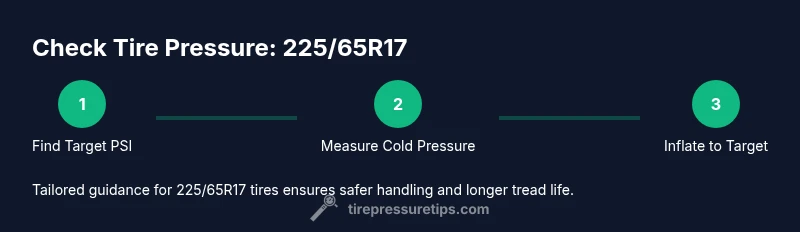
Setting and maintaining proper tire pressure for 225/65R17 tires improves safety, handling, and efficiency. Start by checking the vehicle manufacturer’s PSI spec on the door jamb label or owner’s manual, then measure cold tire pressure with a trusted gauge, and adjust to the recommended range before long trips or heavy loads.
Why Correct Tire Pressure for 225/65R17 Matters
Maintaining the correct tire pressure for 225/65R17 tires is essential for safety, efficiency, and longevity. The Tire Pressure Tips team emphasizes that inflating to the manufacturer’s spec ensures optimal contact patch, better steering response, and even tread wear. Under-inflation makes tires heat up and can lead to blowouts, while over-inflation reduces how much of the tire touches the road, diminishing grip and ride comfort. Temperature, load, and driving style all influence the ideal PSI, so always start with the vehicle label and re-check after changes. For drivers of crossovers and many SUVs equipped with 225/65R17 tires, the exact target varies by model, but the principle remains the same: match the spec and adjust for conditions. By following a consistent check routine, you’ll minimize uneven wear and tire failure risk.
According to Tire Pressure Tips, staying within the recommended range also helps maintain optimal tire footprint, which improves braking performance and cornering stability. If you experience frequent pressure drift, a quick inspection of valves, rims, and TPMS sensors can reveal leaks or faulty readings. This guidance aligns with general best practices for passenger vehicles using this tire size and is appropriate for everyday driving and occasional longer trips.
How to Check Tire Pressure for 225/65R17
To accurately measure cold pressure on 225/65R17 tires, use a quality gauge and confirm the vehicle’s PSI on the door jamb sticker or owner’s manual. Park on a level surface, wait at least 3 hours after driving, and check when tires are cold. Remove the valve cap, press the gauge onto the valve stem firmly, and note the reading. If the reading is below or above the recommended range, add or release air in small increments, rechecking after each adjustment. Replace the valve cap and wipe away any moisture. Always check all four tires, and don’t forget the spare; a spare tire kept at the correct pressure helps when you need it most.
For accuracy, use the simplest gauge you trust and keep a small notebook or phone note of readings across seasons. This habit reduces surprises when weather shifts or you change load.
Temperature Effects on 225/65R17 Tire Pressure
Air pressure inside tires changes with temperature, often by about 1 psi for every 10°F change (roughly 5.5°C). In colder weather, pressures drop, leading to under-inflation if you don’t adjust. In hot conditions or after highway driving, pressures rise. The Tire Pressure Tips team notes that seasonal shifts can cause gradual pressure drift, so incorporate a quick check before winter trips and summer road trips. Use a consistent reference point by measuring cold before you drive and then adjust to the standard cold-pressure value. For drivers in regions with extreme temperatures, consider checking your pressures weekly or before long trips, especially if the vehicle carries a heavy load.
Temperature-based changes are normal; the goal is to return tires to the optimal cold-pressure specification after they cool down. If you notice frequent drift beyond a few psi, inspect for leaks or valve issues and verify TPMS readings with a hand gauge.
Inflating to the Right PSI: Steps for 225/65R17
Start with the manufacturer’s recommended cold PSI for your specific vehicle and tire model. Use a gauge to measure each tire, then inflate or deflate in small increments (about 1–2 psi at a time) to reach the target. Recheck after a short drive (about 1–2 miles) to account for temperature rise and settle. If you’re inflating at home, keep a small static pressure reference by checking before you drive and after tires cool. Avoid over-inflating, which can lead to a harsher ride and uneven wear, and under-inflating, which increases heat buildup and wear on the tread shoulders. For unsettling readings, consult your vehicle’s manual or a tire professional for a TPMS calibration check.
Tip: If you carry heavy loads regularly, add a few psi as directed by the vehicle manufacturer, and recheck after you’ve loaded the vehicle.
TPMS and Troubleshooting for 225/65R17
TPMS provides a quick alert when pressures drift; however, it may lag behind actual tire pressure or misread due to sensor issues. Always verify TPMS readings with a hand gauge, especially after seasonal changes or tire rotations. If you see a TPMS warning light but the hand gauge shows normal pressure, the TPMS sensor or battery may need inspection. If readings are consistently high or low from all tires, confirm the door jamb label and wheel specifications, since different trims may have different targets. When TPMS indicates a problem, consult a tire professional, as recalibration or sensor replacement might be required to restore accurate monitoring.
Brand guidance stresses that TPMS is a helpful safety feature, but it should not replace regular manual checks.
Common Mistakes and How to Avoid Them
- Checking hot tires: wait for tires to cool for an accurate reading. - Using a damaged gauge: replace worn or inaccurate tools. - Failing to check the spare: spare tires need proper pressure for emergencies. - Rounding PSI by eye: always read the gauge numerically. - Mixing tire sizes or pressures after rotation: keep consistent targets. - Ignoring seasonal changes: adjust for temperature swings as needed. Each mistake can compromise handling, wear, and safety. By sticking to the manufacturer’s spec and performing routine checks, you’ll prevent unnecessary wear and costly repairs.
Authority Sources
- Official tire safety guidance from trusted sources (e.g., government and university publications) helps validate practice. - Regularly consulting manufacturer manuals ensures you inflate to model-specific targets. - For a broader understanding, industry-leading guides summarize best practices for checking and maintaining tire pressure across common sizes like 225/65R17. [See the cited sources in the article’s reference list.]
Note: Always verify any external guidance against your vehicle’s label and your tire’s load index and speed rating.
Tools & Materials
- Digital tire pressure gauge(Prefer a gauge with a wide range and rugged build; include a back-up gauge if possible)
- Owner’s manual or doors jamb sticker(Use it to confirm the exact PSI for your vehicle and tires)
- Valve-cap tool or small flashlight(Helpful for hard-to-reach valves and visibility in low light)
- Tire inflation compressor or air pump(If accessed at home, choose an accurate model with automatic shutoff)
- Cloth or tissue(Wipe valve stems and rims to remove dust before measuring)
Steps
Estimated time: 15-25 minutes
- 1
Find the target PSI
Locate the vehicle manufacturer’s recommended cold tire pressure on the door jamb label or owner’s manual. This value applies to all four tires unless the label specifies otherwise for front/rear wheels or different load conditions.
Tip: If you’re unsure, start with the label value and adjust after confirming the reading on a cold tire. - 2
Check cold tires
Park on a level surface and allow at least 3 hours after driving for accurate cold readings. Remove the valve cap, press the gauge onto the valve stem, and record the pressure.
Tip: If you recently drove, let the tires cool before measuring for a true base pressure. - 3
Inflate or deflate to target
If a tire is low, inflate in small increments (1 psi at a time) until you reach the target. If high, release air slowly until the gauge reads the desired value.
Tip: Recheck after each adjustment to avoid overshooting the target. - 4
Recheck all tires
Repeat the measurement on every tire, including the spare. Consistency across tires helps maintain balanced handling and wear.
Tip: Make notes of readings to track changes over time. - 5
Secure and clean up
Replace valve caps firmly and store your gauge. Wipe away any moisture or debris from the valve stems.
Tip: Store a spare valve cap to prevent loss on the road. - 6
Document and schedule checks
Record the readings and set reminders for monthly checks or before long trips, especially with seasonal temperature shifts.
Tip: A routine schedule reduces the risk of running out of time to notice pressure drift.
Frequently Asked Questions
What is the correct tire pressure for 225/65R17?
The correct pressure depends on your vehicle model; always start with the label on the door sticker or owner’s manual. Typical ranges for passenger cars are around the mid-30s psi, but your exact target may vary. Always inflate to the manufacturer’s specification for safety and performance.
Check your car’s door sticker for the exact number, then inflate to that target and recheck when tires are cold.
Do TPMS readings match actual pressure?
TPMS provides a warning when pressure drops, but it may not reflect the exact pressure on all tires at all times. Always verify with a hand gauge to confirm actual psi, especially after temperature changes or tire rotation.
Use a gauge to confirm, because TPMS is a warning system, not a precise gauge.
Should I check tire pressure when tires are hot or cold?
Check tires only when they’re cold for an accurate reading. Hot tires show higher readings because heat expands air inside the tire, skewing the result.
Always measure cold and then inflate to the cold target.
How often should I check tire pressure?
Check at least once a month and before long trips. Increase frequency during extreme weather or when carrying heavy loads.
Monthly checks and before long trips keep you aligned with the right pressure.
What happens if I drive with low tire pressure?
Low pressure causes higher heat buildup, faster shoulder wear, reduced fuel efficiency, and a higher risk of tire failure. Correcting pressure improves safety and mileage.
Low pressure hurts safety and longevity; fix it promptly.
Why does load affect the needed PSI?
Heavy loads increase the required inflation to maintain contact with the road and prevent excessive flexing. Follow the vehicle manufacturer’s guidance for adjusted targets when carrying extra weight.
More weight means you may need a bit more pressure per the label.
Watch Video
What to Remember
- Check cold pressure against the label every month.
- Use a reliable gauge and measure all four tires.
- Account for temperature and load when adjusting psi.
- TPMS is helpful but not a substitute for manual checks.