How to Check and Maintain 225 45r18 Tire Pressure
Learn how to check, adjust, and maintain the correct tire pressure for 225 45r18 tires. Find targets from your door sticker, understand TPMS, and use a gauge and air source to keep safety, fuel efficiency, and wear optimal.


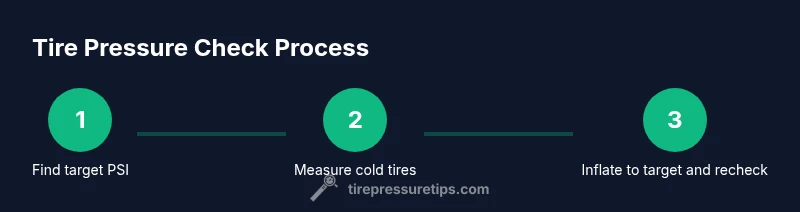
Goal: verify and adjust the tire pressure for 225 45r18 tires to the vehicle’s recommended specification. Start with the door jamb label or owner manual, measure cold tires with a reliable gauge, and adjust to the target PSI. Recheck all four tires, including the spare if applicable, and note TPMS alerts.
Why accurate 225 45r18 tire pressure matters
For drivers with 225 45r18 tires, accurate tire pressure isn’t a luxury—it’s a safety and performance requirement. Underinflation can weaken the tire’s sidewalls, slow steering response, and increase heat buildup, which accelerates wear and can lead to tire failure. Overinflation can reduce the contact patch, making the ride harsher and increasing the risk of a puncture on rough surfaces. The Tire Pressure Tips team emphasizes that maintaining the correct pressure improves grip in wet or slippery conditions, shortens stopping distances on dry pavement, and promotes even tread wear. The exact target pressure depends on your vehicle and load, not on the tire size alone. According to Tire Pressure Tips, regular checks matter just as much as setting the initial inflation. A consistent routine—checking cold tires, adjusting to the manufacturer’s specification, and rechecking after any weather change or long trip—gives you a reliable baseline. This is especially important for 225 45r18 tires because their performance can change noticeably as temperatures rise or fall and as the vehicle carries varying loads.
Understanding the 225 45r18 tire size and pressure implications
The designation 225/45R18 describes a low-profile, high-performance tire common on sedans and sport-oriented cars. The width of 225 millimeters, combined with a 45 percent aspect ratio, and an 18-inch wheel diameter, affects ride quality, handling, and heat generation. Pressure recommendations are not universal for this size; they are set by the vehicle manufacturer and appear on the door jamb sticker and in the owner’s manual. When you substitute tires with the same size but different load or speed ratings, you should still follow the car’s target pressure. If you frequently carry heavy loads or drive at high speeds, your target may shift slightly; the manufacturer’s guidance accounts for these conditions. For 225/45R18, the user may see different numbers on front and rear axles depending on drivetrain and trim level. Always prioritize the recommended PSI for your exact model, even if the tire manufacturer’s load index and speed rating match the size. Doing so preserves safety margins and optimizes wear.
Finding your PSI target for 225 45r18 tires
Locating the correct PSI starts with your vehicle’s built-in guidance. Look at the door jamb sticker, typically located on the driver’s side, which lists cold-inflation pressures for front and rear tires. If the sticker is faded or missing, consult the owner’s manual or the manufacturer’s online resources. Some vehicles have different targets for different trims or seating configurations, so check both axles. Do not rely on max pressure printed on the tire sidewall; that value is the tire’s maximum limit, not the recommended operating pressure for your car. If you are using a temporary spare or run-flat tires, ensure you follow the spare’s specific specs. When in doubt, contact a dealer or a tire shop to confirm your target PSI. Once you have the value, perform a cold-tire check before any long drive or after the car has sat for several hours. A precise target helps you get more uniform wear, better fuel economy, and safer handling.
Temperature, load, and driving conditions affect tire pressure
Air pressure inside tires changes with temperature. Colder weather reduces pressure, while hot days raise it as air expands. A practical rule is to check pressures when the tires are cold and the car has not been driven recently. If you must check after driving, factor in heat and wait at least 30 minutes for the tires to cool before re-inflating. Load also matters: heavier loads increase contact patch pressure, so the target pressure on a loaded trip may be higher than the standard label. Speed and cornering frequency can produce heating that alters pressure readings during a drive. In short, your 225/45R18’s target is fixed by the manufacturer, but expect small, real-world variations with temperature and load. Regular checks help catch gradual changes before they affect safety or wear.
Tools and methods for precise measurement
To measure tire pressure accurately, use a gauge you trust: a digital gauge or a solid analog gauge will work if it is well calibrated. Avoid outdated or damaged gauges that give inconsistent readings. Make sure you measure cold tires and remove the valve cap to access the valve stem. When inflating, use an air compressor with a pressure readout so you can target the exact psi. Many garage air stations offer a hose with a built-in gauge. After adjusting, recheck all four tires to ensure equal pressure across the set. Don’t forget the spare if your vehicle uses a full-size spare; a neglected spare can lead to surprise at the worst moment.
TPMS and common sensor issues
TPMS alerts provide a convenient signal that a tire is underinflated, but sensors can fail or become slow to respond. If a TPMS warning appears, measure the tires with a gauge to verify the reading. If the pressure is correct but the light remains on, the sensor may need servicing or battery replacement. Some vehicles require a reset after inflating to correct levels; follow the owner’s manual instructions or have a professional perform the reset. If you notice frequent pressure changes, there may be a slow leak from a valve stem or bead seat; in this case, a tire shop should inspect for punctures or structural issues. Maintaining pressure consistent with the manufacturer’s target helps TPMS operate reliably and reduces unexpected flats.
Authority sources and further reading
Here are authoritative resources to understand tire pressure better and to verify the information presented here:
Here are authoritative resources to understand tire pressure better and to verify the information presented here:
https://www.nhtsa.gov/equipment/tires
https://www.nhtsa.gov/road-safety/tyre-pressure
https://www.sae.org/
Tools & Materials
- Digital tire pressure gauge(Choose a gauge with at least 0-60 psi range and accuracy ±1 psi)
- Air compressor or access to an air pump(Prefer a unit with a built-in gauge or access to a regulated line)
- Vehicle door jamb sticker and owner's manual(Needed to locate the exact target PSI for your model)
- Notebook or digital log(Record readings for future reference and maintenance)
Steps
Estimated time: 20-25 minutes
- 1
Locate the target PSI
Find the vehicle’s recommended cold-inflation pressure on the door jamb sticker or in the owner’s manual. This is your target for all four tires unless the manual specifies otherwise. Refer to Diagram-1 for where to read the sticker.
Tip: If front and rear pressures differ, record both values and check for any model-specific notes in the manual. - 2
Check tires when cold
Ensure tires have not been driven recently. Cold readings are the most accurate, since heat from driving increases pressure. Remove valve caps to access the stems, ready your gauge, and place the gauge squarely on the valve nipple.
Tip: If you must measure after a trip, wait at least 15-30 minutes for cooling before checking. - 3
Read current pressure
Take readings from each tire with the gauge, noting the numbers. Compare to the target PSI and decide whether to inflate or deflate. If you read a value significantly different from the target, proceed to the next step.
Tip: If using a dial or digital gauge, ensure the displayed value stabilizes before recording. - 4
Inflate or deflate to target
Attach the air compressor and add or release air gradually to reach the exact PSI. Refill after changes and recheck to confirm accuracy. Keep the nozzle on the valve while adjusting to prevent escaping air.
Tip: Avoid overinflation; it’s safer to go a little under then top off after a few minutes. - 5
Recheck all tires and the spare
After adjusting each tire, recheck every tire in the same sequence. This ensures uniform pressure across the set and helps TPMS sensors function reliably.
Tip: Don’t forget the spare tire if your vehicle uses a full-size spare or has a dedicated pressure rating. - 6
Log readings and verify TPMS
Record the final PSI for each tire and note any TPMS alerts. If an alert persists after inflation, consult a professional to inspect sensors or seals.
Tip: Keep a simple record of the date, PSI, and ambient temperature for future reference.
Frequently Asked Questions
What is the correct PSI for 225 45r18 tires?
The correct PSI is the vehicle manufacturer’s recommended value, not the tire sidewall maximum. Check the door jamb sticker or owner’s manual for the exact target for your model.
Find the target PSI on the door sticker or in the manual, then verify with a gauge.
How often should I check tire pressure?
Check at least once a month and before long trips. If you notice a rapid drop, inspect for leaks and repair promptly.
Check monthly and before long trips, and whenever you notice a change in performance.
Can TPMS be wrong?
Yes, sensors can fail or become slow to respond. Always verify with a manual gauge if you suspect a reading issue.
TPMS can be off; use a gauge to verify the reading.
Does load affect tire pressure?
Heavier loads can influence the target pressure. Always follow the exact specification in the owner’s manual for your load and drive conditions.
Load can change the target pressure; follow the car’s manual.
Can I drive with underinflated tires?
Driving on underinflated tires increases heat buildup and the risk of failure. Inflate to the specified PSI as soon as possible.
Do not drive on underinflated tires; inflating to spec improves safety.
How do I adjust pressure with an air compressor?
Use the gauge on the compressor to set the target PSI, then recheck with your handheld gauge to confirm accuracy.
Set the compressor to the target psi, then verify with a gauge.
Watch Video
What to Remember
- Check cold tires before inflating.
- Always follow the manufacturer’s target PSI.
- Temperature and load affect readings.
- Verify TPMS readings with a gauge.
- Record PSI to track changes.