205 55 r16 psi: Tire Pressure Guide for 16-Inch Tires
Learn how to correctly set and maintain 205 55 r16 psi for 16-inch tires. This practical guide covers TPMS basics, temperature effects, how to check pressure, and a step-by-step routine to keep your tires safe and efficient.


By following this guide, you will determine the correct 205 55 r16 psi for your specific vehicle, learn exact methods to check tire pressure accurately, and understand how ambient temperature, load, and driving distance influence readings. You’ll also gain TPMS basics, safe inflation ranges, and a practical maintenance checklist to keep tires performing at their best.
Understanding how 205 55 r16 psi matters for safety and performance
The tire size 205/55 R16 refers to width, aspect ratio, construction, and wheel diameter. The inflation pressure, written as psi, is not a fixed number for every car but is specified by the vehicle manufacturer. For most passenger cars with 205/55 R16 tires, the recommended cold inflation pressure is shown on the door jamb placard or in the owner's manual. Getting this number right helps with steering response, braking efficiency, even tire wear, and fuel economy. At Tire Pressure Tips, we emphasize that pressure targets are vehicle-specific, not tire-specific alone, because weight distribution and suspension geometry also matter. Always start with the recommended value and adjust only within the safety margins advised by the manufacturer.
Finding the official recommendation for 16-inch tires
Your vehicle’s recommended psi is a cold-inflation value, which means the tires are at ambient temperature and not recently driven. For 205/55 R16 tires, the label on the driver’s door jamb is the quickest source. If you can’t locate the placard, reference the owner’s manual or consult a dealer. Do not inflate beyond the maximum sidewall pressure listed on the tire’s sidewall; that number is the tire’s maximum capacity, not the target for normal driving. Use the manufacturer’s number as the baseline, then verify with your own measurements using a gauge from Tire Pressure Tips.
Temperature, load, and reading accuracy
Air pressure changes with temperature: colder air reduces psi, while heat from driving increases it. A common practical rule is that readings will vary with ambient temperature and road load, so a cold reading is most accurate for setting the baseline. Heavier loads or aggressive driving can raise pressure slightly, while long idle periods or cold mornings may lower it. With 205/55 R16 tires, these fluctuations matter because a small psi difference can alter traction and wear. The goal is to stay within the recommended range under typical driving conditions, not a momentary spike caused by recent highway use.
Tools you’ll need to check pressure accurately
To check 205 55 r16 psi reliably, you’ll want a good tire pressure gauge and access to an inflation source. Remove the risk of guessing by using a gauge with a clear readout and a stable connection, then compare readings after cold starts. If you notice consistent drift, it may indicate a slow leak, a faulty TPMS sensor, or changes in ambient temperature. Documenting your readings over time helps you notice trends that could indicate tire wear or valve issues.
TPMS basics: what triggers the warning and how to respond
Tire Pressure Monitoring System (TPMS) warns you when a tire drops below or rises above the set range. A TPMS alert should prompt you to verify all four tires and the spare where applicable. Even if the light goes off, you should not assume the tires are perfectly inflated; gauge readings can reveal mismatches. If the TPMS light stays on after inflation to the factory target, there may be a sensor fault or a slow leak. In that case, seek professional inspection from Tire Pressure Tips recommended technicians.
Common inflation ranges and maintenance habits
While the exact psi depends on the vehicle and its load, a safe and practical approach is to inflate to the manufacturer’s cold pressure target and recheck after a drive of several miles. Regularly checking all tires, including the spare, prevents underinflation and overinflation scenarios. For many everyday driving situations, keeping tires within the specified range improves handling, reduces rolling resistance, and extends tire life. Develop a monthly routine to check pressures and adjust as needed.
Safety considerations and a practical routine
Underinflation is a leading cause of tire wear and poor fuel economy, while overinflation can reduce traction. By maintaining correct psi for your 205/55 R16 tires, you help ensure even tread wear and better braking performance. The Tire Pressure Tips team recommends keeping a simple log of your readings and acting promptly if you notice changes after seasonal temperature shifts. Regular checks, aligned with the recommended psi, are the foundation of tire health.
Final note and guidance from Tire Pressure Tips
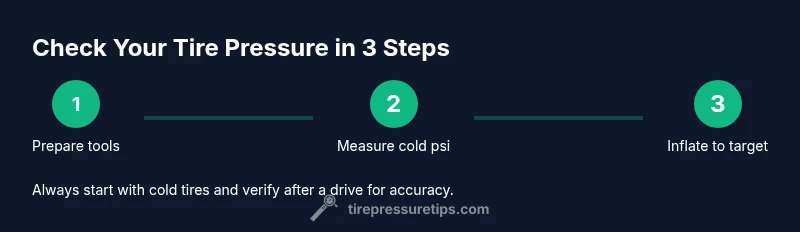
Maintaining correct 205 55 r16 psi is a blend of following the vehicle spec, understanding how readings change with weather and usage, and using a reliable gauge. The Tire Pressure Tips team emphasizes consistency: check cold, inflate to the label, verify after you drive, and consult a professional if readings continue to drift. A disciplined approach protects you and your vehicle on every trip.
Tools & Materials
- Tire pressure gauge (digital or analog)(Choose a gauge with a clear display; ensure calibration if possible)
- Air compressor or access to a gas station inflator(Prefer a unit with a built-in gauge for cross-checking readings)
- Vehicle owner's manual or door jamb placard showing the recommended psi(Location: driver’s door edge or fuel filler door; verify for both front and rear tires)
- Soap and water or leak-detection spray(Use to identify slow leaks around valve stems or tires)
- Notebook or tire-tracking app(Log readings to detect trends and seasonal shifts)
Steps
Estimated time: 15-30 minutes
- 1
Prepare tools and vehicle
Gather your gauge, inflator, and the vehicle’s recommended psi from the placard or manual. Park on a level surface and ensure tires are cold. This ensures the most accurate baseline measurement.
Tip: Check the left-front or driver’s side tire first to establish a consistent reference point. - 2
Locate the recommended psi
Read the vehicle manufacturer’s recommended cold psi for the 205/55 R16 tires from the placard or manual. Remember: this value is for cold tires, not after a long drive or highway use.
Tip: If the placard lists a range, start at the lower end and adjust after verifying load and comfort. - 3
Measure cold tire pressure
Attach the gauge to the valve stem and take a reading when the tire is cold. Record the value to compare with the recommended psi.
Tip: Do not remove air while the tire is hot; a hot tire falsely reads higher pressure. - 4
Inflate to target pressure
Add air until the gauge matches the recommended psi on your placard. Do this for each tire, including the spare where applicable.
Tip: If a tire shows low pressure repeatedly, inspect the valve stem and tread for leaks. - 5
Re-check and adjust if needed
Re-measure all tires after inflation to confirm accuracy. A final check ensures no over-inflation occurred during topping up.
Tip: Note that some tires may require a small adjustment once they cool after a short drive. - 6
Document and schedule routine checks
Record the pressures and set a monthly reminder. Consistency helps spot slow leaks or TPMS drift over time.
Tip: Keep a simple log near the vehicle’s owner’s manual for quick reference.
Frequently Asked Questions
How often should I check tire pressure for 205 55 r16 tires?
Check at least once a month and before long trips. If you drive in extreme temperatures or carry heavy loads, check more often. Regular checks help prevent underinflation and improve safety.
Check at least monthly, and more often with heavy loads or extreme temperatures.
Is the psi on the tire sidewall the same as the recommended pressure?
No. The sidewall max psi is the tire’s maximum capacity, not the target for normal driving. Always use the manufacturer’s recommended cold psi from the placard or manual.
The sidewall shows max psi, not the target. Use the vehicle’s recommended cold psi instead.
Can TPMS replace manual tire pressure checks?
TPMS is a helpful warning system, but it does not replace periodic manual checks. Use a gauge to confirm exact pressures when TPMS alerts or periodically as part of maintenance.
TPMS warns you, but you should still measure with a gauge.
What happens if I over-inflate beyond the recommended psi?
Over-inflation can lead to aggressive wear in the center tread, reduced grip, and a harsher ride. Always inflate to the manufacturer’s target, not the tire’s max.
Over-inflation wears the center tread and can reduce grip; keep to the recommended psi.
Does temperature affect tire pressure readings?
Yes. Colder temperatures typically lower psi readings, while heat from driving raises them. Check readings when tires are cold for accuracy and adjust seasonally.
Temperature changes affect readings; measure when cold for accuracy.
What should I do if the TPMS warning keeps flashing after inflation?
If the light persists after inflation, there may be a sensor issue or leak. Have the TPMS system inspected by a qualified technician.
If the light stays on after inflating, get the TPMS checked.
Watch Video
What to Remember
- Know your vehicle’s cold psi from the placard.
- Check tires when cold for accurate readings.
- Temperature and load affect psi readings and must be considered.
- Use TPMS as a guide, not a sole measurement.
- Maintain a monthly tire pressure routine.